

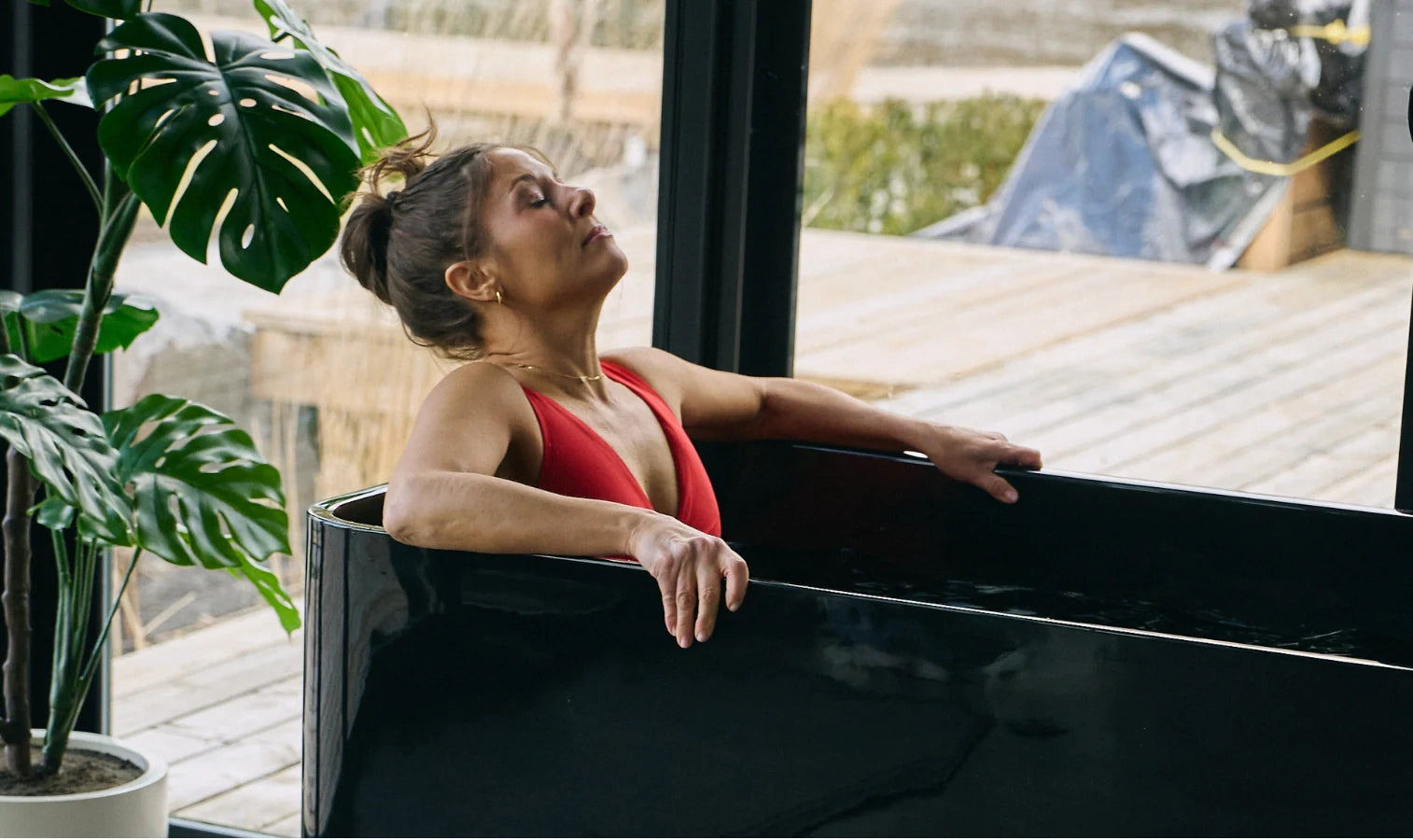
Most Wellness Routines Optimise for How You Feel in the Moment. Cold Water Changes What Your Body Does While You Sleep.
Science + Recovery | 7 min read
Within 12 hours of cold water exposure, two things happen inside your body that most wellness routines completely miss. They are not about how you feel in the moment. They are about what your body does in the hours after, while you sleep and recover. The research on both has grown substantially, and the pattern that keeps appearing is consistent enough to be worth understanding.
The First Thing: Sleep Quality Shifts
A 2025 meta-analysis examined 11 randomised controlled trials covering 3,177 participants and found that cold water immersion was associated with improved sleep quality and overall quality of life. [1] A meta-analysis pools data across multiple independent trials, which makes its conclusions more robust than any single study, and the sleep finding held across the pooled data.
The same body of research found that stress levels dropped following cold exposure and stayed lower for a meaningful window afterward, with effects on stress and wellbeing observed for hours after a single session. [1] This is the part most people do not anticipate: the benefit is not confined to the few minutes in the water. It extends into the rest of the day and into the night.

Why Sleep Improves
The mechanism connects to cortisol, the body's primary stress hormone.
Cortisol follows a daily rhythm and is meant to be elevated in the morning and low at night. Chronic stress disrupts this, keeping cortisol elevated when it should be falling, which holds the nervous system in a state of low-grade alert that interferes with the transition into deep sleep. [2]
Cold exposure is associated with a downregulation of the stress response and supports a healthier cortisol pattern over time. [2] When cortisol drops and stays down in the evening, the body can move more easily into the deep, slow-wave sleep phases that are most important for physical recovery and that many people are chronically missing. The improved sleep is downstream of the calmer nervous system state that cold exposure helps establish.
The Second Thing: Immune Function
The second major finding concerns the immune system.
A randomised trial found that regular cold shower exposure was associated with changes in several immune markers, including immunoglobulins and the interleukins IL-2 and IL-4. [3] These are markers of both antibody-based and cell-mediated immune function, the two broad arms of the immune response. The researchers noted that cold exposure may have therapeutic potential for conditions involving immune dysregulation, while being appropriately cautious about the early stage of the evidence.
This aligns with the broader literature. Other research has documented increases in certain circulating immune cells following cold water immersion, suggesting that the cold acts as a mild, controlled stressor that mobilises immune resources. [4] The body treats brief cold exposure as a challenge to adapt to, and part of that adaptation appears to involve the immune system.

What Happens at the Cellular Level
The most mechanistically interesting research goes a level deeper, to what cold exposure does inside the cell.
A University of Ottawa study found that seven consecutive days of cold immersion improved autophagy, the body's built-in process for clearing out damaged cellular components and recycling them. [5] Autophagy is essentially cellular housekeeping, and its efficiency is linked to healthy aging, stress resilience, and overall cellular function.
In the study, markers of cellular damage decreased and indicators of stress resilience increased over the protocol. [5] This is significant because it shows the effect of cold exposure is not only in how people feel or in circulating hormone levels. It reaches down to what cells are actually doing, improving the maintenance processes that keep tissue healthy over time. The cold was changing cellular behaviour, not just mood.

The Pattern Across Every Trial
It is worth being honest about the state of this research. Sample sizes are still growing, protocols are not yet standardised across studies, and cold exposure science is a younger field than, for example, the decades-long sauna research out of Finland. Different trials use different temperatures, durations, and frequencies, which makes direct comparison harder. [1]
But across the trials reviewed, the same pattern keeps appearing: brief, consistent cold exposure produces measurable changes in immune markers, mood, sleep quality, and cellular health. And critically, the benefit consistently comes from regularity rather than intensity. The autophagy study used seven consecutive days. The immune and sleep findings are tied to repeated exposure. The results come from showing up consistently, not from a single heroic session. [1][5]

What This Means for a Cold Practice
The takeaway reframes what cold exposure is for. Most wellness routines optimise for the experience in the moment: how energised, how relaxed, how good you feel right now. The cold water research points to something different, changes in immunity, sleep architecture, and cellular repair that play out in the hours and days after you get out, much of it while you sleep.
That makes consistency the entire game. The benefits documented in this research are adaptations, and adaptations require repeated exposure over time. A practice you do occasionally will not produce what a practice you do regularly will. And the single biggest predictor of whether a cold practice becomes regular is how much friction stands between you and the water.
The Coldture Classic Tub + Chiller holds an exact temperature anywhere from 3 to 40°C, set from your phone, on a standard household outlet with continuous filtration, so it is ready whenever you are. The 1 HP chiller delivers the same temperature every session, which means the stimulus is consistent and the routine is repeatable. For smaller spaces, the Barrel Tub + Chiller offers the same range in a vertical footprint, and the Ultra Barrel Lite + Chiller is the most compact option in the lineup, built for condos and indoor setups.
And because the same systems run from 3 to 40°C, they support full contrast therapy, pairing cold with heat, which is where a cold plunge and a sauna work together as a complete recovery routine rather than separate practices. Browse the full Coldture cold plunge lineup.
Most routines change how you feel for an hour. The research suggests cold water changes what your body does while you sleep. The difference is consistency.

This article discusses the physiological effects of cold water exposure for general wellness purposes and is not medical advice. Cold water immersion carries risks, particularly for people with cardiovascular conditions. Consult a healthcare professional before beginning a cold exposure practice.
References
[1] Cain T, et al. "The effects of cold water immersion on health and wellbeing: a systematic review and meta-analysis." PLOS ONE. 2025. (Meta-analysis of 11 randomised controlled trials, 3,177 participants.)
[2] Šrámek P, et al. "Human physiological responses to immersion into water of different temperatures." European Journal of Applied Physiology. 2000;81(5):436-442. doi.org/10.1007/s004210050065
[3] Jansky L, et al. "Immune and endocrine responses to repeated cold water immersion in humans." (Randomised trial on cold exposure and immune markers.) European Journal of Applied Physiology. 1996.
[4] Brenner IK, et al. "Immune changes in humans during cold exposure: effects of prior heating and exercise." Journal of Applied Physiology. 1999;87(2):699-710. doi.org/10.1152/jappl.1999.87.2.699
[5] University of Ottawa research on cold water acclimation and autophagy. Published in Advanced Biology. 2023. (Seven-day cold immersion protocol on cellular autophagy and stress response.)
Share:
What Cold Water Immersion Actually Does to Your Brain Chemistry
The Sauna and Your Metabolism: What the Research Really Shows