

Dry Sauna for Recovery: How to Use Heat the Right Way
A dry sauna is the oldest and most studied form of heat bathing: high air temperature, low humidity, and a simple heater doing the work. People have used it for centuries to unwind, but used with a little structure it becomes one of the easiest recovery tools to build into a week. This guide covers what a dry sauna actually does, how to use it for recovery, and how to make it a habit that sticks instead of an occasional treat.
What a dry sauna actually does
A dry sauna heats the air around you, usually somewhere between 80 and 100°C, with humidity kept low. Your skin and core temperature rise, your heart rate climbs in a way that loosely mirrors light cardio, and blood flow to the skin and muscles increases.
That heat-stress response is the part researchers find interesting. Regular sauna use has been associated in observational studies with cardiovascular markers and with how recovered people feel after training. The heat triggers a cascade the body uses to adapt, including a rise in heat shock proteins, increased circulation, and a shift toward a calmer, parasympathetic state once you step out and cool down. None of this is a cure for anything, and the research is still developing, but the practical takeaway is consistent: regular, moderate heat exposure tends to leave people feeling more recovered and more relaxed.
The cool-down matters as much as the heat. The calm, heavy-limbed feeling most people associate with a sauna actually lands in the few minutes after you step out, as your heart rate settles. Skip that and you miss part of the point.
Dry, infrared, or both
"Dry sauna" usually means a traditional, heater-based sauna with low humidity. It is worth knowing how it compares to the alternatives, because the right pick depends on how you like to feel the heat.
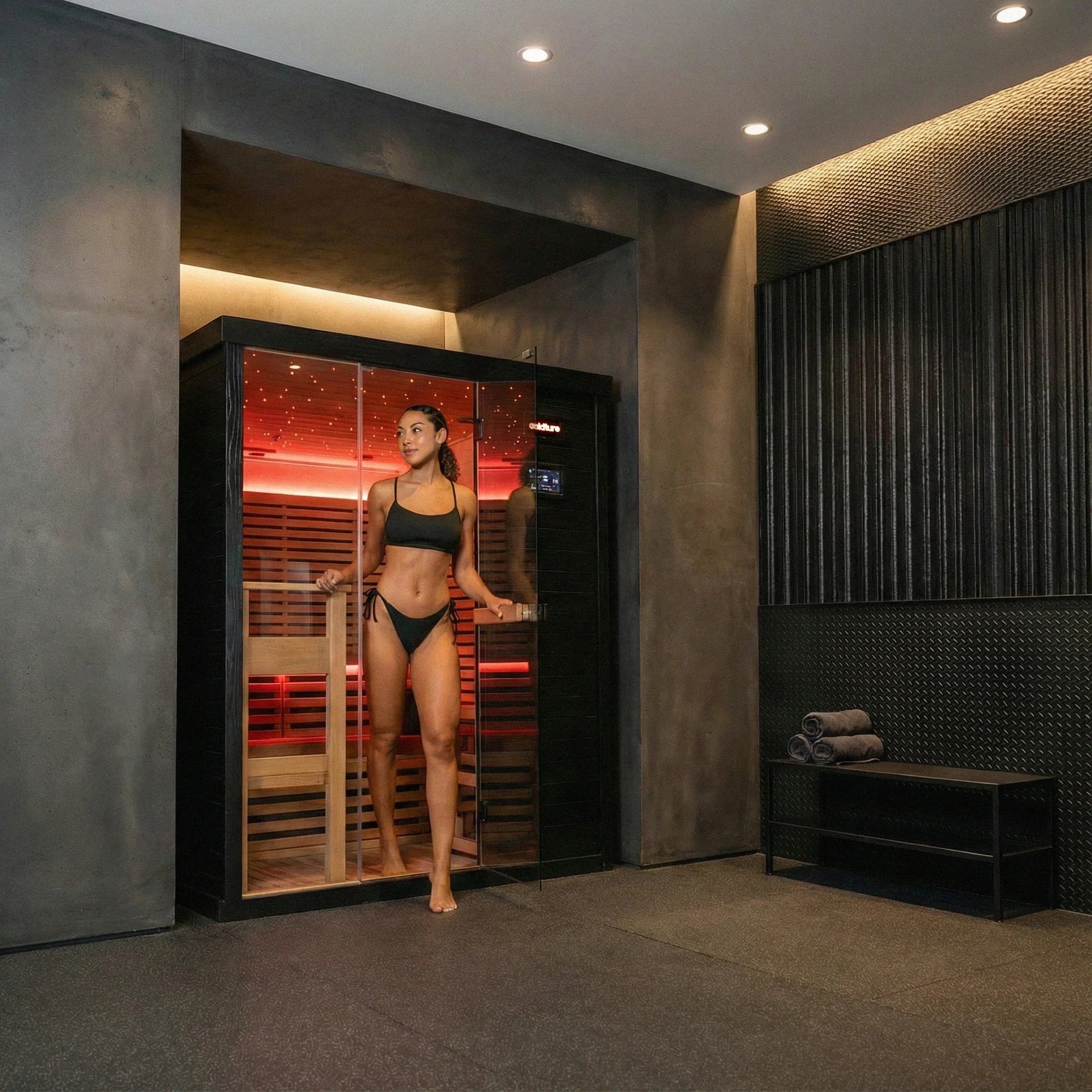
A traditional outdoor sauna heats the air to a high temperature and warms you through that hot, dry environment. It is intense, fast, and the classic experience. An infrared sauna like the Pod runs at a lower air temperature and warms your body directly with infrared light, which many people find gentler and easier to sit in for longer. If you cannot decide, the Hybrid runs both traditional and infrared heat in one cabin, so you can switch depending on the day. All three deliver dry heat, they just get you there differently.
How to use a dry sauna for recovery
The protocol is simple, and consistency beats intensity every time.
Temperature. Traditional dry saunas run hot. Start at the lower end of the range and work up over weeks rather than trying to tough out the maximum on day one. Building tolerance gradually is what keeps people coming back.
Time. Ten to twenty minutes per session is the sweet spot. Longer is not better, and chasing endurance records mostly just makes the habit harder to keep.
Frequency. Three to five sessions a week is the range where a sauna stops being an occasional treat and starts being something your body adapts to.
Timing. Two windows work best. After training, to bookend a workout with heat, or in the evening one to two hours before bed, close enough to wind down but with enough buffer that you are not overheated trying to fall asleep.
Within a single session, give yourself two to three minutes to warm up, eight to fifteen minutes at your working temperature, and then a real cool-down. Hydrate before and after, every time.
Pair heat with cold
If you want to get more out of the habit, this is the upgrade most people have not tried. Following a dry sauna with a cold plunge gives you both ends of the temperature range in one sitting, a practice usually called contrast therapy. You do not need both on day one, but once the sauna habit is set, adding cold is the natural next step and the reason a lot of people end up building a full recovery setup at home.
Four mistakes that quietly ruin the session
- Going too hot too soon. Your tolerance builds over weeks. Starting at maximum heat just makes you quit.
- Skipping water. Dry heat pulls a lot of fluid, so hydrate before and after.
- No cool-down. Walking straight from the heat into your day skips the part your nervous system actually wants.
- Saunaing with zero buffer before sleep. Give it the one to two hour window so you are not trying to fall asleep overheated.
Choosing a dry sauna for home
If you are ready to build this into your space, it comes down to where it will live and how you like the heat. For an authentic, high-temperature dry experience outdoors, the Pro Outdoor Sauna runs a 6 kW HUUM heater and reaches up to 110°C in a hurricane-rated build made for year-round use. If you want infrared instead, or both options in one cabin, the Pod and the Hybrid cover that. You can compare the full lineup across Coldture's sauna range, all engineered in-house in Canada and backed by a nationwide service network.
The bottom line
A dry sauna is one of the simplest, most studied recovery tools you can own. The benefits come from consistency, not heroics: moderate heat, ten to twenty minutes, a few times a week, with a proper cool-down and water. Pair it with cold when you are ready, pick the system that fits your space, and the habit largely takes care of itself.
Share:
Sauna detox guide 2026: benefits, methods, recovery tips
Calories burned in sauna: what science really says