

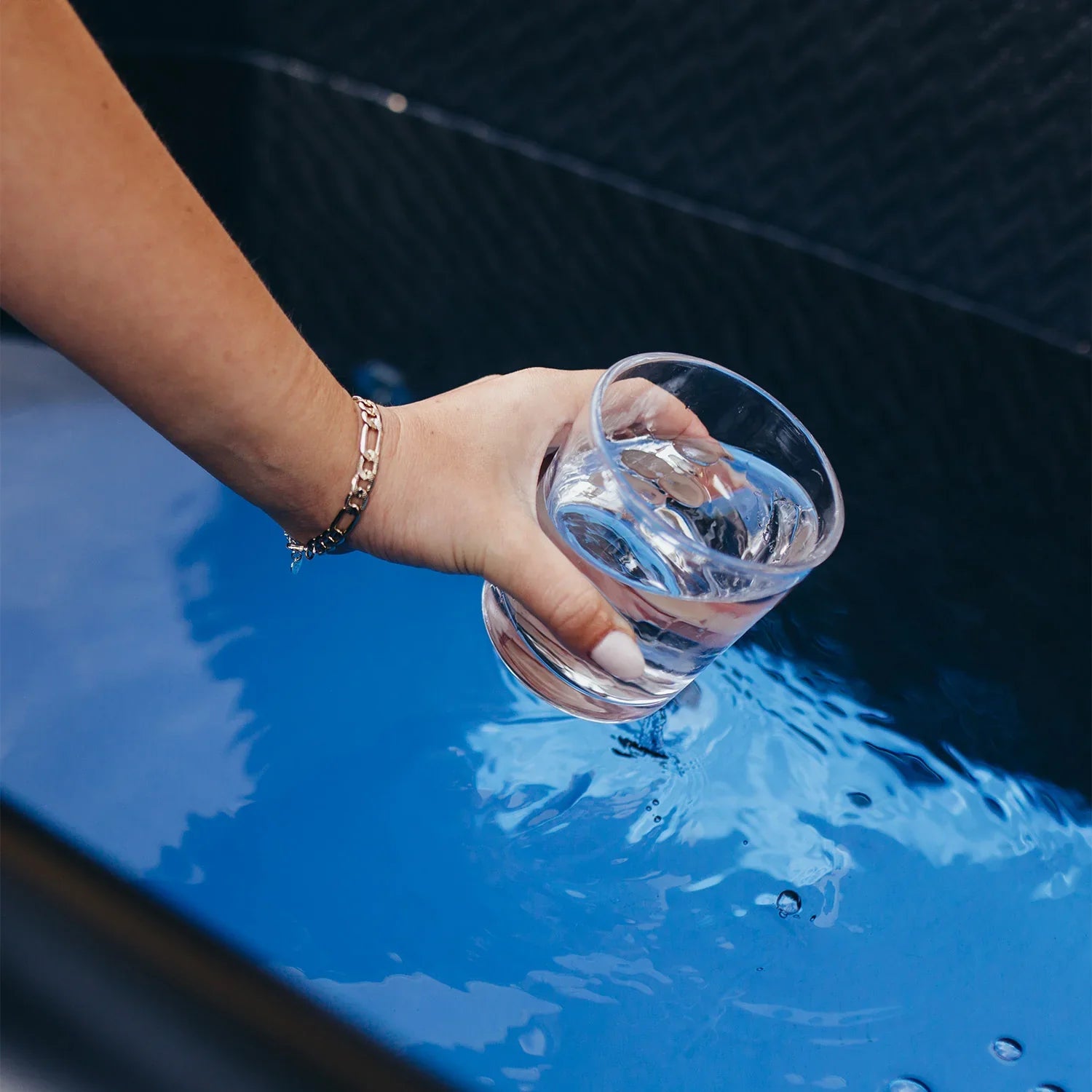
How to Clean a Cold Plunge Tub: A Practical Maintenance Guide
Recovery + Maintenance | 6 min read
A cold plunge is only as good as the water in it, and keeping that water clean is what separates a system you will use daily from one that becomes a chore you avoid. Here is a practical guide to keeping a cold plunge clean, and why the way your system is built makes a large difference in how much work this actually takes.
Why Water Hygiene Matters
A cold plunge is warm enough and exposed enough that, without proper maintenance, it can accumulate bacteria, body oils, sweat, skin cells, and environmental debris. Cold water slows microbial growth compared to a hot tub, but it does not stop it, and standing water that is not filtered or treated will eventually become a hygiene problem. [1]
Clean water is not just about appearance. It is about keeping the plunge safe and pleasant enough that you keep using it. A tub that looks or smells off is one you will skip.
The Core Elements of Cold Plunge Hygiene
Keeping a cold plunge clean comes down to a few principles that apply to any system:
Filtration. Continuous circulation and filtration is the single most important factor. A system that constantly moves water through a filter removes particles and prevents the stagnation where problems start. This is the difference between water that stays clear for weeks and water that clouds in days.
Sanitization and water balance. Beyond filtration, the water itself needs to be treated and kept in balance. Proper water treatment keeps microbial growth in check, while balanced alkalinity protects the water and your equipment and keeps any sanitizer working effectively. The straightforward way to cover all of this is a purpose-built kit: the Coldture Premium Cold Plunge Chemical Starter Pack includes chlorine, an oxidizer, alkalinity plus, and testing strips, so you have everything needed to sanitize, oxidize, balance, and test the water in one place. Always follow the included dosing guidance, and never improvise with pool chemicals your system is not rated for.
Shower before you plunge. The simplest habit with the biggest impact. Rinsing off body oils, lotions, and sweat before getting in dramatically reduces the load on your filtration and chemistry, and keeps the water cleaner far longer.
Keep it covered. An insulated cover keeps out debris, dust, leaves, and contaminants between sessions, and on an insulated system it also helps hold temperature and reduce running cost.
Test and adjust regularly. Using testing strips to check your water on a routine basis lets you catch imbalances early and dose only what is needed, rather than guessing. This keeps the water safe and prevents over-treating.
Periodic full cycles. Even with good filtration and chemistry, water should be fully cycled and the tub cleaned on a schedule. How often depends on use and on how well the system filters, but a regular full drain, wipe-down, and refill keeps everything fresh.
The Drain-and-Refill Problem
Here is where system design matters enormously. Basic tubs without proper filtration require frequent draining and refilling, sometimes weekly, because there is nothing keeping the water clean between sessions. [1] That is a significant ongoing chore: draining hundreds of litres, cleaning the empty tub, refilling, and waiting for it to cool again.
This drain-and-refill cycle is one of the most common reasons people abandon a cold plunge. The maintenance burden simply outweighs the motivation over time. Reducing that burden, through continuous filtration plus proper water treatment that extends how long the water stays usable, is one of the most valuable things a well-designed setup does.
How Continuous Filtration and Proper Chemistry Work Together
A system with continuous circulation and filtration eliminates most of the manual hygiene work, and pairing it with the right water treatment is what keeps the water clean for weeks rather than days.
The Coldture Classic Tub + Chiller runs continuous circulation and filtration with a recommended monthly filter cycle, rather than the constant drain-and-refill that basic tubs require. The water stays clean between sessions, the temperature holds at whatever you set from 3 to 40°C, and the maintenance routine stays manageable. The Barrel Tub + Chiller and Ultra Barrel Lite + Chiller use the same continuous filtration approach in more compact formats. Add the Premium Cold Plunge Chemical Starter Pack and you have both halves of the equation: filtration handling the particles, chemistry handling the rest.
The practical maintenance routine on a filtered, properly treated system: shower before each plunge, keep the cover on between sessions, test and balance the water regularly, follow the recommended monthly filtration cycle, and do periodic deeper cleans per the system guidance. That is a manageable routine, which is the entire point. Browse the full Coldture accessories lineup.
If You're Sticking With Ice for Now
There is nothing wrong with starting simple while you decide whether cold plunging is for you. Keep the water covered, shower before getting in, test it regularly, and stay on top of cleaning. Just know that if the habit sticks, a system that combines continuous filtration with proper water treatment is what turns maintenance from a recurring chore into a quick routine, and that is usually the upgrade people are most glad they made. Browse the full Coldture cold plunge lineup.
This article is for general maintenance guidance. Always follow the specific care, cleaning, and water-treatment instructions provided with your cold plunge system and with any chemical products, and use only sanitizers and methods the manufacturer approves.
References
[1] World Health Organization. "Guidelines for safe recreational water environments, Volume 2: Swimming pools and similar environments." (Reference on water hygiene, filtration, and microbial control in recreational water.) 2006.
Share:
Cold Exposure and Brown Fat: The Metabolism Science Explained
Sauna FAQ: The 5 Questions Everyone Asks, Answered With Research