

You’ve probably heard that saunas torch hundreds of calories per session, making them a secret weapon for weight loss. The reality is more nuanced. While your body does burn extra calories managing heat stress, the numbers are far more modest than fitness influencers suggest. This guide cuts through the hype to reveal exactly how many calories you actually burn in a sauna, what drives that metabolic increase, and why the real value of sauna use lies in recovery benefits rather than fat loss. Understanding these facts helps you use saunas strategically for genuine wellness gains.
Table of Contents
- Key takeaways
- How many calories does a sauna session burn?
- Research insights on calorie burn amounts and variability
- Why sauna calorie burn isn’t a substitute for exercise or dieting
- Optimizing sauna use for recovery and added metabolic benefits
- Explore sauna and recovery solutions from Coldture Wellness
- Frequently asked questions
Key Takeaways
| Point | Details |
|---|---|
| Modest calorie burn | Sauna calorie expenditure is modest and sits between rest and light activity rather than intense exercise. |
| BMI affects burn | Heavier individuals burn more calories during the same sauna session due to cooling larger body mass. |
| Thermoregulation drives burn | Calorie burn mainly comes from thermoregulation and the heart’s response to heat, not fat loss. |
| Water weight loss | Most sauna weight loss is water weight and is quickly regained with proper hydration. |
| Recovery focused use | The strongest value of sauna use lies in muscle recovery and relaxation rather than substantial calorie burning. |
How many calories does a sauna session burn?
Your body burns calories in a sauna through two primary mechanisms: maintaining core temperature and increasing heart rate. When you sit in 170-195°F heat, your cardiovascular system works harder to pump blood to your skin surface for cooling. This process demands energy, creating a measurable metabolic increase.
Sauna use increases metabolic rate via thermoregulation, elevating heart rate to 100-150 beats per minute and core temperature, leading to modest calorie burn equivalent to 1.5-2.0 METs (Metabolic Equivalent Tasks). For context, sitting quietly registers 1.0 MET, while brisk walking hits 3.5-4.0 METs. Sauna falls somewhere between rest and light activity.
The actual numbers vary based on several factors:
- Body composition and weight significantly impact calorie expenditure
- Sauna temperature and humidity levels alter metabolic demand
- Session duration directly correlates with total calories burned
- Individual cardiovascular fitness affects heart rate response
A typical 10-minute session burns approximately 70-130 calories for most adults. Someone weighing 150 pounds might burn around 70 calories, while a 200-pound person could reach 100-110 calories in the same timeframe. These estimates assume traditional dry sauna temperatures between 170-195°F.
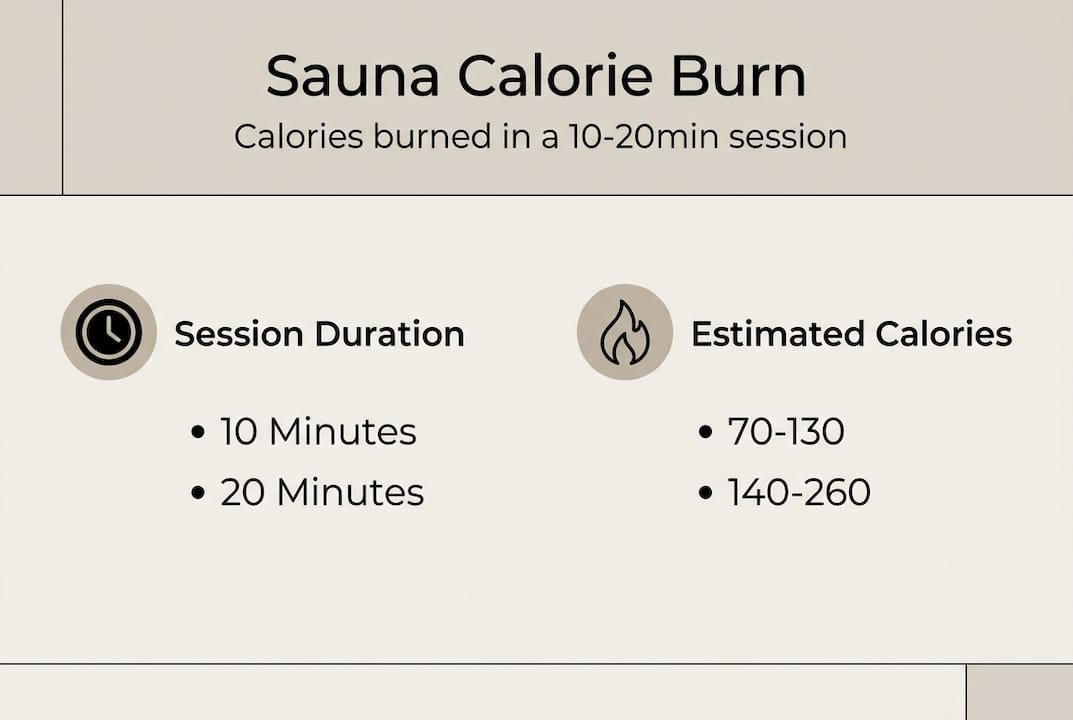
| Duration | Estimated Calories (150 lbs) | Estimated Calories (200 lbs) |
|---|---|---|
| 10 minutes | 70-80 | 95-110 |
| 20 minutes | 140-160 | 190-220 |
| 30 minutes | 210-240 | 285-330 |
Your heart rate serves as a reliable indicator of caloric burn intensity. Most people experience heart rates matching light to moderate exercise during sauna sessions. This cardiovascular response drives the majority of calorie expenditure, not direct fat burning. Understanding this distinction helps set realistic expectations about what saunas can and cannot accomplish for weight management. For comprehensive guidance on maximizing sauna benefits, check out this sauna health checklist for optimal recovery.
Pro Tip: Wear a heart rate monitor during your sauna sessions to track your personal cardiovascular response and estimate calorie burn more accurately based on your specific metrics.
Research on sauna weight loss confirms these moderate calorie expenditure levels align with light physical activity rather than intensive exercise.
Research insights on calorie burn amounts and variability
Peer-reviewed studies provide more conservative estimates than manufacturer marketing materials suggest. One controlled study tracked sedentary overweight young men through four consecutive 10-minute dry sauna sessions. The first session burned 73 calories, increasing to 134 calories by the fourth session, totaling approximately 333-413 calories over 40 minutes with rest intervals. This progressive increase demonstrates how repeated heat exposure within a single visit amplifies metabolic response.
Body mass index plays a significant role in individual calorie expenditure. Heavier individuals require more energy to cool larger body mass, resulting in higher caloric burn during identical sauna conditions. A 180-pound person typically burns 20-30% more calories than a 140-pound person in the same session. This variability makes universal calorie claims misleading without accounting for personal factors.

Sauna type significantly affects calorie burn rates. Traditional Finnish saunas operating at 170-195°F generate higher metabolic demand than infrared saunas running at 120-150°F. Infrared saunas burn slightly fewer calories due to lower ambient temperatures, despite manufacturer claims suggesting otherwise. The temperature differential directly impacts how hard your body works to maintain homeostasis.
| Sauna Type | Temperature Range | Estimated Calories (10 min, 170 lbs) |
|---|---|---|
| Traditional dry | 170-195°F | 85-110 |
| Infrared | 120-150°F | 60-85 |
| Steam room | 110-120°F | 55-75 |
Manufacturer claims often cite calorie burns of 300-600 per session, numbers that exceed what controlled research supports. These inflated figures typically conflate water weight loss with calorie expenditure or extrapolate from best-case scenarios. Peer-reviewed evidence consistently shows more modest burns aligning with light exercise equivalents.
Session structure matters more than single-exposure duration. Multiple shorter sessions with cooling breaks between them generate higher total calorie burn than one extended session. Your body’s thermoregulatory response intensifies with repeated heat challenges, explaining why the fourth 10-minute bout burns nearly double the first. This pattern suggests strategic session timing can optimize metabolic benefits.
Pro Tip: Don’t confuse the 1-3 pounds you might lose during a sauna session with actual fat loss. That’s water weight from sweating, which you’ll regain as soon as you rehydrate properly.
Common sauna myths include exaggerated calorie burn claims that misrepresent the modest metabolic reality. For evidence-based approaches to weight management through temperature therapy, explore the benefits of cold plunge for weight loss as a complementary strategy.
Why sauna calorie burn isn’t a substitute for exercise or dieting
The weight you lose during a sauna session consists almost entirely of water, not fat. Apparent loss is water weight, typically 1-3 pounds per session, which you regain through normal hydration within hours. This temporary fluctuation has no bearing on long-term body composition changes. Mistaking fluid loss for fat reduction leads to unrealistic expectations about sauna effectiveness for weight management.
Calorie burn from sauna sessions falls far short of what’s needed for meaningful fat loss. Creating a 500-calorie daily deficit through diet and exercise leads to roughly one pound of fat loss per week. A 30-minute sauna session burning 200-300 calories represents less than half that daily target, and only if you’re not compensating by eating more afterward. You’d need multiple daily sessions to approach exercise-level calorie expenditure, which poses serious dehydration risks.
Relying solely on sauna for weight loss creates several problems:
- Chronic dehydration from frequent sessions without proper fluid replacement
- No preservation of lean muscle mass that exercise provides
- Missing cardiovascular and strength adaptations from physical activity
- Potential electrolyte imbalances from excessive sweating
Saunas cannot replace the metabolic benefits of movement. Exercise builds muscle, strengthens bones, improves insulin sensitivity through muscle glucose uptake, and creates lasting cardiovascular adaptations. Heat exposure offers none of these structural improvements. Your body becomes more efficient at thermoregulation with regular sauna use, actually reducing calorie burn over time as adaptation occurs.
“Sauna bathing provides modest caloric expenditure comparable to light physical activity, but should be viewed as a recovery and cardiovascular health tool rather than a primary weight loss intervention. The metabolic benefits complement, but do not substitute for, proper nutrition and regular exercise.”
The most effective approach combines sauna use with established weight management strategies. Use heat therapy to enhance recovery from workouts, allowing you to train harder and more consistently. This indirect benefit contributes far more to long-term body composition than the direct calorie burn from sitting in heat. Strategic sauna timing supports your fitness routine rather than replacing it.
For a comprehensive understanding of how temperature therapy fits into weight management, review the benefits of cold plunge for weight loss and how thermal contrast supports metabolic health. Research on saunas and weight loss limits confirms that heat exposure alone produces minimal long-term fat reduction.
Optimizing sauna use for recovery and added metabolic benefits
The real value of regular sauna use lies in post-workout recovery rather than calorie burning. Sauna enhances muscle recovery, reduces soreness, upregulates heat shock proteins, and improves insulin sensitivity following exercise. These adaptations help you train more effectively, indirectly supporting body composition goals through improved workout quality and consistency.
Optimal sauna protocols for recovery benefits include:
- Schedule sessions 3-4 times weekly for consistency without overexposure
- Aim for 15-30 minutes per session at 160-180°F for traditional saunas
- Time sessions within 30-60 minutes post-workout for maximum recovery benefit
- Hydrate with 16-24 ounces of water before entering and after exiting
- Allow gradual acclimation over 2-3 weeks, starting with shorter, cooler sessions
- Cool down properly between sauna rounds if doing multiple sessions
Heat shock proteins activated during sauna exposure play a crucial role in cellular repair and muscle recovery. These protective proteins help rebuild damaged muscle tissue faster, reduce inflammation markers, and may improve protein synthesis. The cardiovascular conditioning from regular heat exposure also enhances endurance capacity over time, creating measurable performance benefits beyond simple calorie burn.
Safe sauna practices require attention to individual health status. People with cardiovascular conditions, pregnant women, and those on certain medications should consult healthcare providers before beginning regular sauna use. Start conservatively and monitor how your body responds. Dizziness, nausea, or excessive fatigue signal you’ve pushed too far.
Pro Tip: Alternate between sauna heat and cold plunge immersion for enhanced recovery benefits and metabolic stimulus. This contrast therapy approach amplifies circulation, reduces inflammation more effectively than heat alone, and may provide additional metabolic advantages through cold-induced thermogenesis.
Your heart rate elevation during sauna sessions provides cardiovascular conditioning similar to moderate exercise. Regular exposure trains your heart to pump more efficiently, improves blood vessel function, and may reduce blood pressure over time. These adaptations contribute to overall metabolic health in ways that extend beyond immediate calorie expenditure.
For detailed protocols on maximizing recovery benefits, consult this sauna health checklist for optimal recovery. Research-backed sauna health benefits demonstrate why recovery focus delivers more value than calorie counting.
Explore sauna and recovery solutions from Coldture Wellness
Now that you understand the real metabolic impact of sauna use and its powerful recovery benefits, you can make informed decisions about incorporating heat therapy into your wellness routine. Coldture offers premium indoor and outdoor saunas designed for consistent post-workout recovery and long-term health optimization. Each unit combines professional-grade performance with elegant design that fits seamlessly into your home or commercial space.

Maximize your recovery protocol by pairing sauna sessions with Coldture’s cold plunges for evidence-based contrast therapy. This combination amplifies circulation benefits, accelerates muscle recovery, and creates the metabolic stimulus that heat or cold alone cannot achieve. For those seeking flexibility, portable cold plunges deliver professional recovery benefits anywhere you train. Every Coldture product prioritizes safety, durability, and user experience, ensuring you get maximum value from your investment in wellness hardware.
Frequently asked questions
How many calories does a typical sauna session burn?
A standard 15-20 minute sauna session burns approximately 140-260 calories for most adults, depending on body weight and sauna temperature. This calorie expenditure is comparable to light walking or gentle yoga, not intensive exercise. Heavier individuals burn more calories due to increased metabolic demand for cooling larger body mass.
Can sauna use alone cause long-term weight loss?
Saunas alone do not produce meaningful long-term fat loss because the weight lost during sessions is primarily water from sweating, not fat tissue. You regain this fluid weight within hours through normal hydration. Sustainable fat loss requires a calorie deficit created through dietary changes and regular physical activity that saunas cannot replace.
How often should I use a sauna for recovery benefits?
Optimal recovery benefits come from 3-4 sauna sessions per week, each lasting 15-30 minutes at 160-180°F. This frequency allows adequate heat exposure for cardiovascular adaptation and muscle recovery without overtraining your thermoregulatory system. Always prioritize proper hydration before and after each session, and allow gradual acclimation if you’re new to regular sauna use.
Does infrared sauna burn more calories than traditional sauna?
Infrared saunas actually burn slightly fewer calories than traditional saunas because they operate at lower temperatures (120-150°F versus 170-195°F). The reduced ambient heat creates less metabolic demand for cooling your body. Many manufacturer claims about infrared calorie burn significantly exceed what peer-reviewed research supports, so maintain realistic expectations about both sauna types.
Share:
Dry Sauna for Recovery: How to Use Heat the Right Way
Thermal therapy routine guide to boost recovery