


Most people grew up hearing that getting cold makes you sick. It’s one of those beliefs that sticks around despite the evidence pointing in a very different direction. Modern research shows that deliberate, controlled cold exposure can actually train your immune system to become more resilient, not weaker. New data suggests that cold water immersion and related practices may reduce inflammation, lower sick days, and support long-term wellness. This article breaks down the science, the most effective methods, and the practical steps you can take to use cold therapy safely for immune support.
Table of Contents
- How cold therapy affects the immune system
- Methods of cold therapy: Approaches and protocols
- Benefits and risks: What the evidence really shows
- Best practices: Practical tips for using cold therapy to support immunity
- Enhance your wellness journey with Coldture
- Frequently asked questions
Key Takeaways
| Point | Details |
|---|---|
| Cold triggers adaptive response | Exposure activates stress pathways that may boost anti-inflammatory immune markers. |
| Best results with consistency | Long-term, regular cold therapy shows more immunity support than single sessions. |
| Start simple and safe | Begin with cool showers before progressing to plunges or cryotherapy. |
| Know the risks | Individuals with certain conditions should avoid cold exposure without medical guidance. |
How cold therapy affects the immune system
When your body hits cold water, it doesn’t just shiver and wait it out. A cascade of physiological responses fires up almost immediately. Your sympathetic nervous system activates, your heart rate shifts, and your brain signals a surge of hormones designed to help you adapt and survive.

One of the most significant responses is a norepinephrine surge. Norepinephrine is a hormone and neurotransmitter that plays a key role in regulating inflammation. Cold therapy also increases anti-inflammatory cytokines like IL-10 while reducing pro-inflammatory markers such as TNF-α, IL-6, and IL-8. In plain terms, your body shifts toward a less inflamed, more balanced immune state.
This is what researchers call a hormetic effect. A small, controlled stressor pushes your body to adapt and build stronger defenses, without tipping into harmful territory. Think of it like strength training for your immune system. A little stress, applied consistently, makes the system stronger over time.
The key word is moderate. Physiological research confirms that cold therapy triggers strong sympathetic nervous activity and a surge in norepinephrine, leading to higher levels of anti-inflammatory cytokines and reduced pro-inflammatory markers. Overdoing it, especially without adaptation, can flip those benefits into risks.
| Immune marker | Effect of cold exposure | Why it matters |
|---|---|---|
| Norepinephrine | Significantly increased | Reduces inflammation signals |
| IL-10 (anti-inflammatory) | Increased | Calms overactive immune response |
| TNF-α (pro-inflammatory) | Decreased | Lowers chronic inflammation risk |
| IL-6 (pro-inflammatory) | Decreased | Supports immune balance |
| IL-8 (pro-inflammatory) | Decreased | Reduces tissue inflammation |
For anyone already using ice baths for recovery, these immune effects are a meaningful bonus layered on top of the muscle repair and soreness reduction you’re already getting.
“Cold exposure creates a measurable shift in the body’s inflammatory profile, with consistent evidence pointing toward reduced pro-inflammatory cytokines and increased anti-inflammatory activity.” — Research summary, PMC 2025
Methods of cold therapy: Approaches and protocols
Understanding the science is only helpful if you know how to apply it. Here’s how popular cold therapy methods stack up for immunity.
Cold water immersion, cold showers, whole-body cryotherapy, and the Wim Hof Method have all been studied for their immune effects. Each has a different entry point, cost, and level of intensity. Choosing the right one depends on your current fitness level, access to equipment, and goals.
A landmark Dutch randomized controlled trial found a 29% reduction in sick days among participants who finished their showers with a cold blast. That’s a meaningful real-world outcome from a simple, low-cost habit.
| Method | Temperature range | Session length | Best for |
|---|---|---|---|
| Cold shower | 55-65°F (13-18°C) | 30-90 seconds | Beginners, daily use |
| Cold water immersion | 50-59°F (10-15°C) | 5-15 minutes | Intermediate, recovery |
| Whole-body cryotherapy | -166 to -220°F | 2-4 minutes | Advanced, clinical settings |
| Wim Hof Method | Variable | Combined breathing + cold | Motivated self-practitioners |
Pros and cons by method:
- Cold showers: Easy to start, no equipment needed, lower intensity. Less precise temperature control.
- Cold water immersion: Full-body exposure, strong physiological response, highly effective. Requires a tub or plunge unit.
- Whole-body cryotherapy: Fast sessions, no wetness. Expensive, requires a facility, limited home access.
- Wim Hof Method: Combines breathwork with cold for amplified effect. Requires learning a specific technique and consistent practice.
For those building structured cold plunge routines, cold water immersion tends to deliver the most consistent immune and recovery benefits when practiced regularly.
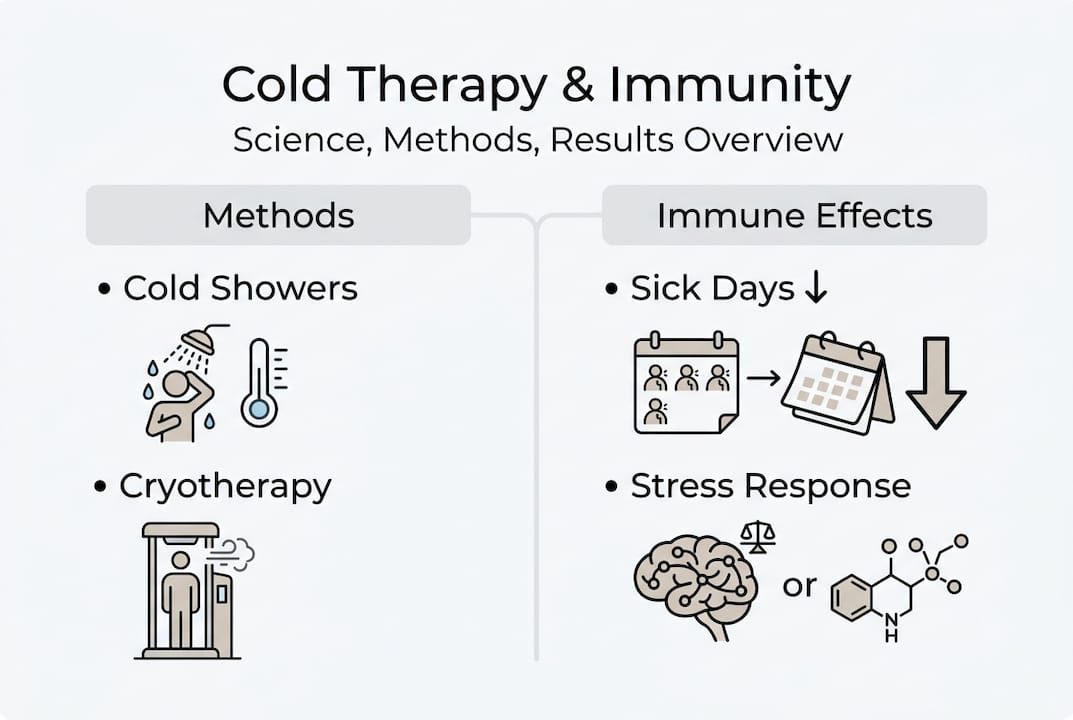
Pro Tip: If you’re new to cold therapy, start with 30 seconds of cold at the end of your regular shower. Do this every day for two weeks before moving to longer or colder exposures. Adaptation is everything.
Benefits and risks: What the evidence really shows
With so many methods available, it’s important to weigh which outcomes are genuinely supported by science and who should approach with caution.
The most robust finding in the research is the 29% reduction in sick days observed in the Dutch cold shower trial. That’s a hard number from a controlled study, and it’s compelling. Reduced chronic inflammation is another well-supported benefit, particularly for people who practice cold exposure consistently over weeks and months.
However, it’s worth being honest about the limits. Meta-analyses looking at acute immune responses, meaning what happens to your immune system right after a single cold session, show limited and inconsistent results. A one-time plunge is unlikely to meaningfully boost your immunity. The benefits build over time with regular practice.
Who should avoid cold therapy:
- People with heart or cardiovascular conditions
- Individuals with serious lung or respiratory issues
- Pregnant individuals
- Anyone currently sick or running a fever
- People with Raynaud’s disease or severe circulation problems
For those managing cold plunges and inflammation as part of a broader wellness plan, understanding these boundaries is just as important as knowing the benefits.
“While the evidence for cold therapy’s immune benefits is promising, most experts caution that the research is still maturing. Healthy adults with no contraindications are the best candidates for exploring these protocols.” — Harvard Health
The risk of hypothermia is real, especially with unsupervised cold water immersion in open water or without temperature control. Cardiovascular stress from sudden cold shock is another concern, particularly for older adults or those with undiagnosed heart conditions. Quality equipment with precise temperature control removes a lot of that guesswork.
Best practices: Practical tips for using cold therapy to support immunity
Once you know the likely benefits and limitations, it’s time to focus on smart, safe ways to implement cold therapy into your routine.
Long-term, regular, and moderate cold exposure yields the clearest immune benefits. Excessive or acute stress without proper adaptation can backfire, increasing cortisol and suppressing immune function rather than supporting it. Consistency beats intensity, especially in the early weeks.
Combining cold exposure with focused breathing, like the techniques used in the Wim Hof Method, can amplify the physiological response. Controlled breathing before a cold plunge helps regulate your nervous system and makes the experience more manageable, especially for beginners.
Key best practices for immune support:
- Start with water temperatures between 55-65°F and work down gradually over several weeks
- Aim for 2 to 4 sessions per week rather than daily intense exposure
- Keep early sessions short, 30 to 90 seconds, and build toward 5 to 10 minutes over time
- Always warm up naturally after a session. Let your body generate its own heat rather than jumping straight into a hot shower
- Avoid cold therapy when you’re already sick, overtired, or under significant physical stress
- Practice cold plunge safety by using equipment with reliable temperature controls
Pro Tip: Always check with your doctor before starting cold therapy if you have any underlying health conditions, take medications that affect circulation or heart rate, or are new to intense physical wellness practices. This isn’t just a disclaimer. It’s genuinely important for your safety.
The adaptive cold therapy protocols that show the strongest immune outcomes all share one thing: they’re gradual, structured, and consistent. There’s no shortcut to adaptation, but the payoff in reduced inflammation and improved resilience is real for those who stick with it.
Enhance your wellness journey with Coldture
With evidence-based guidance in hand, elevating your cold therapy practice is easier and safer than ever. The difference between a frustrating cold exposure experience and a genuinely effective one often comes down to equipment quality and temperature precision.
At Coldture, our premium cold plunges are engineered to give you consistent, controlled temperatures so you can follow the protocols that actually work. Whether you’re looking for a permanent home setup or something more flexible, our portable cold plunge options make it easy to build a real routine without compromising on performance. Pair your cold practice with red light therapy to support cellular recovery and reduce inflammation from multiple angles. When your tools match your commitment, results follow.
Frequently asked questions
Does cold therapy really boost your immune system?
Cold therapy supports anti-inflammatory processes and has been linked to fewer sick days in controlled studies, but a dramatic acute immune boost in healthy adults isn’t consistently proven by meta-analyses. Long-term, regular practice shows the most meaningful results.
What is the safest way to start cold therapy for immunity?
Begin with 30 to 90 seconds of cold water at the end of your regular shower and increase duration gradually over several weeks. The Dutch RCT that showed a 29% reduction in sick days used exactly this kind of simple, low-barrier approach.
Who should avoid cold therapy?
Anyone with heart or lung conditions, severe circulation issues, or who is pregnant should avoid cold therapy unless a doctor has specifically cleared them. The risk of cardiovascular stress and hypothermia is real for vulnerable groups.
How often should you do cold therapy for immune support?
Most evidence supports 2 to 4 moderate sessions per week, with gradual adaptation over time. Regular, consistent exposure produces clearer immune benefits than sporadic intense sessions.
Share:
Top recovery methods to boost wellness and performance
Build a daily cold therapy routine: recovery & resilience