


If your muscles stay sore longer than they should, your focus fades by midday, and stress feels harder to shake than it used to, you’re not alone. Millions of athletes and health-conscious professionals hit the same wall. Daily cold therapy cuts through that pattern fast. Cold therapy increases dopamine up to 250% and norepinephrine up to 530%, sharpens mental clarity, and reduces inflammation in ways that compound over time. This guide walks you through every step: the science, the setup, the daily routine, and how to troubleshoot when progress stalls.
Table of Contents
- Understanding cold therapy benefits and mechanisms
- Preparation: Materials, safety, and prerequisites
- Step-by-step daily cold therapy routine
- Troubleshooting, common mistakes, and personalization
- Elevate your cold therapy experience
- Frequently asked questions
Key Takeaways
| Point | Details |
|---|---|
| Consistency is key | Regular short sessions offer greater rewards than sporadic intense exposure. |
| Safety first | Always check for contraindications and never immerse alone or after hyperventilating. |
| Morning sessions maximize benefits | Cold exposure early in the day boosts focus, mood, and energy best. |
| Avoid hot showers post-exposure | Let your body warm up naturally for 15-20 minutes to enhance metabolic effects. |
| Personalize your approach | Track your tolerance and progress to tailor frequency and duration for optimal results. |
Understanding cold therapy benefits and mechanisms
Cold therapy works by triggering a controlled stress response in your body. When you expose yourself to cold water, your nervous system releases a surge of neurochemicals that improve mood, sharpen focus, and accelerate physical recovery. These aren’t subtle effects. They’re measurable, repeatable, and they build on each other with consistent practice.
Here’s what daily cold exposure actually does for you:
- Boosts dopamine and norepinephrine for sustained mood elevation and mental drive
- Reduces systemic inflammation, which speeds up muscle repair after hard training
- Strengthens immune function, with 29% less sickness absence linked to daily cold showers
- Builds mental resilience by training your nervous system to stay calm under stress
- Improves circulation through repeated vasoconstriction and vasodilation cycles
One thing most people get wrong: they think intensity is everything. It isn’t. Consistency is what drives results. A two-minute cold shower every morning beats a single extreme plunge once a week. Understanding the right ice bath temperatures and how they affect your body helps you dial in the right approach from day one.
Key stat: The benefits of cold exposure accumulate over weeks, not days. Acute inflammation may spike slightly in the first few sessions, but it decreases significantly with regular practice.
For a broader look at the physiology, the cold therapy guide from The Biological Edge breaks down the mechanisms in detail. The short version: cold makes your body stronger, smarter, and more adaptable, one session at a time.
Preparation: Materials, safety, and prerequisites
Before you step into cold water, you need to know two things: what you need, and whether cold therapy is safe for you right now. Skipping this step is the most common mistake beginners make, and it’s also the most dangerous.
Who should not do cold therapy without medical clearance:
According to absolute contraindications, cold therapy is not appropriate for people with cardiovascular disease, pregnancy, severe anemia, uncontrolled hypertension, Raynaud’s syndrome, or cold intolerance. If any of these apply to you, talk to your doctor before starting.
Here’s a simple breakdown of what you need at each level:
| Level | Setup | Equipment needed |
|---|---|---|
| Beginner | Cold shower | Shower, timer |
| Intermediate | Cold bath | Bathtub, thermometer, timer, ice |
| Advanced | Cold plunge tub | Dedicated plunge unit, thermometer, timer |
For all levels, your preparation checklist should include:
- Comfortable, minimal clothing (or none) to maximize skin contact with cold water
- A timer so you don’t guess your exposure duration
- Awareness of your breathing before you enter, not after
- A buddy or someone nearby for your first several sessions
The ice bath recovery benefits are real, but only when you approach the practice safely. Never rush the setup phase.
Safety rule: Never hyperventilate before cold immersion. It reduces carbon dioxide and can cause sudden loss of consciousness in water. Always consult your doctor if you have any underlying health conditions.
Step-by-step daily cold therapy routine
Building a daily cold therapy habit works best when you follow a progressive structure. Jumping straight into a 10-minute ice plunge on day one is a recipe for quitting. Here’s how to build it properly.
Your progressive cold therapy plan:
- Weeks 1 to 2: Start with cold showers at around 15°C (59°F). Aim for 30 seconds to 1 minute per session. Focus on controlled breathing: 4-second inhale, 6-second exhale to manage the gasp reflex.
- Weeks 3 to 4: Extend shower duration to 2 minutes. Begin experimenting with cold baths if you have access.
- Month 2 onward: Transition to cold plunges at 10 to 15°C for 2 to 3 minutes per session. This is where the most significant neurological and recovery benefits kick in.
- Daily timing: Morning sessions between 6 and 8 AM are optimal for energy, focus, and dopamine. If you train in the morning, wait at least 4 to 6 hours before cold exposure if muscle growth is your priority.
- Post-session: Follow the Søberg Principle. Allow your body to rewarm naturally for 15 to 20 minutes. No hot shower immediately after. This natural rewarming process activates thermogenesis (your body generating its own heat) and amplifies the metabolic benefits.
Here’s a quick reference for session targets by week:
| Week | Temperature | Duration | Method |
|---|---|---|---|
| 1 to 2 | 15°C / 59°F | 30 to 60 seconds | Cold shower |
| 3 to 4 | 13 to 15°C / 55 to 59°F | 90 to 120 seconds | Cold shower or bath |
| 5 to 8 | 10 to 13°C / 50 to 55°F | 2 to 3 minutes | Cold bath or plunge |
| 8 and beyond | 10°C / 50°F | 3 to 5 minutes | Cold plunge tub |
For athletes looking to refine their approach, cold plunge routine tips and performance and recovery tips offer sport-specific guidance. The contrast therapy principle is also worth exploring once you’re comfortable with cold-only sessions.
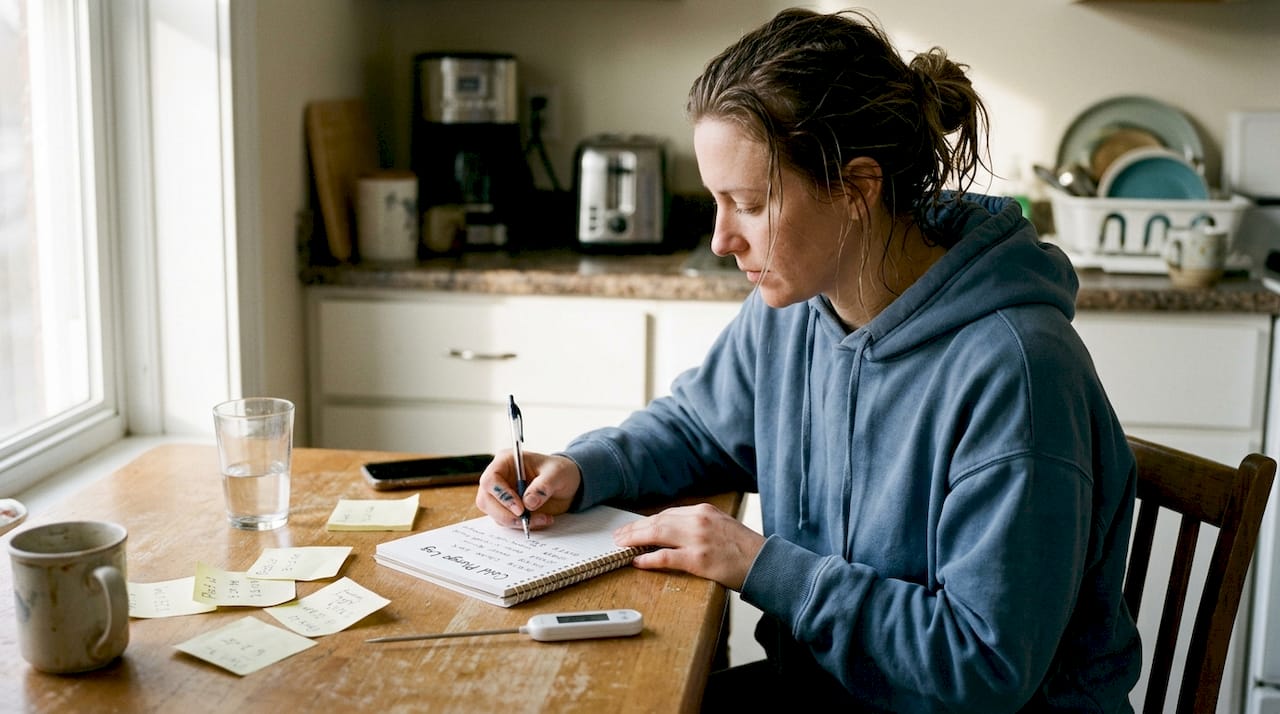
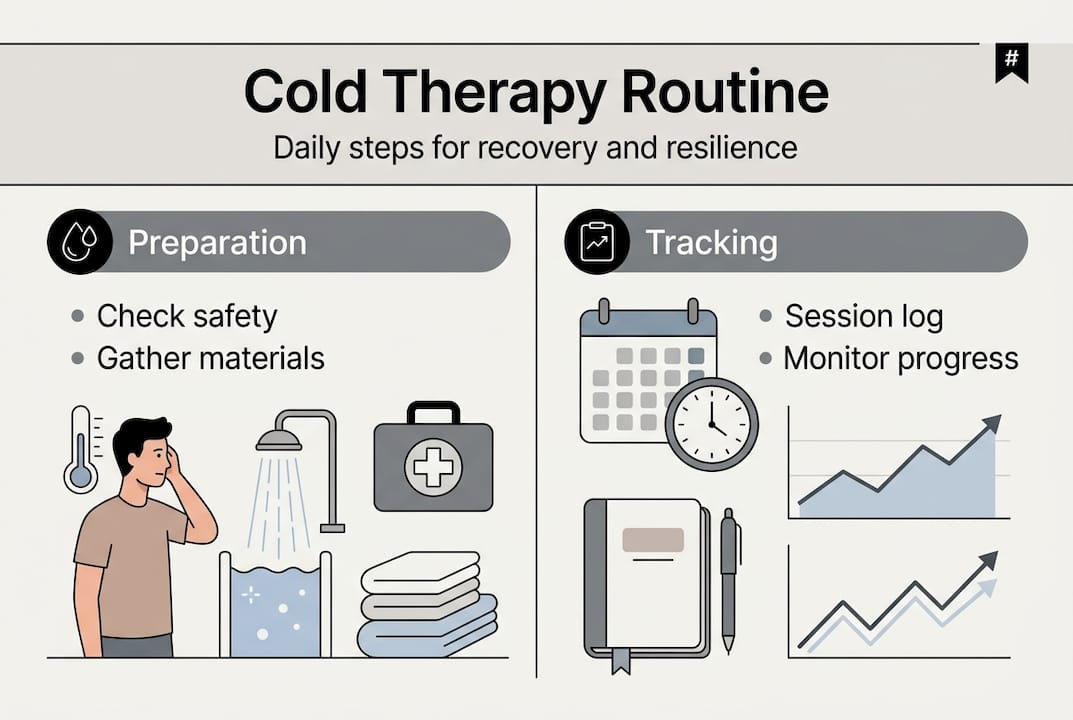
Pro Tip: Keep a simple session log. Note the date, water temperature, duration, and how you felt within 30 minutes after. After four weeks, patterns emerge that help you personalize your routine far more effectively than any generic plan.
Troubleshooting, common mistakes, and personalization
Even with a solid plan, most people hit friction points in the first month. Knowing what to watch for keeps you consistent instead of sidelined.
The most common mistakes to avoid:
- Going too intense, too soon. Cold shock is real. Pushing past your tolerance in week one doesn’t accelerate results. It increases dropout rates.
- Skipping safety protocols. No buddy, no timer, no temperature check. These shortcuts create unnecessary risk.
- Taking a hot shower immediately after. This blunts the thermogenic response and reduces the metabolic benefit of the session.
- Being inconsistent. Missing three or four days in a row resets much of the neurological adaptation you’ve built.
- Ignoring individual response. Individual tolerance varies significantly. What works for a competitive athlete may overwhelm someone just starting out.
Personalization is where long-term success lives. Use your session log to track mood, energy, recovery speed, and sick days. If you’re feeling chronically fatigued after sessions, reduce duration or raise the water temperature slightly. If you’re not noticing any effect after four weeks, you may need to lower the temperature or increase frequency.
For a structured framework on timing and recovery windows, the ice bath timing guide is a practical resource. And for a full breakdown of what recovery actually looks like week over week, the ice bath recovery guide covers the full picture.
Pro Tip: Aim for a minimum of 11 minutes of cold exposure per week, split across multiple sessions. This threshold is where research consistently shows meaningful improvements in mood, recovery, and immune function. You don’t need more than that to start seeing results.
Monitor these four markers to know your routine is working:
- Mood and mental clarity within 30 minutes post-session
- Muscle recovery speed after training days
- Sick days per month over a rolling 90-day window
- Stress response in high-pressure situations at work or in competition
When in doubt, consult reputable guides or a medical professional. Cold therapy is powerful, but it works best when it’s dialed in to your physiology, not someone else’s.
Elevate your cold therapy experience
You now have the knowledge to build a daily cold therapy routine that actually sticks. The next step is making sure your setup matches your ambition. A cold shower gets you started, but a purpose-built system gets you results that compound year after year.
At Coldture, we design cold plunges and recovery systems built for people who take their performance seriously. Whether you’re looking for a space-efficient solution or a full-featured plunge setup, our cold plunges collection covers every level. If flexibility matters to you, our portable cold plunges bring professional-grade cold therapy anywhere you need it. Every product is built to make your daily practice easier, more consistent, and more effective. Your routine is the foundation. The right equipment is what turns it into a long-term advantage.
Frequently asked questions
What is the minimum effective dose for daily cold therapy?
11 minutes per week, split across multiple sessions, is enough to produce meaningful health and recovery benefits. You don’t need long sessions to see results.
Can I take a hot shower right after cold therapy?
No. Wait 15 to 20 minutes after your session to allow natural rewarming, which activates thermogenesis and maximizes the metabolic response.
Is cold therapy safe for everyone?
No. People with cardiovascular disease, pregnancy, severe anemia, uncontrolled hypertension, Raynaud’s syndrome, or cold intolerance should not practice cold therapy without medical clearance.
What are the best times of day to do cold therapy?
Morning sessions between 6 and 8 AM are optimal for energy and focus. Avoid cold exposure immediately after strength training if muscle growth is your primary goal.
How do I track progress for physical and mental benefits?
Log each session and monitor mood, focus, recovery speed, and sick days over time. Individual tolerance varies, so personal tracking is the most reliable way to optimize your routine.
Share:
Cold therapy and immunity: science, methods, and results
Unlock Faster Recovery: Proven Strategies After Every Workout