


Most people assume cold exposure is just about toughness, a willpower contest between you and freezing water. That framing misses almost everything that matters. Deliberate cold exposure triggers a cascade of adaptive physiological responses that go far beyond discomfort tolerance. When practiced with intention and the right protocols, it reshapes how your body recovers, how your nervous system handles stress, and how your mind responds to pressure. This guide breaks down the science, the practical protocols, and the real-world benefits for athletes and wellness enthusiasts who want results, not just bragging rights.
Table of Contents
- What is deliberate cold exposure?
- How deliberate cold exposure affects your body
- Recovery benefits: Athletic performance and muscle soreness
- Deliberate cold exposure for mental resilience and mood
- Protocols, safety tips, and contraindications
- Enhance your cold exposure practice with Coldture
- Frequently asked questions
Key Takeaways
| Point | Details |
|---|---|
| Intentional cold matters | Deliberate exposure triggers adaptive benefits unlike accidental cold contact. |
| Recovery and resilience boost | Practiced properly, it speeds muscle recovery and builds mental toughness. |
| Safety first | Protocols must be personalized with attention to contraindications and never practiced alone. |
| Timing is critical | Cold exposure works best for endurance recovery and should be avoided right after resistance training for hypertrophy gains. |
| Practical routines available | Start with brief sessions in cold water, progressing with comfort and safety for optimal results. |
What is deliberate cold exposure?
Deliberate cold exposure is the intentional practice of exposing your body to temperatures below your thermal comfort zone for a specific duration and purpose. It is not the same as stepping outside without a jacket or rinsing off with cool water after a workout. The word “deliberate” is doing real work here. You are choosing the temperature, the duration, and the timing with a specific physiological outcome in mind.
Intentional practice below thermal comfort levels triggers physiological adaptations that accidental cold contact simply does not produce. Your body needs to register the cold as a meaningful stressor to initiate the adaptive response.
The three main methods used in deliberate cold exposure are:
- Cold water immersion (CWI): Submerging the body in cold water, typically in a cold plunge, ice bath, or cold tub. This is the most studied and most effective method for full-body adaptation.
- Cold showers: More accessible but less precise. Useful for beginners or as a daily maintenance tool.
- Whole-body cryotherapy: Brief exposure to extremely cold air in a specialized chamber. Less evidence-backed than immersion for recovery purposes.
For practical protocols, cold water immersion, showers, and cryotherapy each have different minimum weekly durations and temperature targets. Here is a quick reference:
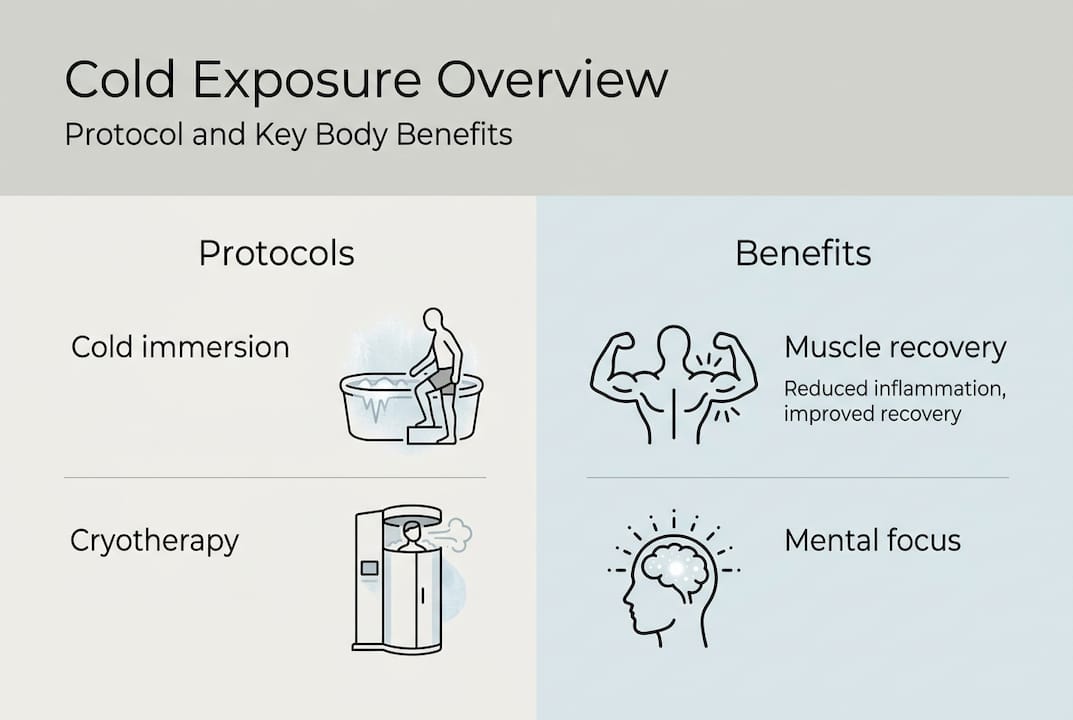
| Method | Temperature range | Recommended duration | Weekly minimum |
|---|---|---|---|
| Cold water immersion | 50 to 59°F (10 to 15°C) | 2 to 10 minutes | 11 minutes total |
| Cold shower | 60 to 68°F (15 to 20°C) | 2 to 5 minutes | 3 to 5 sessions |
| Cryotherapy | minus 166 to minus 220°F | 2 to 3 minutes | 2 to 3 sessions |
For a deeper look at how temperature affects your results, the cold plunge temperature guide covers the full spectrum from beginner to advanced protocols.
How deliberate cold exposure affects your body
When you enter cold water, your body does not just get cold. It launches a coordinated physiological response that touches your nervous system, your hormones, and your metabolism simultaneously.
The most immediate effect is sympathetic nervous system activation. Your heart rate spikes, blood vessels constrict, and your brain floods with norepinephrine and dopamine. Norepinephrine can increase by 200 to 300 percent with cold immersion. Dopamine rises significantly and, unlike the spike from other stimulants, it stays elevated for hours afterward. That sustained lift is why so many athletes report sharper focus and better mood for the rest of the day.
Shivering thermogenesis kicks in when your core temperature drops. Your muscles contract rapidly to generate heat, burning calories and activating brown adipose tissue (brown fat), which is metabolically active fat that generates heat rather than storing energy.
The concept that ties all of this together is hormesis:
“Hormesis is the principle that a controlled, mild stressor applied repeatedly produces a stronger, more resilient system. Cold exposure is one of the cleanest examples of hormesis in practice.”
Hormesis builds resilience through controlled stress, meaning each session is essentially a training stimulus for your stress response system, not just your muscles. The key benefits triggered by these mechanisms include:
- Reduced inflammation and faster tissue repair
- Improved circulation through repeated vasoconstriction and vasodilation cycles
- Enhanced mitochondrial efficiency over time
- Stronger autonomic nervous system regulation
For athletes specifically, understanding how these mechanisms translate to performance is covered in detail in cold therapy performance research and application guides.
Recovery benefits: Athletic performance and muscle soreness
The recovery case for cold exposure is strong, but it comes with important nuance that most people overlook.
Reduces DOMS and muscle damage, improves perceived recovery, and boosts power output after exercise. These are documented outcomes from controlled studies. Delayed onset muscle soreness (DOMS) is the deep ache you feel 24 to 72 hours after hard training. Cold immersion consistently reduces its severity and duration.
Here is where timing matters enormously:
| Training type | Cold exposure timing | Effect |
|---|---|---|
| Endurance or HIIT | Within 1 hour post-session | Positive: reduces soreness, speeds recovery |
| Resistance training | Immediately post-session | Negative: may blunt hypertrophy signals |
| Resistance training | 6 to 8 hours post-session | Neutral to positive: less interference |
Meta-analyses confirm benefits after endurance and high-intensity work, but the evidence is less consistent after resistance training. If building muscle mass is your primary goal, avoid cold immersion immediately after lifting.
A practical recovery protocol looks like this:
- Complete your training session fully before any cold exposure.
- Wait at least 30 minutes after endurance work before immersing.
- Target water temperature between 50 and 59°F for maximum effect.
- Stay in for 2 to 10 minutes depending on your tolerance and session intensity.
- Warm up naturally afterward, without a hot shower, to extend the adaptive response.
Pro Tip: If you train twice a day, use cold immersion after your first session to accelerate recovery before the second. Skip it after your final session of the day if you are focused on strength gains.
For more on structuring your sessions, ice bath recovery insights and athlete cold plunge routines offer practical frameworks built around real training schedules.
Deliberate cold exposure for mental resilience and mood
The mental benefits of cold exposure are not a side effect. For many practitioners, they become the primary reason to keep showing up.
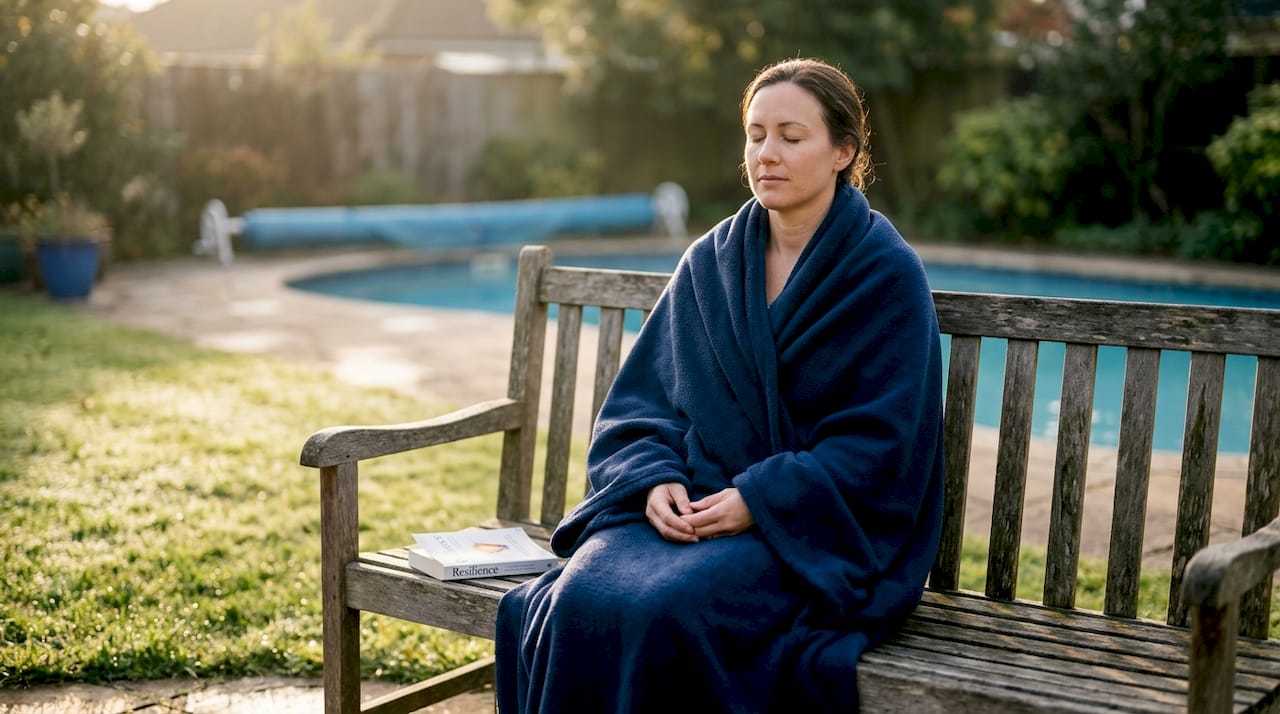
Every time you choose to enter cold water when your brain is screaming at you to stop, you are practicing a specific skill: voluntary control over your stress response. That skill transfers. Athletes who practice deliberate cold exposure consistently report stress tolerance via eustress, meaning they handle competitive pressure, training setbacks, and daily stressors with noticeably more composure.
The neurochemical picture supports this. The dopamine and norepinephrine surge from cold immersion produces:
- Sharper focus and mental clarity for 2 to 4 hours post-session
- Elevated mood that outlasts the session significantly
- Reduced anxiety through parasympathetic rebound after the initial sympathetic spike
- Potential adjunct benefits for people managing depression symptoms
Long-term data adds another layer. Improved sleep and quality of life are documented outcomes in extended trials, along with a 29 percent reduction in sickness absence among regular cold exposure practitioners. That last number is striking because it suggests systemic immune and resilience benefits that go well beyond the plunge itself.
Pro Tip: Practice nasal breathing during your cold immersion. Slow, controlled breaths through your nose activate the parasympathetic nervous system and help you stay calm and present, which is exactly the mental skill you are training.
To understand the deeper nervous system effects behind these mood and resilience gains, cold plunging emotional resilience breaks down the autonomic mechanisms in practical terms.
Protocols, safety tips, and contraindications
Getting the benefits of cold exposure requires more than just jumping in. Structure and safety awareness are what separate effective practice from unnecessary risk.
A beginner starter protocol:
- Start with cool showers at 68°F for 1 to 2 minutes, three times per week.
- Gradually lower temperature over two to three weeks as tolerance builds.
- Move to cold water immersion at 59°F for 2 to 3 minutes once comfortable.
- Progress toward 50 to 55°F for 5 to 10 minutes over four to six weeks.
- Aim for 11 minutes of total cold immersion per week across multiple sessions.
Safety is non-negotiable. Never practice solo or combine with hyperventilation breathing techniques before immersion. Hyperventilation lowers carbon dioxide levels and can cause sudden loss of consciousness in water, which is a life-threatening combination.
Key contraindications to know before starting:
- Cardiovascular disease or arrhythmia: Cold causes immediate blood pressure spikes and heart rate changes that can be dangerous.
- Raynaud’s disease: Cold triggers severe vascular spasms in the extremities.
- Pregnancy: Thermoregulation is altered and fetal risk is not worth the benefit.
- Peripheral neuropathy: Reduced sensation means you cannot accurately gauge cold damage.
- Active infections or fever: Cold exposure stresses an already taxed immune system.
Personalize your dose via tolerance and optimize results by pairing cold exposure with quality sleep and nutrition. Cold is a stressor, and your body needs adequate recovery resources to adapt from it. For detailed temperature and timing guidance, the cold plunge temperature and protocols resource is a practical starting point.
Enhance your cold exposure practice with Coldture
Building a consistent deliberate cold exposure practice is significantly easier when your setup removes friction and supports precision. Water temperature consistency, ease of entry, and reliable equipment are not luxuries. They are the difference between a practice you maintain and one you abandon.
Coldture designs cold plunges built specifically for the kind of intentional, protocol-driven practice this article describes. Whether you are recovering from high-intensity training, building mental resilience, or integrating cold into a broader wellness routine, the right equipment makes every session more effective and safer. If space or budget is a consideration, portable cold plunges offer the same performance benefits in a flexible format that fits home and travel use. Your practice deserves hardware that keeps up with your commitment.
Frequently asked questions
What are the key benefits of deliberate cold exposure for athletes?
Athletic recovery benefits include reduced muscle soreness and damage, improved perceived recovery, and boosted power output when cold exposure is timed correctly around training sessions.
How often should you practice deliberate cold exposure?
Protocols specify 11 minutes of total cold immersion per week, divided across several brief sessions in uncomfortably cold water, as the threshold for meaningful physiological adaptation.
Can cold exposure help build mental resilience?
Yes. It triggers controlled stress adaptation through eustress, boosting focus, alertness, and your tolerance for discomfort in ways that transfer directly to athletic and daily performance.
Who should avoid deliberate cold exposure?
People with cardiovascular disease, Raynaud’s, pregnancy, neuropathy, or active infections should avoid cold exposure due to significant safety risks that outweigh the potential benefits.
Is cold exposure better than passive recovery?
Contrasting study findings show cold exposure is not universally superior to passive recovery. It performs best after endurance and high-intensity work, and should be timed and personalized based on your specific training goals.
Share:
A Recovery Routine for Athletes: How to Recover Around Hard Training
Ice bath workflow for gyms: A practical guide for peak recovery