

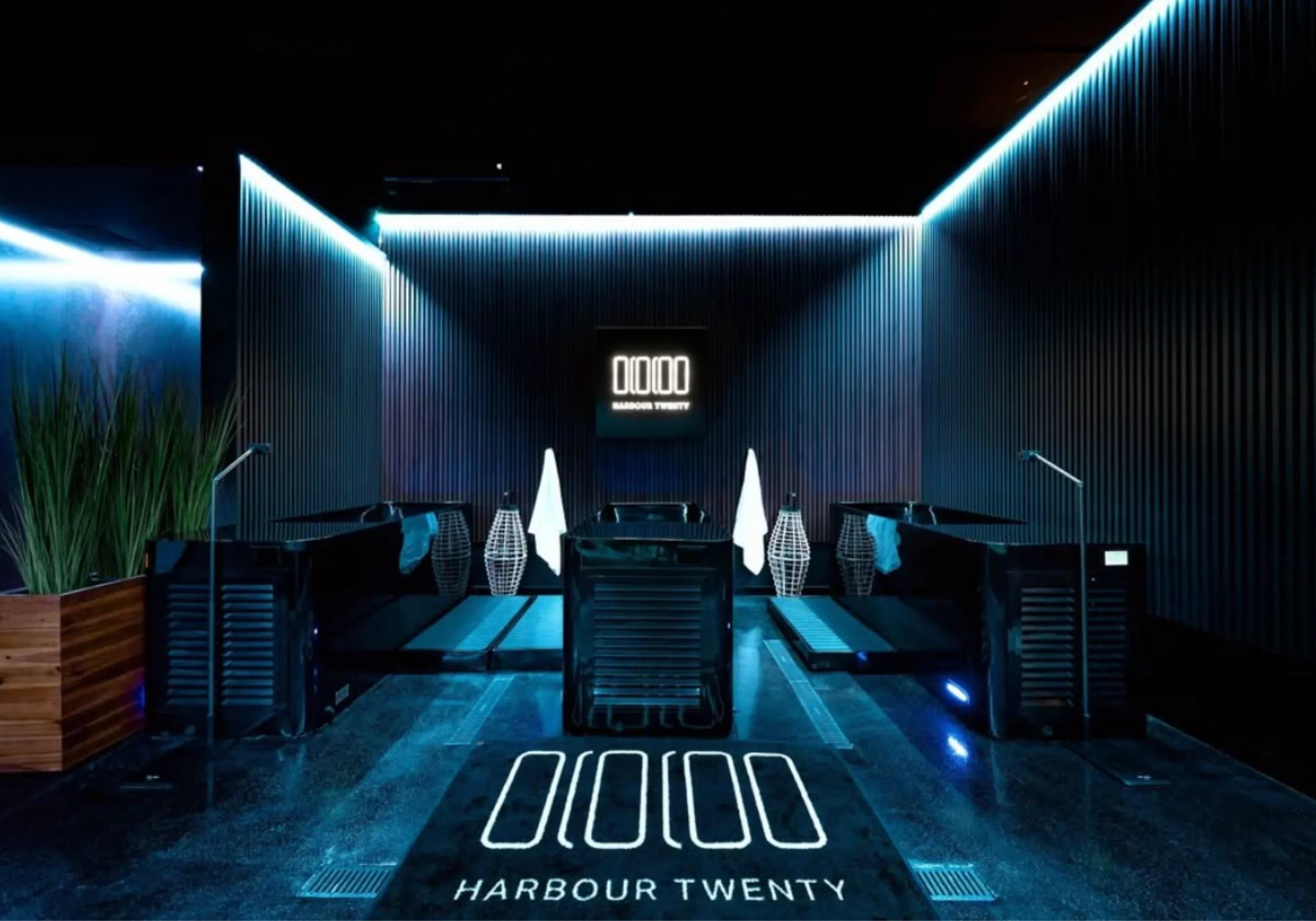
Running a recovery program that clients actually use takes more than buying a tub and filling it with ice. Gyms across North America are adding ice bath services because demand is real, retention improves, and the numbers work. Commercial-grade workflows can handle 20 to 50 daily users and deliver ROI in 4 to 12 months at $15 to $50 per session. This guide walks you through equipment selection, evidence-based protocols, workflow troubleshooting, and how to measure outcomes so you can build a recovery service that performs as hard as your clients do.
Table of Contents
- Choosing the right equipment for gym ice baths
- Protocols and timing for optimal ice bath recovery
- Troubleshooting common workflow pitfalls
- Measuring ROI and client outcomes
- Contrast therapy: Combining ice baths and saunas for enhanced recovery
- Our take: The real-world impact of ice bath workflows in gyms
- Explore commercial-grade cold plunges and recovery solutions
- Frequently asked questions
Key Takeaways
| Point | Details |
|---|---|
| Scalable equipment | Choose ice bath systems with chillers and UV/ozone filtration sized to daily user demand for optimal workflow. |
| Safety-first protocols | Set temperature, timing, and screening guidelines to maximize recovery and minimize risks for all gym clients. |
| ROI and impact tracking | Measure financial returns, client wellness outcomes, and utilize data on sickness reduction to prove value. |
| Contrast therapy options | Combine ice baths and saunas for endurance-focused recovery, but tailor use to athlete needs based on evolving evidence. |
| Continuous optimization | Regularly review workflow, gather feedback, and adjust equipment or protocols for client satisfaction and performance. |
Choosing the right equipment for gym ice baths
Equipment is where most gym owners either set themselves up for success or create daily headaches. The wrong setup means constant maintenance calls, client queues, and hygiene complaints. The right setup runs quietly in the background while your team focuses on coaching.
For commercial use, high-performance systems require at minimum a 1HP chiller, UV or ozone filtration, and enough capacity to handle 20 to 50 users per day without water quality degrading between sessions. These aren’t optional upgrades. They’re the baseline for any facility that takes ice bath benefits seriously at scale.
Here’s a quick comparison of single-tub versus multi-tub setups:
| Feature | Single tub | Multi-tub setup |
|---|---|---|
| Daily capacity | 10 to 20 users | 30 to 50+ users |
| Queue risk | High during peak hours | Low with staggered scheduling |
| Maintenance load | Concentrated | Distributed |
| Upfront cost | Lower | Higher, better ROI at scale |
| Hygiene control | Harder to maintain | Easier with dedicated cycles |
For boutique studios with lighter traffic, a single high-quality unit works well. For larger gyms with morning and evening rush periods, two or three tubs prevent the bottlenecks that frustrate clients and hurt retention.
Key features to prioritize when selecting equipment:
- Chiller capacity: 1HP minimum, 2HP preferred for high-volume facilities
- Filtration system: UV or ozone to maintain water quality between sessions
- Temperature range: Consistent 39 to 59°F (4 to 15°C) without fluctuation
- Drain and refill speed: Fast turnover matters during peak hours
- Build material: Commercial-grade stainless or reinforced acrylic for durability
Pro Tip: Build a weekly maintenance schedule into your staff SOPs from day one. Filtration checks, water chemistry tests, and surface wipe-downs should be non-negotiable tasks, not reactive fixes. Consistent hygiene is what keeps clients coming back and keeps liability low.
For a deeper look at what makes cold exposure effective for your clients, the ice bath recovery guide covers the physiology behind the practice.
Protocols and timing for optimal ice bath recovery
With the right equipment in place, the next step is setting up protocols that maximize recovery and safety. A tub without a protocol is just cold water. A tub with a well-designed protocol is a recovery tool your clients will schedule their week around.
The evidence-based benchmarks are clear. A solid post-workout protocol targets 50 to 59°F (10 to 15°C), sessions of 2 to 15 minutes, and a frequency of 3 to 4 times per week. That range covers most client needs, but how you apply it depends on the individual.

Here’s how to tier your protocols by experience level:
| Client level | Temperature | Duration | Frequency |
|---|---|---|---|
| Beginner | 55 to 59°F (13 to 15°C) | 2 to 5 min | 2 to 3x per week |
| Intermediate | 50 to 55°F (10 to 13°C) | 5 to 10 min | 3 to 4x per week |
| Advanced | 39 to 50°F (4 to 10°C) | 10 to 15 min | 3 to 4x per week |
Timing relative to workout type matters more than most gym owners realize. One of the most common mistakes is scheduling ice baths immediately after strength sessions. Cold post-lift blunts protein synthesis, which means your clients could be undermining the muscle-building work they just did. Delay ice baths 4 to 6 hours after resistance training.
For endurance sessions, cardio, or competition days, cold immersion immediately post-workout is appropriate and beneficial. The inflammatory response you want to reduce after a long run is different from the one you want to preserve after a squat session.
A structured onboarding sequence for new users:
- Health screening form covering cardiovascular history and cold sensitivity
- Staff-guided first session at beginner temperature and duration
- Written protocol card with recommended progression
- Check-in at session three to assess tolerance and adjust
- Graduation to self-directed sessions once the client demonstrates safe entry and exit
Pro Tip: Screen every new client for heart conditions before their first session. Post a visible timer and a maximum unsupervised session limit of 15 minutes. These two steps alone eliminate most liability exposure.
For coaches building individualized programs, the cold plunge routine resource covers athlete-specific scheduling. And if clients ask about temperature specifics, the ice bath temperature guide explains the tradeoffs at each range.
Troubleshooting common workflow pitfalls
Even with planning, gyms encounter obstacles. Here’s how to keep your workflow running smoothly.
The three most common failure points in gym ice bath programs are queue buildup, water hygiene issues, and safety incidents. Each one is preventable with the right systems in place.
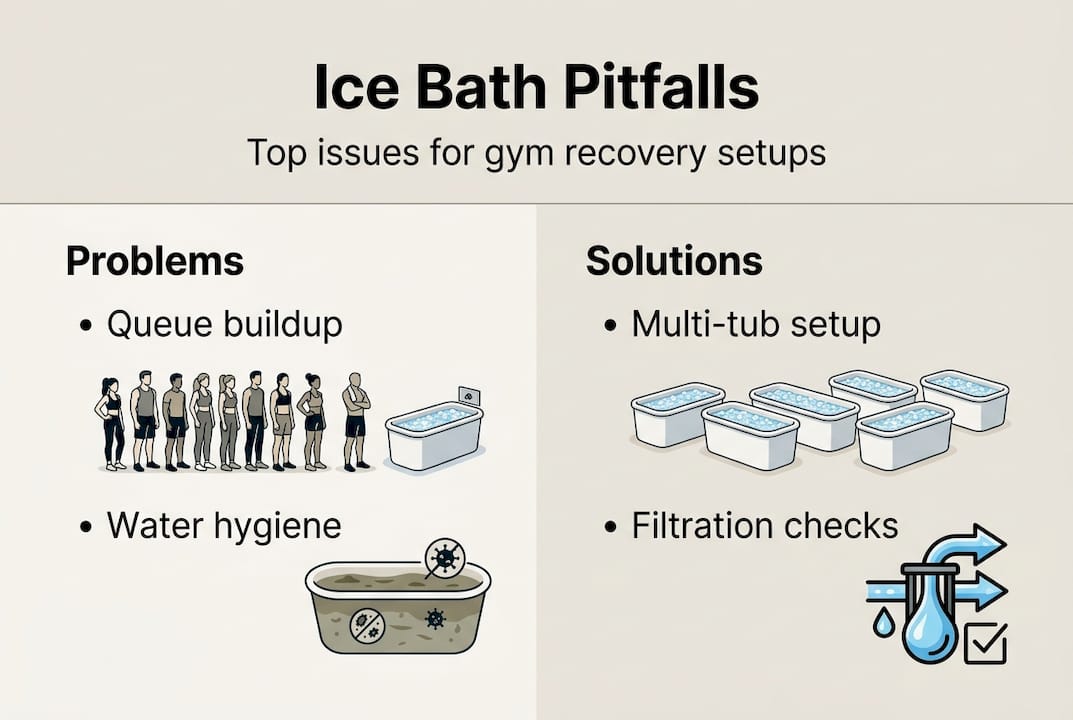
Queue management becomes a problem when peak-hour demand exceeds tub capacity. The fix is simple: implement a booking system. Even a basic sign-up sheet at the front desk reduces walk-up congestion. For larger facilities, a digital scheduling tool integrated with your gym management software works better. Single tubs cause client queues and poor maintenance breeds bacteria, two issues that compound quickly in high-traffic environments.
Hygiene failures are the fastest way to lose client trust. Water that looks cloudy, smells off, or tests outside safe pH ranges signals a maintenance gap. Build these non-negotiables into your operations:
- Test water chemistry daily (pH 7.2 to 7.8, sanitizer levels within range)
- Run filtration cycles between every session during peak hours
- Drain and deep clean tubs weekly, not monthly
- Require clients to shower before entering
- Post hygiene standards visibly near the tub area
Safety risks are manageable with screening and supervision. The most serious incidents involve clients with undiagnosed cardiovascular conditions or those who stay in too long without monitoring.
Critical safety note: Never allow unsupervised sessions for first-time users. Post a 15-minute maximum session limit at every tub. Clients with known heart conditions, hypertension, or Raynaud’s disease should get medical clearance before using cold immersion. These aren’t suggestions. They’re the standard of care.
For more context on how recovery science connects to performance outcomes, the recovery and performance insights resource is worth sharing with your training staff.
Measuring ROI and client outcomes
With workflows optimized, it’s time to look at the results you can expect for your clients and your bottom line.
The business case for ice bath recovery is stronger than most gym owners expect. Regular cold immersion users show a 29% reduction in sickness absence, which translates directly to fewer canceled sessions and more consistent revenue. At $30 to $50 per session, a single commercial tub running at 70% capacity pays for itself well within the first year.
Key metrics to track from day one:
- Session volume: Daily and weekly tub utilization rate
- Revenue per session: Track against your target pricing tier
- Client retention: Compare churn rates before and after adding recovery services
- Recovery feedback: Simple 1 to 5 rating after each session, collected digitally or on paper
- Sickness and cancellation rates: Month-over-month comparison for regular users
- Net Promoter Score: Ask clients if they’d recommend your recovery program
The feedback loop matters as much as the financial data. Clients who feel heard about their recovery experience stay longer and refer more. A short post-session survey, even just two questions, gives you the signal you need to adjust protocols, staffing, and scheduling.
For a broader view of what a structured recovery program can deliver, the complete recovery overview covers outcomes across different client populations.
Contrast therapy: Combining ice baths and saunas for enhanced recovery
For gyms wanting to go further, combining ice baths with saunas offers unique recovery advantages.
Contrast therapy alternates between hot and cold exposure, typically sauna at 170 to 195°F followed by cold immersion at 50 to 59°F, repeated for two to four cycles. The theory is that rapid temperature shifts drive circulation harder than either modality alone. Evidence for contrast therapy is mixed overall, but it’s clearly preferred for endurance athletes over those focused on hypertrophy.
Here’s how the two approaches compare:
| Modality | Best for | Avoid if |
|---|---|---|
| Ice bath only | Strength recovery (delayed), general inflammation | Immediately post-lift |
| Contrast therapy | Endurance recovery, competition days | Hypertrophy-focused programs |
| Sauna only | Cardiovascular health, relaxation | Acute injury or dehydration |
For gyms, the appeal of contrast therapy goes beyond physiology. It’s a premium experience that justifies higher session pricing and increases time-on-site. Members who use both sauna and cold plunge tend to visit more frequently and report higher satisfaction.
Practical tips for adding contrast therapy to your facility:
- Place sauna and cold plunge within 20 feet of each other to reduce transition time
- Recommend 3 to 4 minutes in the sauna followed by 2 to 3 minutes in the cold plunge
- Limit to two or three cycles per session for most clients
- Monitor individual response, especially in the first few sessions
- Avoid recommending contrast therapy on heavy strength training days
For a full breakdown of how to structure contrast sessions, the contrast therapy guide is a practical starting point.
Our take: The real-world impact of ice bath workflows in gyms
Here’s what we’ve learned working with gym owners across North America: the facilities that get the most out of ice bath programs are the ones that treat protocols as living documents, not laminated signs on the wall.
One-size-fits-all approaches fall short because client populations vary widely. A boutique studio serving competitive triathletes needs a completely different protocol cadence than a commercial gym with a mix of recreational lifters and weekend warriors. The science gives you the framework. Your clients give you the calibration.
What works in busy gyms is simplicity at the point of use combined with sophistication behind the scenes. Clear signage, easy booking, and fast staff response to hygiene issues matter more to daily retention than having the most advanced chiller on the market.
The uncomfortable truth is that most ice bath programs underperform not because of bad equipment but because of inconsistent staff training and no feedback loop. Use cold strategically: post-endurance and competition for recovery, delayed post-strength, and always monitored for individual response. Build that into your staff culture, not just your intake forms.
For coaches who want to go deeper on structuring client-specific programs, athlete recovery routines offers a practical framework worth bookmarking.
Explore commercial-grade cold plunges and recovery solutions
You now have the framework to build an ice bath workflow that delivers real results for your clients and your business. The next step is finding equipment that matches your facility’s scale and ambitions.
Coldture’s lineup of commercial cold plunges is built for exactly this environment: high daily usage, easy maintenance, and the kind of performance that keeps clients coming back. If you’re evaluating flexible options, our portable cold plunges work well for facilities that need versatility. And if contrast therapy is on your roadmap, explore our commercial outdoor saunas to complete the recovery experience your members are asking for.
Frequently asked questions
What’s the recommended session duration for gym ice baths?
Beginners should start with 2 to 5 minutes, while experienced users can work up to 15 minutes at 50 to 59°F (10 to 15°C). Always match duration to the client’s experience level and health history.
How many clients can a commercial ice bath setup serve daily?
Most high-capacity systems support 20 to 50 sessions per day, depending on the number of tubs and how well maintenance cycles are managed between peak hours.
Should ice baths be used immediately after strength workouts?
No. Wait 4 to 6 hours after resistance training because cold post-lift blunts protein synthesis and can reduce the muscle adaptation your clients are training for.
What measurable outcomes should gyms track for ROI?
Track session volume, revenue per session, client retention, and sickness rates. Facilities with consistent programs report a 29% reduction in sickness absence among regular users.
Is contrast therapy more effective than ice baths alone?
Evidence is mixed, but contrast therapy is clearly preferred for endurance recovery. It’s not recommended for clients whose primary goal is muscle hypertrophy.
Recommended
- What is ice bath recovery: a complete guide for 2026 – Coldture Wellness
- Why use ice baths: maximize recovery and performance – Coldture Wellness
Share:
Deliberate cold exposure: Boost recovery and resilience
Why muscle recovery matters: boost performance & prevent injuries