

Heat exposure is one of the most underrated tools in your wellness arsenal. Most people think about heat as something to avoid, a risk to manage rather than a resource to use. But the role of heat exposure in wellness is far more significant than that. Research now links regular heat therapy to lower cardiovascular disease risk, reduced dementia rates, better sleep, and measurable improvements in mood. This article breaks down the biology behind those benefits, the science that supports them, and how to actually put heat to work in your routine without overdoing it.
Key takeaways
| Point | Details |
|---|---|
| Heat triggers cellular repair | Heat stress activates protective proteins that support cellular health and reduce inflammation. |
| Sauna frequency matters | Using a sauna 4 to 7 times per week is linked to dramatically lower cardiovascular and dementia risk. |
| Mental health benefits are real | Whole-body heat exposure has shown antidepressant effects lasting weeks in clinical trials. |
| Safe protocols exist | Proper hydration, cool-down periods, and session limits make heat therapy accessible for most healthy adults. |
| Heat complements exercise | Heat therapy amplifies recovery and cardiovascular adaptation but does not replace physical activity. |
The biology behind heat exposure benefits
When your body temperature rises significantly during a sauna session or a hot bath, it does not just make you sweat. It triggers a cascade of physiological changes that your body uses to protect and repair itself. Understanding these mechanisms is what separates deliberate heat therapy from simply being uncomfortable.
The most studied mechanism involves heat shock proteins (HSPs). Heat stress induces HSP production that supports cellular repair and proteostasis, the process by which your cells maintain proper protein folding and prevent the kind of protein aggregation linked to neurodegenerative diseases. HSP70 and HSP90 in particular act as molecular chaperones, refolding damaged proteins and tagging misfolded ones for disposal. This is not a minor housekeeping function. Protein misfolding is a key driver of aging-related disease, which is why consistent heat exposure may have longevity implications beyond what you would expect from sweating.
On the cardiovascular side, heat exposure works almost like a passive cardio session. Your heart rate climbs, blood vessels dilate, and your body works to dissipate heat through circulation. Over time, regular sauna use expands plasma volume in ways similar to aerobic training, reducing cardiac preload and improving overall cardiovascular fitness. Additionally, sauna bathing improves endothelial function and reduces arterial stiffness, which are two markers that matter enormously for long-term heart health. Blood pressure typically drops in the hours after a session as well.
There is also an anti-inflammatory dimension worth noting. Frequent sauna use inversely correlates with serum C-reactive protein levels, a reliable marker of systemic inflammation. Lower inflammation means lower background risk for everything from cardiovascular events to cognitive decline.
Finally, heat exposure modulates the autonomic nervous system in a way that builds long-term resilience. Exposure acutely spikes sympathetic activity, but the parasympathetic rebound that follows appears to improve autonomic flexibility over time. Think of it as training your nervous system to recover faster from stress, not just thermal stress, but psychological stress too.
- Heat shock proteins protect against protein misfolding linked to aging and neurodegeneration
- Plasma volume expansion from heat mimics cardiovascular benefits of aerobic exercise
- Improved endothelial function reduces arterial stiffness and blood pressure over time
- Lower C-reactive protein levels indicate reduced systemic inflammation
- Parasympathetic rebound after heat exposure trains autonomic recovery
Pro Tip: If you are new to heat therapy, start with shorter sessions at moderate temperatures and build up gradually. Your body needs time to adapt before these protective mechanisms fully activate.
What the research says about cardiovascular and brain health
The most compelling evidence for heat exposure and health comes from a single extraordinary dataset: the Kuopio Ischemic Heart Disease (KIHD) study, a Finnish cohort that followed over 2,300 men for more than 20 years. The numbers it produced are striking enough to change how you think about your wellness routine.
| Sauna Frequency | Cardiovascular Benefit | Additional Risk Reduction |
|---|---|---|
| Once per week (baseline) | Reference group | Reference group |
| 2 to 3 times per week | Moderate risk reduction | Moderate reduction in all-cause mortality |
| 4 to 7 times per week | 63% lower sudden cardiac death risk | 40% lower all-cause mortality |
| 4 to 7 times per week | 66% lower dementia risk | 65% lower Alzheimer’s risk |
Men using sauna 4 to 7 times per week showed a 40% lower all-cause mortality and a 63% lower risk of sudden cardiac death compared to once-weekly users. That is not a marginal improvement. That is the kind of number you normally see from pharmaceutical interventions, not lifestyle practices.
The brain health data is equally impressive. Frequent sauna use is associated with a 66% lower risk of all-cause dementia and a 65% lower risk of Alzheimer’s disease specifically, even after adjusting for cardiovascular and lifestyle confounders. Given that dementia prevention remains one of the least solved problems in medicine, this finding deserves serious attention.
The dose-response relationship in the data is also worth studying. The benefits do not plateau at two or three sessions per week. They keep climbing with frequency, which suggests the adaptations are cumulative rather than one-time. Duration and temperature also matter. Sessions of 15 to 20 minutes at temperatures around 174 to 194°F appear to produce the most consistent results.
That said, this research comes with real limitations. Cardiologist Dr. Laukkanen notes strong epidemiological evidence for sauna benefits but cautions that healthy user bias may confound results and calls for more randomized controlled trials. People who use saunas regularly tend to have other healthy habits, so attributing all benefit to heat alone requires caution. Still, the biological mechanisms align with the observed outcomes, which makes the connection plausible even if not yet fully proven.
For people without access to a traditional sauna, there is good news. Hot baths at 104 to 108°F for 20 to 30 minutes produce similar cardiovascular and heat shock protein responses in smaller trials. Infrared saunas operate at lower temperatures but penetrate tissue more deeply, producing comparable core temperature elevation. The mechanism matters more than the specific format.
Can heat improve mental health?
The question of whether heat can improve mental health has moved from wellness speculation to legitimate clinical inquiry. And the early answers are genuinely surprising.
One of the most compelling findings comes from a 2016 JAMA Psychiatry randomized clinical trial. Whole body hyperthermia reduced depression scores significantly for at least six weeks after a single treatment session in adults with major depressive disorder. Six weeks. From one session. That kind of duration from a non-pharmacological intervention is rare, and it points to mechanisms that go deeper than temporary mood elevation.
Researchers believe serotonergic neurons in the skin and gut may play a role, potentially explaining how skin temperature changes translate into mood shifts. Heat exposure also appears to increase brain-derived neurotrophic factor (BDNF), a protein associated with neuroplasticity, learning, and the ability to buffer stress over time. Higher BDNF levels are consistently linked to lower rates of depression and better cognitive resilience.
“Heat therapy acts as a hormetic stressor, triggering beneficial adaptations without causing harm when dosed properly.” (Cold exposure and heat therapy longevity insights)
Sleep quality is another underappreciated benefit. The parasympathetic rebound following heat exposure can accelerate the body’s natural temperature drop at night, a signal the brain uses to initiate deep sleep. People who sauna in the evening frequently report faster sleep onset and longer slow-wave sleep cycles.
There are also psychosocial dimensions that science is only beginning to quantify. Psychosocial factors modulate heat response significantly, with higher health literacy and social support reducing symptom burden during heat exposure. In Finnish culture, the sauna is a space of community, conversation, and decompression. That social ritual likely amplifies the biological benefits by compounding physiological calm with genuine psychological safety.
Here is what the emerging mental health research points to:
- Whole body hyperthermia produces antidepressant effects lasting weeks, not hours
- BDNF release during heat therapy supports neuroplasticity and stress resilience
- Core temperature drop after heat promotes better deep sleep onset
- Serotonergic pathways in the skin may mediate mood shifts from heat exposure
- Social and contextual factors amplify the mental wellness benefits of sauna use
How to safely add heat therapy to your routine
Getting the benefits of heat exposure and health without tipping into heat stress and wellness risk is about understanding the parameters that make it therapeutic. Here is a practical framework for doing it right.
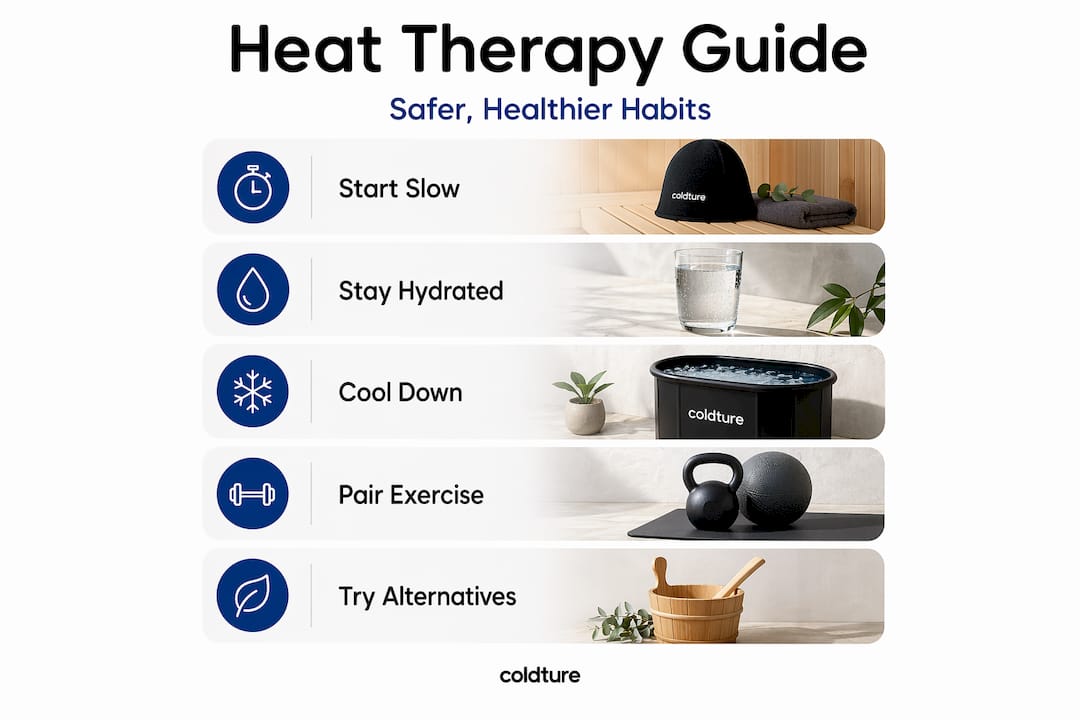
1. Start with frequency and duration, not intensity. Research supports sessions of 15 to 20 minutes at 174 to 194°F, two to three times per week for beginners. As your tolerance builds over several weeks, working up to four or more sessions per week is where the most significant data sits. Check the sauna health checklist Coldture put together for a practical session-by-session guide.
2. Hydration is non-negotiable. You lose roughly a pint of water per session in a traditional sauna. Drink 16 to 24 oz of water before you go in, and replenish with electrolytes after. Dehydration blunts every benefit and dramatically increases cardiovascular strain.
3. Know who should proceed with caution. Pregnant women, people with uncontrolled hypertension, those with certain heart conditions, and anyone with a known heat intolerance should consult a physician before starting heat therapy. Heat safety guidelines often underestimate risks for vulnerable populations due to cumulative and nighttime exposure effects.
4. Cool down deliberately. A cool shower or a few minutes in ambient air after your session lets your autonomic nervous system practice that parasympathetic recovery response. If you have access to contrast therapy (alternating heat and cold), this is where the benefits compound significantly.
5. Pair heat with your existing routine. Heat therapy complements exercise but does not replace it. Use sauna after strength training or cardio to amplify recovery, or on rest days to maintain cardiovascular stimulus without additional muscular load.
6. If you do not have a sauna, use alternatives. Hot baths at 104 to 108°F, infrared saunas, and hot yoga all produce meaningful thermal stress. The key is consistent elevation of core body temperature for a sustained period, not a specific format.
Pro Tip: Cognitive resilience to heat improves with practice. Reframing thermal discomfort as a challenge rather than a threat, combined with steady pacing and hydration, can meaningfully extend your effective session time and amplify mental health benefits.
My take on heat therapy’s place in wellness
I came to heat therapy through cold, which might seem backward. Building Coldture around ice baths and cold plunges taught me that deliberate thermal stress, applied with intention, creates real physiological and psychological change. When we expanded into saunas in 2025, it was not a pivot. It was the logical completion of something we already understood.
What I’ve noticed is that heat is chronically undervalued in wellness conversations because it is so familiar. Everyone has been warm. It does not feel like a practice until you frame it correctly. The people I’ve seen get the most out of sauna use are the ones who treat it as a protocol, not a luxury. They track frequency, they hydrate deliberately, and they combine it with cold and sleep rather than treating it as a standalone indulgence.
The mental health angle is what I find most exciting right now. The idea that a single whole-body heat session can shift depression markers for six weeks deserves far more mainstream attention than it gets. I think we are in the early stages of understanding heat’s role in mood regulation, and the research will catch up to what practitioners and athletes have been experiencing for decades.
My honest advice: do not wait for a perfect setup. A hot bath, done consistently, at the right temperature and duration, is a real intervention. Start there. Build the habit before you build the infrastructure.
— Daniel
Build your heat therapy practice with Coldture

Coldture’s sauna line was built with the same standard we brought to cold plunge design: performance you can feel, built to last. Whether you are setting up a dedicated wellness space at home or looking for a backyard solution that works year-round, the outdoor sauna collection has options for every setup. For those who want indoor and outdoor flexibility, the full sauna lineup covers both. Pair your sessions with Coldture’s dry mat for a complete contrast therapy setup that transitions seamlessly from heat to recovery. These are not impulse buys. They are long-term investments in how you feel every day.
FAQ
What is the role of heat exposure in wellness?
Heat exposure triggers protective biological responses including heat shock protein production, cardiovascular adaptation, and autonomic nervous system regulation. These mechanisms collectively support heart health, brain function, recovery, and mental well-being when heat is applied consistently and safely.
How often should you use a sauna for health benefits?
The strongest research benefits appear at four to seven sessions per week, with sessions of 15 to 20 minutes at 174 to 194°F. Even two to three sessions per week produces measurable cardiovascular and mood benefits compared to infrequent use.
Can heat exposure help with depression?
Yes, clinical evidence supports this. A 2016 JAMA Psychiatry trial found that whole-body hyperthermia reduced depression scores for at least six weeks after a single session. Mechanisms likely involve serotonergic pathways, BDNF release, and autonomic nervous system recovery.
What are safe alternatives if you do not have a sauna?
Hot baths at 104 to 108°F held for 20 to 30 minutes produce cardiovascular and heat shock protein responses comparable to traditional saunas based on published research. Infrared saunas and hot yoga are also practical formats for achieving therapeutic thermal stress.
Who should avoid or limit heat exposure?
Pregnant women, individuals with uncontrolled hypertension or certain heart conditions, and those with known heat intolerance should consult a physician before starting heat therapy. Standard temperature guidelines can underestimate cumulative heat risk, particularly for vulnerable populations.
Share:
Your Energy Recovery Checklist for Peak Performance
The Concept of Luxury Wellness: What It Really Means