

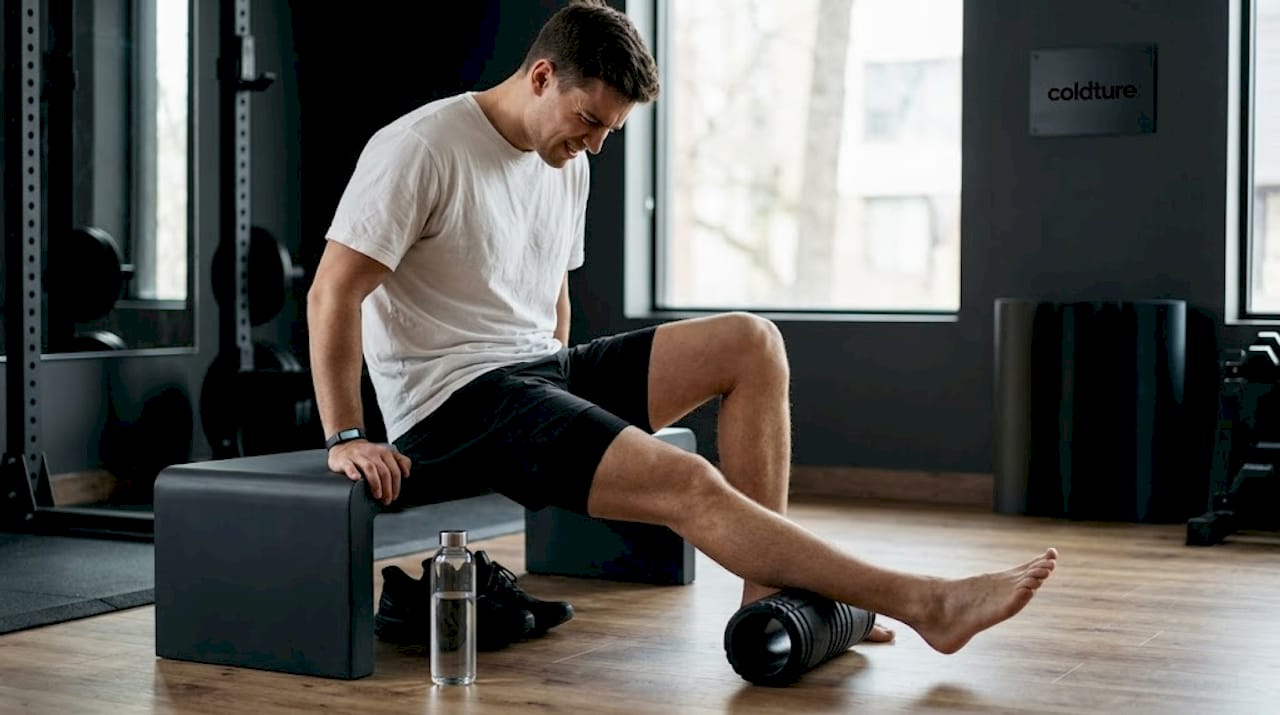
Most athletes and active people train hard enough. Recovery is where they lose ground. Missing even one pillar — hydration, sleep, pacing, or modality timing — can set back weeks of work. A structured energy recovery checklist removes the guesswork, so nothing critical gets skipped. This guide breaks down every element of an effective recovery plan, from post-workout nutrition windows to cold immersion protocols, with evidence-backed specifics your training already deserves.
Key takeaways
| Point | Details |
|---|---|
| Sleep is your top return | Consistent, high-quality sleep drives more recovery than any modality or supplement. |
| Hydration goes beyond water | Replace 120–150% of fluid lost with electrolyte-rich drinks to fully rehydrate after training. |
| Cold therapy requires strategy | Use cold water immersion during high-load periods, not routinely, to avoid blunting strength adaptations. |
| Pacing protects your energy envelope | Operating at 80% of perceived capacity on good days prevents crashes and maintains long-term consistency. |
| Recovery is a learnable skill | Treating recovery as a structured practice, not an afterthought, compounds into measurable performance gains. |
1. Your energy recovery checklist: foundational priorities
Before you add ice baths or compression boots, get the fundamentals right. These are the highest-return items on any energy recovery checklist, and skipping them makes everything else less effective.
- Sleep quality and consistency. Sleep is where tissue repairs, hormones reset, and neural patterns consolidate. Aim for 7–9 hours with a consistent sleep and wake time. Poor sleep hygiene undercuts every other recovery tool you own.
- Post-workout nutrition timing. The window matters. Consuming protein and carbohydrates within 30–60 minutes of a hard session accelerates glycogen resynthesis and reduces muscle protein breakdown. Target 20–40g of protein and 0.5–0.8g of carbohydrates per kilogram of body weight.
- Smart rehydration. Plain water is not enough after intense training. Athletes should replace 120–150% of body mass lost during exercise with electrolyte-rich fluids within 2–4 hours, using sodium concentrations of 460–690 mg/L.
- Active recovery movement. Light movement the day after hard training, think walking, cycling, or yoga at under 60% of max heart rate, clears metabolic waste and reduces stiffness without adding training stress.
- Stress and sleep hygiene. Mental stress activates the same physiological stress pathways as physical exertion. Managing cortisol through breathwork, screen limits before bed, and consistent wind-down routines protects the hormonal environment needed for recovery.
Pro Tip: If you can only pick one habit to add this week, prioritize your sleep window before any recovery modality. A cold plunge at 10 AM does not offset four hours of broken sleep.
2. Hydration and nutrition: the non-negotiable checklist items

This section is where most people underestimate specificity. Vague advice to “drink water” and “eat protein” leaves too much on the table.
Hydration protocol. Weigh yourself before and after training. For every kilogram of body mass lost, drink 1.2 to 1.5 liters of fluid that includes meaningful sodium content. Sports drinks, coconut water with added sodium, or electrolyte tablets all meet this need. Thirst alone is a lagging indicator, not a reliable signal during recovery.
Post-workout nutrition targets. Whole food sources beat supplements when you can manage them. Chicken and rice, Greek yogurt with fruit, or a protein shake plus a banana all hit the macronutrient windows that matter. Pairing hormonal balance through nutrition with consistent meal timing creates a recovery environment your training can actually build on.
Pre-sleep nutrition. Casein protein before bed has a strong evidence base for overnight muscle protein synthesis. 30–40g consumed 30 minutes before sleep consistently shows benefits in muscle repair literature.
Pro Tip: Track body weight before and after three to four training sessions to establish your personal sweat rate. Once you know your numbers, rehydration becomes a precise protocol, not guesswork.
3. Pacing and energy management
Pacing is the most underrated strategy in any energy optimization guide, and it applies to every athlete, not just those managing chronic illness.
The core principle is simple: recovery is not passive. Waiting until you feel exhausted before resting is a recovery strategy that guarantees you are already behind. Scheduling rest before you feel depleted keeps your energy envelope stable and your adaptation curve rising.
For those managing chronic fatigue conditions like ME/CFS or POTS, clinical guidelines recommend operating at 50–70% capacity with activity increments capped at 10–20% to prevent post-exertional symptom crashes. That principle scales directly into athletic training. High performers and people rehabbing injuries alike benefit from building in mandatory deload weeks every third or fourth training block.
The “80% rule” takes this further. Using 80% of perceived energy capacity rather than pushing to 100% on strong training days maintains a physiological buffer. That buffer is what allows you to show up consistently without accumulating fatigue debt that derails your whole week.
Pro Tip: Before each training day, score your readiness on a 1–10 scale. If you score below 6, treat that session as active recovery. Protecting your buffer on low-readiness days is not weakness. It is the strategy.
4. Cold therapy, compression, massage, and heat
This is where athletes often overcomplicate things or misuse tools they paid good money for. The right modality at the right time accelerates recovery. The wrong modality at the wrong time can slow your progress.
| Modality | Best use case | Caution |
|---|---|---|
| Cold water immersion | High-load blocks, tournaments, back-to-back game days | Avoid after hypertrophy-focused lifting; blunts muscle growth signals |
| Compression garments | Post-training for circulation and soreness reduction | Minimal direct strength recovery benefit |
| Massage or foam rolling | Reducing perceived tightness, improving range of motion | Not a substitute for sleep or nutrition |
| Heat therapy / sauna | Easy days, relaxation, mobility prep | Avoid immediately post-injury |
| Contrast therapy | Tournament recovery, end of high-intensity blocks | Requires access to both cold and heat sources |
Cold water immersion specifics. The optimal protocol is 8–12 minutes at 8–12°C. This range meaningfully reduces delayed onset muscle soreness and creatine kinase markers at 24 hours post-exercise. What it does not do is improve acute muscle strength recovery or explosive power. Know what you are using it for before you jump in.
One finding worth understanding: partial immersion is as effective as full-body immersion for reducing muscle damage markers. If a full cold plunge is not accessible, a cold water foot and leg bath can still deliver significant benefit for lower-body training recovery.
The strategic timing of CWI matters most when your goal is hypertrophy. If you are in a muscle-building phase, save the cold for tournament weeks or high-volume training blocks. Use heat and contrast therapy on easy days to support relaxation and tissue mobility without interfering with the anabolic signals your training depends on.
- Cold water immersion: reduce soreness, limit use post-strength training
- Compression: wear post-workout for 1–2 hours for circulation support
- Foam rolling: 5–10 minutes pre and post-session for mobility
- Sauna or heat: schedule on rest or easy days, not immediately after heavy lifting
- Contrast therapy: alternate 1–2 minutes cold, 10–15 minutes heat for end-of-block recovery
You can find detailed protocols for cold plunge timing for athletes to sharpen how you sequence these tools within a training week.
5. Building your weekly recovery template
A recovery plan only works when it is tied to specific days and sessions. “I’ll recover when I need to” is not a plan. It is a gap in your program.
Here is how to build a repeatable weekly template:
- Training days: Prioritize post-workout nutrition within 60 minutes, active cool-down for 10 minutes, and rehydration protocol based on sweat rate data.
- High-intensity days: Add cold water immersion or compression post-session. Log HRV or a readiness score that evening.
- Easy or active recovery days: Schedule heat therapy or a sauna session, 20–30 minutes of low-intensity movement, and a focused wind-down routine before sleep.
- Rest days: Full sleep optimization. No alarm if possible. Use this day for mental recovery through breathwork, journaling, or low-stimulation activities.
- Deload weeks: Every third or fourth week, drop training volume by 40–60%. This is where supercompensation actually happens.
Tracking matters here. Heart rate variability is the most practical readiness tool available to athletes outside a lab setting. A consistent drop in HRV over three to five days is a signal to reduce load, not push through. Subjective readiness scales work just as well if you are honest with yourself. The goal of this energy recovery guide approach is iteration over time, not perfection from day one.
For deeper context on how muscle recovery affects performance, Coldture has covered the mechanics behind why each of these template elements moves the needle.
Pro Tip: Review your recovery template every four weeks alongside your training data. If performance is flat despite hard work, the issue is almost always under-recovery, not under-training.
What I’ve learned about recovery that most articles won’t tell you
I came to recovery out of necessity. A knee injury during training stripped away everything I thought I knew about building fitness and forced me to learn pacing from scratch.
What I discovered is that recovery is a structured performance skill, not an absence of training. Most people treat it as a passive gap between workouts. The athletes I’ve seen make the most consistent progress treat it as deliberately as their hardest sessions.
The misconception that kills more progress than anything else is the idea that pushing through fatigue is discipline. Sometimes it is. More often, it is just debt accumulation. You can push through a lot of warning signs for a few weeks. Then something gives. A small injury, a prolonged plateau, a crash in motivation. The body keeps score whether you track it or not.
The 80% rule changed how I approach good training days entirely. My instinct, and I think most athletes’ instinct, is to take advantage of feeling great by going harder. What I’ve learned is that protecting a buffer on your best days is what creates the consistency that compounds over months and years.
The same logic applies to cold therapy. I used to jump into cold after every single session thinking I was accelerating recovery across the board. The evidence eventually caught up with what some coaches had been saying quietly for years. Routine cold immersion after strength work is counterproductive if muscle growth is your goal. Use it surgically, not as a default.
— Daniel
Upgrade your recovery with Coldture’s tools
Building a solid energy recovery checklist is the foundation. Having the right tools to execute it consistently is what separates intentions from results.
Coldture builds recovery equipment designed for people who take this seriously. The Xtreme Outdoor Cold Plunge delivers precise temperature control so every cold immersion session follows the protocol you actually set. For contrast therapy and heat recovery days, Coldture’s indoor and outdoor saunas bring that capability home. And if you want to add photobiomodulation to your recovery stack, the red light therapy lineup completes the picture. Every tool is built for consistency, performance, and the long game.
FAQ
What is an energy recovery checklist?
An energy recovery checklist is a structured list of validated recovery actions, covering sleep, nutrition, hydration, pacing, and modality use, that athletes and active individuals follow systematically to optimize physical and mental recovery between training sessions.
How long should cold water immersion last for recovery?
The optimal cold water immersion protocol is 8–12 minutes at 8–12°C, which reduces delayed onset muscle soreness and creatine kinase at 24 hours post-exercise without significantly impacting acute strength recovery.
Should I use cold therapy after every workout?
No. Routine cold water immersion after strength-focused sessions can blunt hypertrophy adaptations by interfering with biological signals needed for muscle growth. Reserve cold immersion for high-load blocks, tournament periods, or cardio-dominant training days.
How much fluid should I drink after training?
Replace 120–150% of the body mass lost during exercise using electrolyte-rich fluids within 2–4 hours post-session. For every kilogram of body weight lost, that means drinking 1.2 to 1.5 liters of fluid with adequate sodium content.
What is the 80% rule in energy recovery?
The 80% rule means stopping activity or limiting exertion to 80% of your perceived capacity even on good days, maintaining a physiological buffer that prevents energy crashes and supports long-term performance consistency.
Recommended
- Step-by-step recovery protocol for peak athletic results – Coldture Wellness
- Effective Recovery Routines: Expert Examples for Athletes – Coldture Wellness
- Unlock Faster Recovery: Proven Strategies After Every Workout – Coldture Wellness
- Why recovery is vital for peak performance in 2026 – Coldture Wellness
Share:
Breathwork for Cold Exposure: Optimize Every Plunge
The Role of Heat Exposure in Wellness Explained