TL;DR:

  • Science shows effective recovery routines enhance performance, prevent injury, and build mental resilience.
  • Athletes should personalize recovery methods, balancing active movement and passive rest based on their needs.
  • Monitoring tools like heart rate variability help tailor routines and ensure consistent progress over time.

Most athletes train hard. Far fewer recover smart. The gap between those two groups is where performance gains are won or lost, and where mental resilience either builds or quietly erodes. With dozens of recovery methods competing for your attention, from foam rolling to far-infrared therapy, choosing the right routine feels overwhelming. The good news is that the science has never been clearer. Evidence-backed recovery routines don’t just reduce soreness; they accelerate adaptation, protect against injury, and sharpen the mental edge that separates good athletes from great ones. This guide walks you through proven examples at every level.

Table of Contents

Key Takeaways

Point Details
Build a recovery foundation Always start with cool down, foam rolling, stretching, and post-exercise nutrition for optimal results.
Active vs. passive choice Use active recovery for mobility and soreness, but switch to passive methods for injuries or extreme fatigue.
Leverage advanced modalities Premium technologies like FIR, CWI, and vibration therapy offer targeted performance benefits if integrated correctly.
Monitor and adapt Track progress with HRV apps and continually adjust routines based on feedback and evolving goals.
Personalization drives outcomes Individual goals, context, and convenience determine which recovery routine is most effective for you.

The fundamentals: Standard post-workout recovery routines

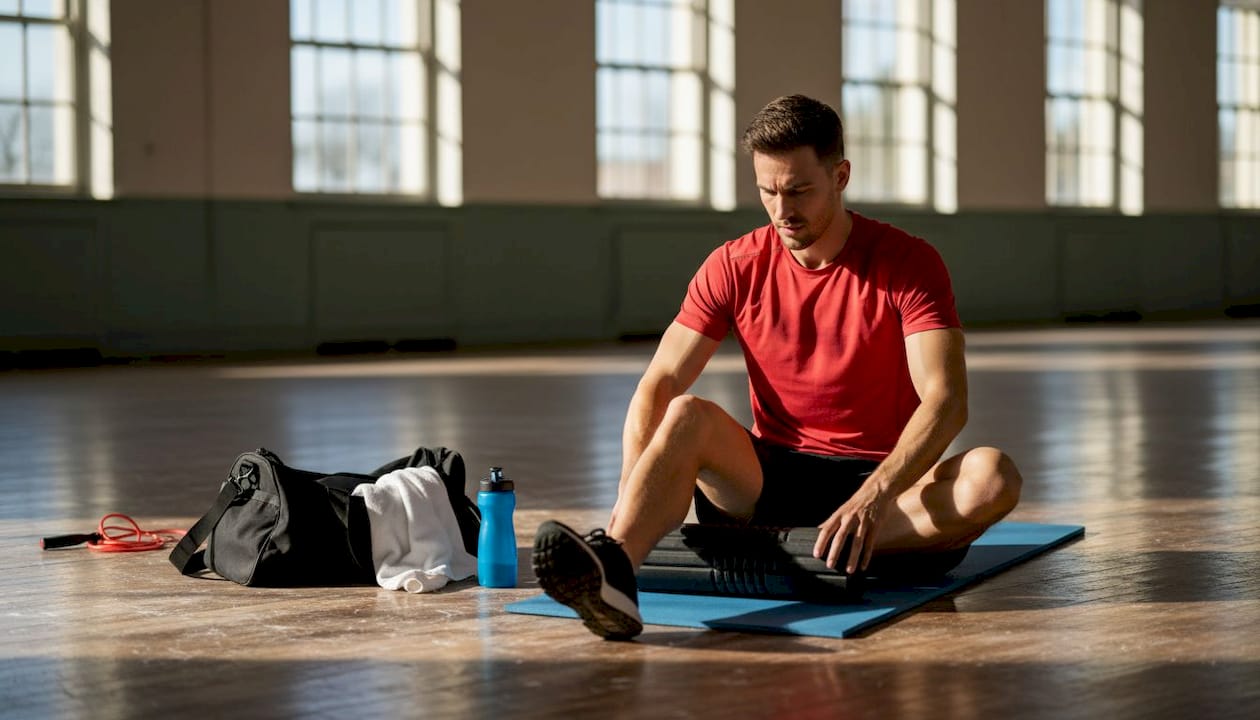
Every elite recovery stack starts with the same unglamorous foundation. Before you invest in premium modalities, you need to lock in the basics. These four steps form the backbone of any effective post-workout routine, and skipping them undermines everything built on top.

  1. Cool down (10 to 15 minutes). Drop intensity gradually. A brisk walk, easy cycling, or light jogging keeps blood circulating and prevents the blood pooling that causes that heavy, stiff feeling after hard sessions. Your heart rate should return to near resting before you move on.
  2. Foam rolling (5 to 10 minutes). Work through major muscle groups with slow, deliberate passes. Foam rolling reduces soreness after heavy compound movements like squats, making it one of the most accessible tools in your kit. Focus on areas that feel dense or tender.
  3. Stretching (10 minutes). Static stretching after exercise, not before, improves flexibility and reduces next-day stiffness. Hold each stretch for 20 to 30 seconds. Prioritize hips, hamstrings, and thoracic spine if you train with heavy loads.
  4. Post-workout nutrition (within 30 to 60 minutes). This window matters. Protein-rich snacks after workouts support muscle repair and glycogen replenishment. Aim for roughly 1.7 grams of protein per kilogram of body weight per day, distributed across meals.

The sequencing here is intentional. Cooling down before foam rolling means your tissues are warm and more pliable. Stretching after rolling extends that pliability. Nutrition caps it off by giving your muscles the raw material to rebuild.

For athletes building a cold plunge recovery routine, these fundamentals still apply first. Cold exposure works best as a complement to a solid base, not a replacement for it.

Pro Tip: Prep your post-workout snack before training. Decision fatigue after a hard session is real. If your recovery nutrition requires zero thought, you’ll actually eat it.

Active vs. passive recovery: Tailoring approaches for resilience

Beyond these steps, knowing when and how to adjust your approach is equally vital, especially when injuries or fatigue come into play.

Not all recovery days are equal. Some days your body needs movement. Other days it needs stillness. Confusing the two is one of the most common mistakes athletes make, and it costs them weeks of progress over a full season.

Active recovery keeps you moving at low intensity. Think:

  • Walking or light hiking
  • Yoga or mobility flows
  • Easy swimming or cycling
  • Foam rolling and dynamic stretching

Passive recovery means deliberate rest. Examples include:

  • Sleep (the most powerful recovery tool available)
  • Professional massage or self-massage tools
  • Epsom salt baths
  • Meditation or breathwork

The decision between them isn’t complicated once you know the principle. Active recovery improves circulation and lowers soreness on normal training days, while passive recovery is the right call during injury, illness, or extreme fatigue. Movement drives blood flow, which clears metabolic waste. But when your system is already under stress, adding more movement just adds more load.

“Active recovery is superior for circulation and soreness reduction unless injury or extreme fatigue is present. In those cases, rest is the intervention.”

Mental resilience is also built here. Athletes who treat passive recovery as “lazy” often overtrain and burn out. Learning to rest without guilt is a skill, and it’s one that separates athletes who perform for decades from those who flame out in a few years.

Your recovery ritual personalization should account for your training phase, sleep quality, and stress load outside the gym. A hard week at work changes what your body needs on Saturday morning.

Advanced modalities: Tech-powered recovery routines and their performance impact

Once basic routines are consistently applied, athletes can amplify their recovery with scientifically proven premium modalities.

Woman using recovery tech devices at home

The landscape of recovery technology has expanded fast. A recent meta-analysis comparing multiple modalities gives us the clearest picture yet of what actually works and for what outcome.

Modality Primary benefit Best use case
Far-infrared (FIR) Jump height, neuromuscular output Power athletes, post-competition
Cold water immersion (CWI) Inflammation control High-volume training blocks
Vibration therapy Testosterone preservation Strength and power sports
Massage Muscle damage reduction General soreness, travel recovery
Cold compression (portable) Acute soreness relief Immediate post-game or post-race
Functional electrical stimulation (FES) Circulation, lactate clearance Endurance athletes

Vibration therapy reduces testosterone breakdown during intense training cycles, while FIR leads the field for improving jump height in elite athletes, scoring a remarkable SUCRA ranking of 98.3% for countermovement jump performance. That’s not a small margin. That’s a dominant result across the studies analyzed.

On the inflammation and muscle damage side, CWI inhibits inflammation and massage consistently reduces markers of muscle damage. Neither is a magic fix, but both show reliable, repeatable effects across populations.

For athletes interested in cold therapy benefits, CWI is the most evidence-dense modality for managing the inflammation load that comes with high-frequency training. And if you want to explore the neuromuscular performance side, red light recovery therapy is worth a serious look given the FIR data above.

The key insight from the research is that no single modality wins across every outcome. You match the tool to the goal.

Monitoring recovery and adapting routines for long-term results

With a firm grasp on technology-driven benefits, it’s essential to continually monitor and tailor your recovery for evolving goals.

Data without action is just noise. But the right data, tracked consistently, tells you exactly when to push and when to back off. Heart rate variability (HRV) is the most practical metric available to most athletes right now.

HRV measures the variation in time between heartbeats. Higher variability generally signals better recovery and readiness. Lower variability signals stress, fatigue, or incomplete recovery. HRV weekly trends (RMSSD) are more reliable for tracking adaptation than single-day readings. Apps like HRV4Training, WHOOP, or Garmin’s built-in tools make this accessible without expensive lab equipment.

Tracking metric What it tells you Action threshold
HRV (RMSSD) weekly average Chronic adaptation and stress load Drop of 10%+ from baseline: reduce intensity
Resting heart rate Acute fatigue and illness 5+ bpm above normal: prioritize sleep
Subjective soreness (1 to 10) Localized muscle stress 7+: switch to passive recovery
Sleep duration and quality Overall recovery capacity Under 7 hours: adjust training volume

Adapting your routine also means accounting for life outside training. Youth athletes need more sleep and less intensity in modalities. Endurance athletes prioritize circulation and glycogen. Power athletes focus on neuromuscular readiness. Injured athletes shift entirely to passive and non-load-bearing active recovery.

Routine adherence and convenience are the biggest predictors of long-term recovery success. Not the sophistication of the modality. Not the price of the equipment. Whether you actually do it, consistently, over months and years.

Pro Tip: Set a weekly HRV baseline after a full rest day. That number becomes your personal reference point. Everything else gets measured against it, not against someone else’s data.

For deeper routine adherence strategies, the research points to simplicity, scheduling, and removing friction as the three levers that matter most.

A nuanced approach: No single ‘best’ routine, tailor to your goals and context

Here’s what years of working with athletes and studying recovery science actually teaches you: the athletes who recover best are rarely the ones using the most advanced tools. They’re the ones who’ve figured out what works for their body, their schedule, and their goals, and then do it without exception.

The research backs this up. Experts consistently stress that tailoring routines to personal goals, physiology, and context outperforms any standardized protocol. FIR and CWI are genuinely powerful. But a FIR session you skip because it’s inconvenient does nothing. A 10-minute foam roll you do every single day compounds over a season.

The uncomfortable truth is that most athletes don’t have a recovery knowledge problem. They have an adherence problem. The solution isn’t a better gadget. It’s a simpler, more sustainable routine built around tailored recovery insights that fit your actual life. Start with the fundamentals, add one modality at a time, and measure the result. That’s how lasting resilience is built.

Enhance your recovery with premium wellness solutions

You now have the framework. The next step is equipping yourself with tools that match your ambition.

https://coldture.com

At Coldture, we design premium recovery hardware built specifically for athletes and wellness enthusiasts who take their routines seriously. Whether you’re ready to add a cold plunge to your post-training protocol, explore the neuromuscular benefits of red light therapy, or build a full heat and contrast recovery setup with our outdoor saunas, every product is engineered for performance and built to last. Upgrade your recovery environment and make consistency the easiest choice you make all day.

Frequently asked questions

How long should a recovery routine take after a workout?

A standard 4-step routine runs about 20 to 30 minutes total, covering a 10 to 15 minute cool down, 5 to 10 minutes of foam rolling, stretching, and post-exercise nutrition. Consistency matters more than duration.

What is the difference between active and passive recovery?

Active recovery improves circulation through low-intensity movement like walking or yoga, while passive recovery means complete rest, sleep, or massage. Passive recovery is recommended when injury or extreme fatigue is present.

Which recovery modalities offer the fastest relief for muscle soreness?

Portable cold compression, FIR, and vibration therapies show the fastest clinical results. FIR improves neuromuscular outcomes and cold compression alleviates acute soreness most quickly in elite athlete trials.

How can I track my recovery progress over time?

Use an HRV app and monitor your weekly RMSSD average. HRV weekly averages track both chronic adaptation and acute stress more reliably than single-day readings, giving you actionable data to adjust training load.

Is there one recovery routine that works for everyone?

No. Routine adherence and context are the strongest predictors of outcomes, meaning your routine should be tailored to your goals, body type, activity level, and what you’ll actually stick to long term.