

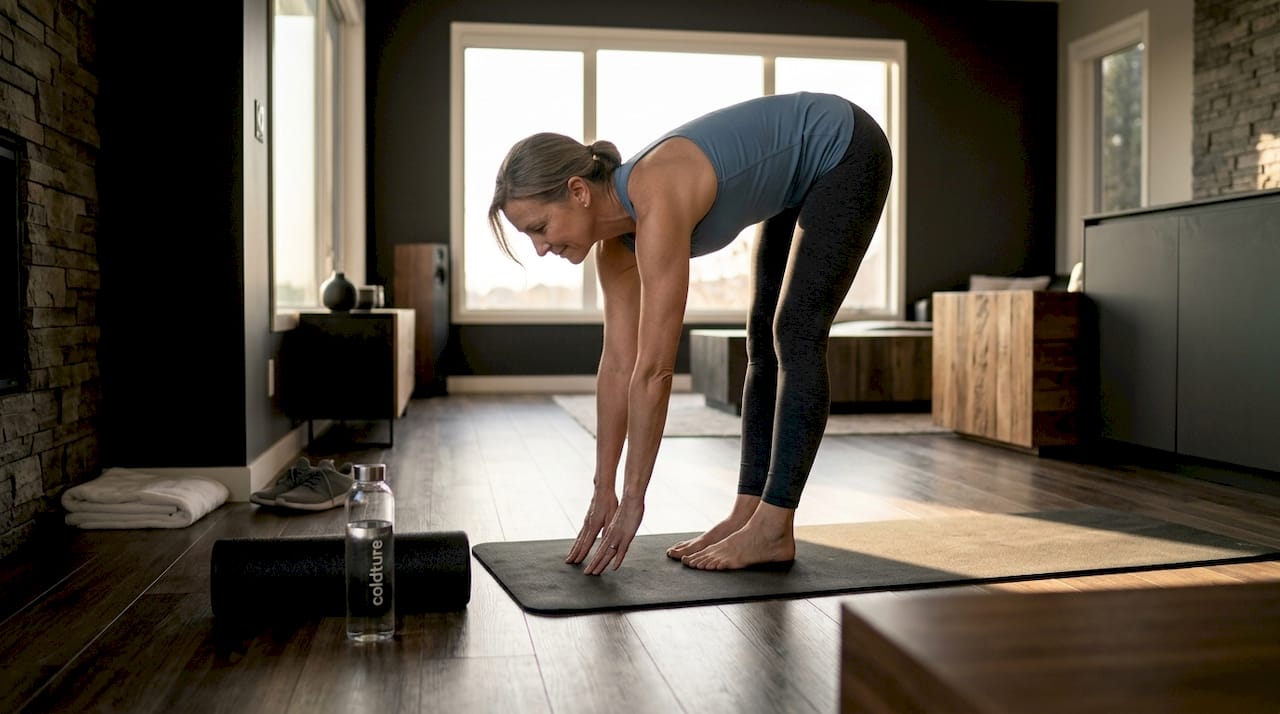
A step-by-step recovery routine is a structured, progressive plan that guides you through specific phases of activity, nutrition, and rest to restore physical function and rebuild performance after injury or intense training. Unlike passive rest, a well-designed routine uses symptom-guided progression to move you forward safely. The difference between recovering in six weeks and six months often comes down to structure. This guide draws on protocols from the Cleveland Clinic, Daily Burn, and PALM Health to give you a practical, evidence-based recovery plan guide you can start using today.
What are the essential components of a step by step recovery routine?
Recovery is not a single action. It is a sequence of coordinated inputs that work together to reduce inflammation, rebuild tissue, and restore nervous system balance. The foundational recovery components are light movement, targeted mobility work, self-myofascial release, nutrition, sleep, and stress management. Each one serves a distinct biological function, and skipping any of them creates a gap in your healing.
The tools you use to execute these components matter as much as the components themselves. Here is a comparison of the most effective recovery tools, their purpose, and when to use them:

| Tool | Purpose | Best timing |
|---|---|---|
| Foam roller | Breaks up fascial adhesions and improves blood flow | After light movement, pre-stretch |
| Cold plunge | Reduces acute inflammation and muscle soreness | Within 30 minutes post-training |
| Sauna or heat therapy | Increases circulation and promotes muscle relaxation | 12 to 24 hours post-training |
| Compression devices | Reduces swelling and speeds lymphatic drainage | During or after training |
| Box breathing | Activates parasympathetic nervous system | End of recovery session |
| Red light therapy | Supports cellular repair and tissue regeneration | Any time, especially evening |
Sequencing these tools correctly is what separates a recovery routine for beginners from a genuinely effective protocol. The order matters: warm the tissue first, then mobilize it, then apply soft tissue work, then downshift the nervous system. Jumping straight to foam rolling cold muscle or ending a session with stimulating activity defeats the purpose of each tool.
Pro Tip: Choose tools based on your current symptoms, not what you see elite athletes using. If cold plunges cause anxiety or spike your heart rate uncomfortably, start with contrast showers and build tolerance gradually.
How to execute a daily recovery routine step by step
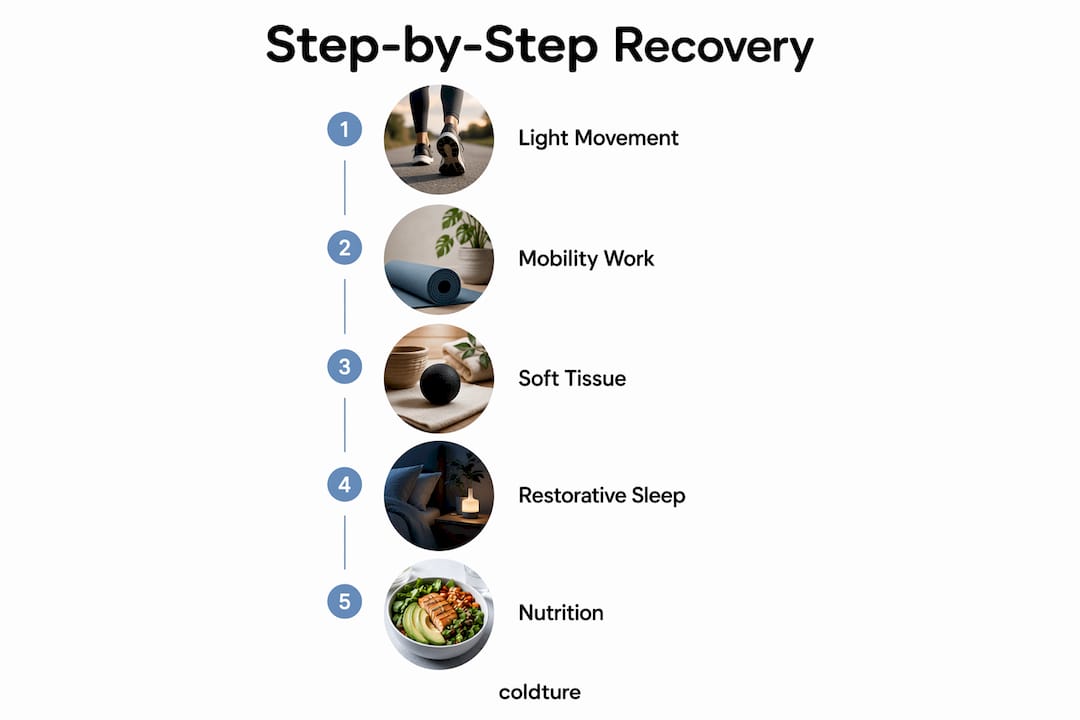
The most effective recovery day structure, validated by Daily Burn’s 45 to 60 minute protocol, follows a four-phase sequence that progressively shifts your body from mild activity into deep restoration. This is your daily recovery checklist, built for real execution.
-
Light movement (20 to 30 minutes). Walk, swim, or practice gentle yoga at a conversational pace. You should be able to hold a full sentence without gasping. This phase increases blood flow to sore tissue, clears metabolic waste, and primes your body for the work ahead. Do not treat this as a workout. Intensity kills the purpose.
-
Targeted stretching and mobility (10 to 15 minutes). Focus on the muscle groups you trained most recently. Hold each stretch for 30 to 60 seconds and breathe through any tension. Dynamic mobility drills like hip circles, thoracic rotations, and ankle CARs work better here than static holds alone because they restore range of motion under light load.
-
Foam rolling and self-myofascial release (10 to 15 minutes). Apply pressure slowly to tender spots and hold each position for 20 to 30 seconds. Avoid rolling directly over joints, the lower back, or any area with acute swelling. The goal is mild discomfort, not pain. If a technique hurts sharply, you are either on the wrong spot or applying too much pressure.
-
Deliberate breathing (5 minutes). Box breathing, which means inhaling for four counts, holding for four, exhaling for four, and holding for four, activates your parasympathetic nervous system and signals your body that the recovery session is complete. This is the most underused step in most people’s routines, and it is the one that ties everything else together.
This stepwise recovery process works because each phase prepares the body for the next. Skipping phase one and going straight to foam rolling is like trying to stretch a cold rubber band. You get less result and more risk.
Pro Tip: Track how you feel at the start and end of each session using a simple 1 to 10 soreness and energy scale. Two weeks of data will show you which phases are working and which need adjustment.
What does evidence-based injury recovery look like for concussions and ACL rehab?
General workout recovery and injury-specific rehabilitation follow the same principle but require stricter progression criteria. Two of the most studied injury protocols are concussion recovery and ACL rehabilitation, and both demonstrate why calendar time is a poor guide for advancement.
The Cleveland Clinic’s 6-stage concussion framework moves patients through return to regular activities, light aerobic exercise, moderate activity, heavy noncontact activity, full contact practice, and return to competition. The critical rule is that you must be symptom-free for at least two days at each stage before advancing. Pushing through symptoms does not accelerate recovery. It extends it.
ACL rehabilitation uses objective clearance criteria rather than symptom reports alone. According to Dr. Jeremy Burnham’s ACL physical therapy protocol, return to sport requires limb symmetry of 90% or greater on strength tests, hop test symmetry of 95% or greater, and a psychological readiness score above 75. These numbers exist because subjective confidence and actual tissue readiness frequently diverge, and the gap between them is where reinjury happens.
| Protocol | Key phases | Progression criteria |
|---|---|---|
| Concussion (Cleveland Clinic) | Rest, light aerobic, moderate, heavy noncontact, contact, competition | Symptom-free for 2+ days per stage |
| ACL rehab (Burnham protocol) | Acute, strength, neuromuscular, sport-specific, return to sport | Strength symmetry ≥90%, hop symmetry ≥95%, psych score >75 |
“Structured symptom-guided recovery plans offer safer, more personalized healing than fixed timelines.” — Cleveland Clinic
The lesson from both protocols applies to every recovery context. Objective markers beat gut feelings. If you are not meeting the criteria for the next phase, staying in the current one is not failure. It is the protocol working correctly.
How to optimize nutrition, sleep, and stress for effective recovery
The physical work of a recovery routine means nothing if your body lacks the raw materials to rebuild. PALM Health recommends 20 to 40 grams of high-quality protein per meal within hours after training, with a daily total of 80 to 90 grams to support muscle repair. That range is not arbitrary. It reflects the threshold at which muscle protein synthesis is maximally stimulated without excess amino acids being oxidized for energy.
Sleep is the single most effective recovery tool most people consistently underuse. Consistent, sufficient sleep supports hormone release, immune function, and tissue repair in ways no supplement or device can replicate. Growth hormone, which drives muscle repair, is released primarily during deep sleep. Cutting sleep short to fit in an extra training session is a net negative trade.
Here are the practical lifestyle habits that support your gradual recovery methods:
- Eat a protein-rich meal or snack within two hours of finishing training or a recovery session.
- Prioritize sleep consistency over total hours. Going to bed and waking at the same time each day regulates cortisol and growth hormone cycles.
- Use deep breathing or a short mindfulness practice before bed to lower cortisol and improve sleep quality.
- Hydrate throughout the day, not just around training. Dehydration impairs both performance and tissue repair.
- Reduce alcohol intake during active recovery phases. Alcohol disrupts sleep architecture and blunts protein synthesis.
Stress management is not optional in a comprehensive recovery strategy. Chronic psychological stress elevates cortisol, which directly competes with the anabolic hormones responsible for tissue repair. Athletes who manage stress recover faster than those who do not, even when training loads are identical.
What are the most common recovery mistakes and how do you fix them?
The most damaging recovery mistake is treating soreness as a signal to push harder. Soreness indicates tissue damage and inflammation. It is a request for repair, not a green light for more stress. Confusing the two is the fastest route to overtraining syndrome or reinjury.
- Skipping early phases. Jumping from acute injury directly to sport-specific training skips the tissue preparation that makes later phases safe. Every phase exists for a reason.
- Relying on one method. Foam rolling alone, or cold plunges alone, addresses only one part of the recovery equation. Effective routines stack multiple modalities.
- Ignoring objective markers. Feeling ready is not the same as being ready. Use strength tests, range of motion measurements, or the symptom scales from protocols like the Cleveland Clinic’s concussion stages.
- Advancing on a fixed schedule. Recovery timelines are estimates, not deadlines. If you are not meeting the criteria for the next phase, the answer is more time in the current one.
“Patients should scale back and re-stabilize if symptoms worsen, following symptom-guided protocols rather than arbitrary timing.” — Cleveland Clinic
Pro Tip: Keep a daily recovery log with three data points: soreness level (1 to 10), energy level (1 to 10), and one observation about what felt different. Patterns emerge within two weeks and tell you more than any generic timeline.
When symptoms worsen or plateau, consult a physical therapist or sports medicine physician before modifying the protocol on your own. Self-directed recovery has limits, and knowing when to bring in a professional is part of the routine.
Key takeaways
A structured, symptom-guided step-by-step recovery routine built on sequenced movement, targeted nutrition, and objective progression criteria is the most reliable path to full physical restoration.
| Point | Details |
|---|---|
| Sequence your recovery phases | Follow light movement, mobility, soft tissue work, and nervous system downshift in order for best results. |
| Use objective progression criteria | Advance phases based on symptom tolerance and measurable markers, not calendar time or how you feel. |
| Prioritize protein and sleep | Consume 20 to 40 grams of protein post-training and protect sleep quality to maximize tissue repair. |
| Stack recovery modalities | Combine cold therapy, heat, foam rolling, and breathing exercises rather than relying on a single method. |
| Track and adjust honestly | Log soreness and energy daily to identify what is working and when to consult a professional. |
What I’ve learned from building a recovery practice from the ground up
I built Coldture because I lived the gap between wanting to recover and having the tools to do it properly. When I was rehabbing my knee, I followed every protocol I could find, and the hardest part was not the exercises. It was accepting that the phases existed for a reason and that skipping ahead would cost me more time than it saved.
The athletes and everyday people I have worked with since then share the same pattern. They are disciplined about training and impatient about recovery. They want a timeline, and when the timeline does not hold, they push. That push is almost always what extends the process.
What actually works is structure combined with honest self-assessment. The expert recovery routines I have seen succeed are not the most aggressive ones. They are the most consistent ones. The person who shows up every day and does the full sequence, including the five minutes of breathing at the end, heals faster than the person who trains hard and skips the fundamentals.
Recovery is not the opposite of performance. It is where performance is built. The sooner you treat your recovery session with the same seriousness as your training session, the faster everything else moves.
— Daniel
Build your recovery toolkit with Coldture
Coldture’s recovery bundles are designed to give you every modality covered in this guide under one roof. Cold plunges for acute inflammation control, saunas for circulation and muscle relaxation, and red light therapy for cellular repair work together as a complete system rather than isolated tools.
Whether you are managing a sports injury or optimizing post-training recovery, Coldture’s products are trusted by NHL organizations, Olympic teams, and F45 studios because they are built to perform at that level. The same tools are available for home use, so your recovery environment matches the quality of your effort. Explore Coldture’s full range and build a routine that actually fits your body and your goals.
FAQ
What is a step by step recovery routine?
A step-by-step recovery routine is a structured sequence of activities including light movement, mobility work, soft tissue release, nutrition, and rest that progressively restore physical function after injury or intense training. Each phase builds on the previous one to maximize healing efficiency.
How long should a daily recovery session take?
A complete daily recovery session takes 45 to 60 minutes, structured as 20 to 30 minutes of light movement, 10 to 15 minutes of stretching, 10 to 15 minutes of foam rolling, and 5 minutes of deliberate breathing, according to Daily Burn’s validated protocol.
When should I advance to the next phase of injury recovery?
Advance to the next phase only when you meet objective criteria, not when you feel ready. For concussion recovery, the Cleveland Clinic requires at least two symptom-free days per stage. For ACL rehab, progression requires strength symmetry of 90% or greater and hop test symmetry of 95% or greater.
How much protein do I need for muscle recovery?
PALM Health recommends 20 to 40 grams of high-quality protein within hours of training and a daily total of 80 to 90 grams to provide the amino acids needed for muscle repair and recovery.
What happens if I push through pain during recovery?
Pushing through pain during recovery delays healing and increases reinjury risk. Symptom-guided protocols from the Cleveland Clinic show that advancing before meeting phase criteria extends total recovery time rather than shortening it.
Recommended
- Effective Recovery Routines: Expert Examples for Athletes – Coldture Wellness
- Step-by-step recovery protocol for peak athletic results – Coldture Wellness
- Unlock Faster Recovery: Proven Strategies After Every Workout – Coldture Wellness
Share:
The Role of Light Therapy in Recovery: 2026 Guide
Cold Plunge Mistakes to Avoid for Better Results