

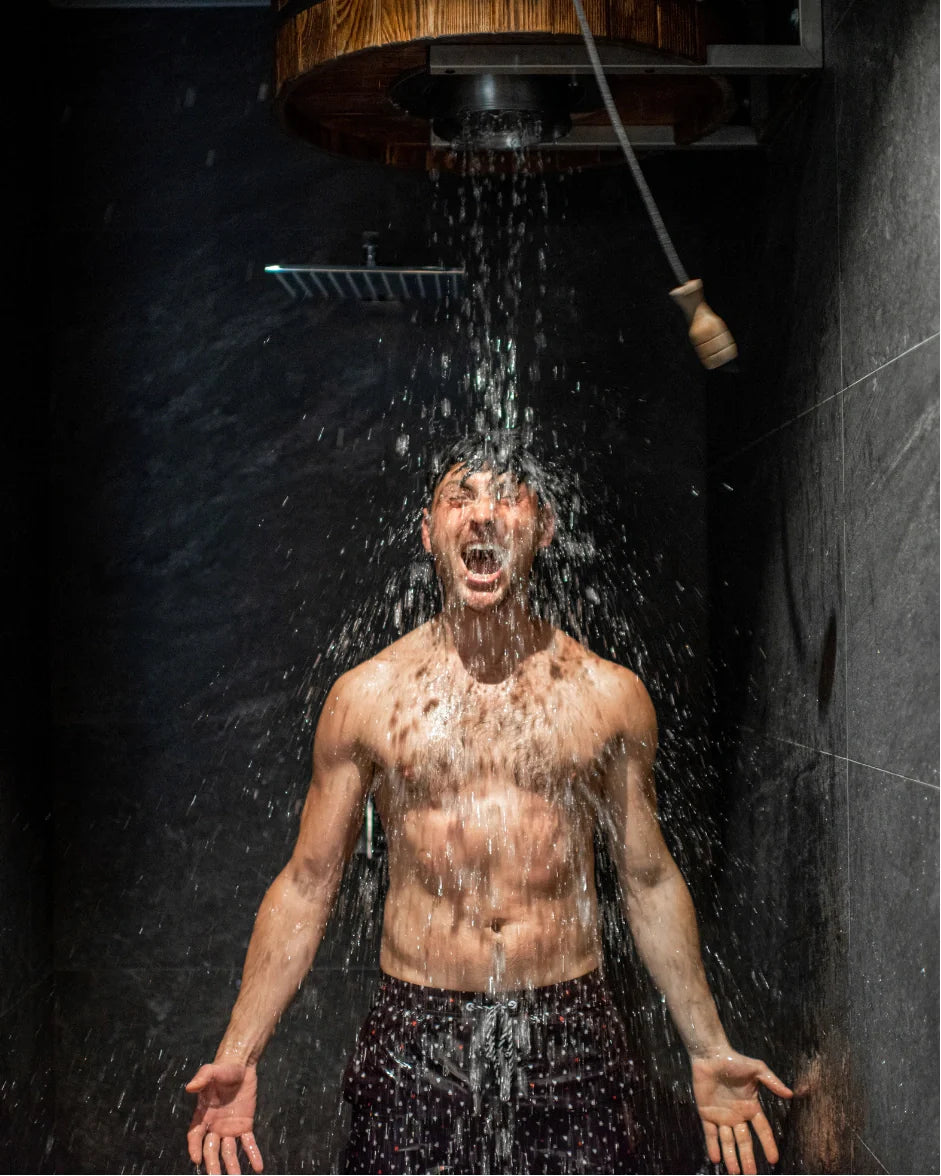
Researchers gave 3,018 people one simple instruction at the end of their shower. The results surprised everyone, including the people running the study. No ice baths. No special equipment. No minimum time requirement that mattered. Just cold water at the end of a normal shower, and a measurable change in how often people called in sick.
The Instruction
The instruction was almost comically simple: finish your shower with cold water. That was it.
Participants took their normal hot shower, then ended it with a burst of cold water before getting out. There were no ice baths involved, no equipment to buy, no elaborate protocol to follow. Just cold water at the end of an otherwise ordinary shower, every day, for 30 days. [1]
The simplicity is part of why the study became so widely cited. It tested whether a minimal, accessible behaviour, the kind of thing anyone could do starting tomorrow, could produce a measurable health outcome.
The Result
Self-reported work absences dropped by 29 percent.
The study was a randomised controlled trial, the gold standard of clinical research design, conducted in the Netherlands with 3,018 participants between the ages of 18 and 65. [1] Participants were randomly assigned to end their daily shower with 30, 60, or 90 seconds of cold water, or to a control group that showered normally with no cold exposure. Across the cold-shower groups, sickness absence from work fell by 29 percent compared to the control group over the study period.
A randomised, controlled design with over 3,000 participants is a serious piece of evidence. It is what separates this study from the anecdotal claims that often surround cold exposure. The participants were randomly assigned, there was a control group, and the outcome was a concrete behaviour, days absent from work, rather than a subjective feeling.
The Part That Surprised the Researchers
Here is the finding that caught the research team off guard: the duration did not matter.
The 30-second, 60-second, and 90-second groups all produced essentially the same result. [1] More cold exposure did not produce a proportionally larger benefit. The cold exposure itself was the trigger, and once that threshold was crossed, additional time did not meaningfully change the outcome.
This runs counter to the assumption many people hold about cold exposure, that longer and colder is always better. For this particular outcome, the data suggested the opposite: the act of getting cold daily was what mattered, not the heroics of enduring it for longer. That makes the practice far more sustainable, because the version people will actually keep doing is the short one.
It is worth being precise about one thing. While absences dropped, the study did not find a significant difference in the number of sick days when people did get ill, nor in self-reported illness itself. People in the cold groups still got sick, but they were absent from work less often. The most likely interpretation involves energy, alertness, and resilience rather than a dramatic change in immune defence, though the immune mechanisms below are part of the broader picture. [1]
What Was Actually Happening
The proposed mechanisms connect to how the body responds to acute cold stress.
Cold water exposure activates the sympathetic nervous system and triggers a rapid increase in norepinephrine, a neurotransmitter and hormone involved in alertness, focus, mood, and the inflammatory response. [2] Cold exposure has been shown to produce substantial increases in circulating norepinephrine, and this is thought to underlie several of the alertness and mood effects people report. [3]
There is also evidence that cold exposure engages the immune system in ways a warm shower does not. Some research has documented increases in certain circulating immune cells following cold water immersion, suggesting an acute mobilisation of immune resources in response to the cold stressor. [4] The combination of sympathetic activation, the norepinephrine response, and immune engagement is the leading explanation for why a short daily cold exposure could translate into the real-world outcome the trial measured.
Thirty seconds is enough to begin that process. And because the duration did not change the result, the practical message is straightforward: brief, consistent, daily.
From Cold Shower to Cold Plunge
The shower study is compelling precisely because the bar is so low. Anyone can end a shower with cold water, and the data suggests even that minimal dose produces a measurable effect. It is the best possible argument for starting.
But the same principles that make the cold shower work, sympathetic activation, the norepinephrine response, immune engagement, scale with a more controlled and complete cold exposure. A cold shower gives you whatever temperature comes out of the tap, which varies by season and location and is rarely cold enough to be optimal. A dedicated cold plunge gives you a precise, repeatable dose every time.
The Coldture Classic Tub + Chiller holds an exact temperature anywhere from 3 to 40°C, set from your phone, on a standard household outlet with no installation required. The 1 HP chiller means the same temperature every session, so the stimulus is consistent rather than dependent on the weather or the plumbing. For tighter spaces, the Barrel Tub + Chiller delivers the same range in a vertical, footprint-efficient format, and the Ultra Barrel Lite + Chiller is the most compact in the lineup, designed for condos and indoor use.
The lesson from the study is not that you need elaborate equipment. It is that consistency is what produces results, and that the cold itself is the trigger. A system that makes daily cold exposure frictionless is the most reliable way to turn a 30-day experiment into a permanent habit. Browse the full Coldture cold plunge lineup.
Thirty seconds was the difference in the study. A system you will actually use every day is the difference over a lifetime.
This article discusses the physiological effects of cold water exposure for general wellness purposes. Cold water immersion carries risks, particularly for people with cardiovascular conditions. Consult a physician before beginning a cold exposure practice.
References
[1] Buijze GA, et al. "The effect of cold showering on health and work: a randomized controlled trial." PLOS ONE. 2016;11(9):e0161749. doi.org/10.1371/journal.pone.0161749
[2] Šrámek P, et al. "Human physiological responses to immersion into water of different temperatures." European Journal of Applied Physiology. 2000;81(5):436-442. doi.org/10.1007/s004210050065
[3] Jedema HP, Grace AA. "Norepinephrine and stress response regulation." (Review of norepinephrine in acute stress and arousal.) Biological Psychiatry. 2004.
[4] Brenner IK, et al. "Immune changes in humans during cold exposure: effects of prior heating and exercise." Journal of Applied Physiology. 1999;87(2):699-710. doi.org/10.1152/jappl.1999.87.2.699
Share:
What Cold Water Actually Does to Your Heart Rate in the First 10 Seconds
What Cold Water Immersion Actually Does to Your Brain Chemistry