


TL;DR:
- Cold therapy reduces pain, inflammation, and enhances recovery through vasoconstriction and nervous system activation.
- Methods include localized ice packs, cold water immersion, whole-body cryotherapy, and cold showers.
- Proper protocol, gradual adaptation, and safety precautions are essential for maximizing benefits and minimizing risks.
Cold therapy is far more than pressing an ice pack against a sore knee after a workout. The science behind applying cold to the human body spans pain relief, inflammation control, faster athletic recovery, and even mental resilience, and it has moved well beyond the sports medicine clinic into everyday wellness routines. Cryotherapy works through several overlapping physiological mechanisms that affect your nerves, blood vessels, and metabolism simultaneously. Athletes, biohackers, and everyday wellness seekers are building consistent cold exposure practices that deliver real, measurable results. This guide breaks down exactly how cold therapy works, which methods matter most, and how to build a routine that fits your goals.
Table of Contents
- What is cold therapy? The science explained
- Methods of cold therapy: Localized, immersion, and whole-body approaches
- Benefits of cold therapy: What the research really shows
- Risks, contraindications, and who should be cautious
- Optimizing your cold therapy routine: Timing, dosing, and real-world tips
- A cold, hard look: What most guides miss about cold therapy
- Ready to experience the benefits of cold therapy?
- Frequently asked questions
Key Takeaways
| Point | Details |
|---|---|
| Science-backed recovery | Cold therapy reduces inflammation and speeds up post-exercise recovery, especially for athletes. |
| Method matters | Cold water immersion is more effective than other methods for deep tissue recovery and soreness relief. |
| Timing is critical | Using cold therapy right after strength training can hinder muscle growth—timing is everything. |
| Know the risks | Not everyone should try cold therapy; always consider your medical background and adapt gradually. |
| Sustainable routines | Consistent, moderate cold therapy yields the best long-term benefits for wellness and resilience. |
What is cold therapy? The science explained
Cold therapy, also called cryotherapy, refers to any deliberate application of cold temperatures to the body. Traditionally, that meant ice packs on a sprained ankle or a bag of frozen peas on a bruise. Modern applications look very different and target outcomes far beyond acute injury care.
When your body meets cold, three things happen almost instantly. Blood vessels near the skin constrict (vasoconstriction), pulling blood away from the surface and toward your core organs. Metabolic activity in the cooled tissue slows down, reducing cellular demand for oxygen and limiting inflammatory signals. Finally, nerve conduction slows, which is why cold numbs pain so effectively.
These effects together explain why cold therapy reduces pain, swelling, and inflammation through vasoconstriction, reduced metabolic activity, and sympathetic nervous system activation. The sympathetic nervous system response is especially interesting. A cold plunge triggers a stress response similar to exercise, releasing norepinephrine and adrenaline, which many practitioners credit for the mood and focus benefits reported after cold exposure.
“Cold is not just about slowing inflammation. It is a full-body stress signal that, applied correctly, trains your nervous system to recover faster and respond more calmly under pressure.”
This is why deliberate cold exposure has gained traction not just among professional athletes but among biohackers and wellness enthusiasts who want sharper mental edges and more stable energy throughout the day. The popularity spike is real, and the science increasingly supports it.
| Physiological effect | What happens | Practical outcome |
|---|---|---|
| Vasoconstriction | Blood pulled to core | Reduced swelling and inflammation |
| Metabolic slowdown | Cellular activity drops | Less oxidative stress post-exercise |
| Nerve conduction slows | Signal transmission decreases | Pain relief |
| SNS activation | Norepinephrine release | Mood lift, alertness, focus |
Methods of cold therapy: Localized, immersion, and whole-body approaches
Understanding the core mechanisms, let’s map out the practical methods you can use and what fits whom best. Not every cold therapy modality delivers the same results, and choosing the wrong one for your goal wastes time and potential benefit.
Common methodologies include localized cold therapy such as ice packs and compresses, and whole-body methods like cold water immersion (CWI), whole-body cryotherapy (WBC), and cold showers. Here is how they compare:

| Method | Temperature range | Session length | Best for |
|---|---|---|---|
| Ice pack/compress | 0-5°C (32-41°F) | 10-20 min | Localized injury, joint pain |
| Cold water immersion | 5-15°C (41-59°F) | 10-15 min | Full-body recovery, DOMS |
| Whole-body cryotherapy | -110 to -140°C | 2-4 min | Rapid pain relief, inflammation |
| Cold shower | 10-20°C (50-68°F) | 2-10 min | Mood, daily habit, accessibility |
Key things to know about each:
- Ice packs are ideal for targeted swelling or a specific joint after an acute injury or hard training session. They do not deliver systemic recovery benefits.
- Cold water immersion is the gold standard for post-exercise recovery. You can dial in cold plunge temperatures precisely, which matters because even a few degrees changes the outcome.
- Whole-body cryotherapy uses ultra-cold air in a chamber. It is fast and comfortable compared to immersion, but it does not cool muscle tissue as deeply.
- Cold showers are your entry point. Accessible, free, and effective enough to build tolerance before graduating to immersion.
Pro Tip: If you are brand new to cold therapy, start with 60 seconds of cold at the end of a warm shower for one week. This builds the psychological tolerance that most beginners skip, and that mental adaptation is half the battle.
Building consistent cold plunge routines from the start accelerates both physical and mental adaptation.
Benefits of cold therapy: What the research really shows
With so many ways to use cold therapy, what results can you actually expect? Here is what the latest research uncovers, separated by what is well-established and what is still emerging.
Strong evidence:
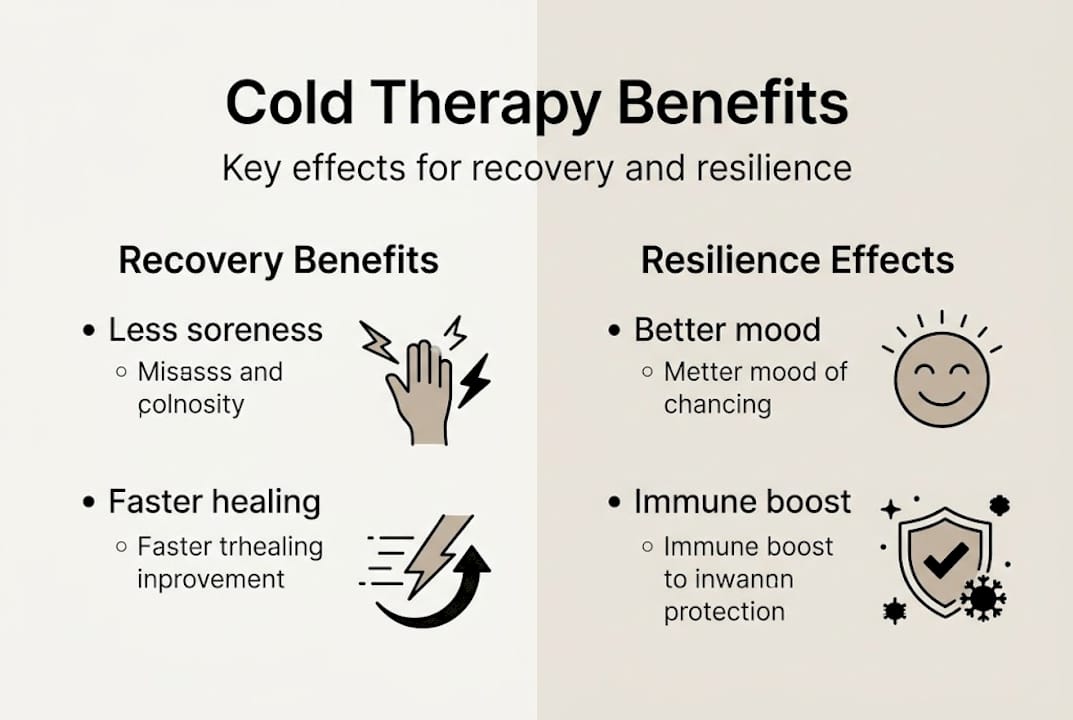
- Post-exercise muscle soreness (DOMS) is significantly reduced with consistent CWI protocols
- Creatine kinase (CK) levels, a marker of muscle damage, drop faster with cold exposure after hard efforts
- Inflammatory markers decrease, speeding up the window between hard training sessions
- Performance in subsequent sessions improves when cold therapy is used strategically
Empirical data confirms that cold therapy reduces post-exercise muscle soreness, CK levels, and inflammation markers, and accelerates recovery but may blunt muscle growth if used immediately after strength training. That last point is critical and often buried in popular coverage.
Emerging or mixed evidence:
- Mental resilience and improved stress response from regular cold exposure
- Mood improvement and energy regulation via norepinephrine release
- Long-term metabolic benefits and body composition changes
“The data on mood and mental resilience is promising, but it is not a replacement for sleep, nutrition, or clinical mental health support. Cold therapy is a powerful tool in the stack, not the whole stack.”
For a full breakdown of recovery and performance benefits, the evidence is strongest for endurance athletes and team sport players who need to back up hard efforts with minimal downtime. Explore performance and recovery research to see how protocols differ by sport and goal. The CWI protocols and recovery literature is particularly strong for athletes managing high training loads.
Risks, contraindications, and who should be cautious
While the benefits are appealing, it is vital to understand who should and should not try cold therapy. Cold exposure is a physiological stressor, and for certain people, that stress is genuinely dangerous.
Who should avoid cold therapy:
- People with impaired circulation or peripheral vascular disease
- Those with Raynaud’s syndrome or cold hypersensitivity
- Individuals with hypertension or heart disease
- Pregnant women
- Anyone with open wounds or active skin infections
- People taking medications that affect circulation or temperature regulation
Contraindications include impaired circulation, cold hypersensitivity, Raynaud’s, hypertension, and heart disease, alongside pregnancy and open wounds. The risks for these groups include hypothermia, nerve damage, and cardiovascular stress events that can escalate quickly in cold water.
For healthy individuals, the risks are manageable but not zero. Ice baths are booming in popularity but carry real health risks, including the dangers of unsupervised immersion and sudden cold shock response, which can cause involuntary gasping and even cardiac arrhythmia in susceptible people.
Best safety practices:
- Never plunge alone, especially when starting out
- Enter cold water slowly and control your breathing before immersing fully
- Keep sessions short initially and extend duration gradually over weeks
- Exit immediately if you feel chest tightness, numbness beyond the skin, or disorientation
Pro Tip: Gradual adaptation is not weakness. Starting at 15°C for 5 minutes and working down over 4 to 6 weeks is smarter and safer than jumping into 5°C water on day one. Your body adapts more completely with a progressive approach.
Review deliberate cold exposure safety guidelines before starting any new cold therapy protocol.
Optimizing your cold therapy routine: Timing, dosing, and real-world tips
Taking all this into account, here is how to put cold therapy safely and strategically into practice. The biggest mistakes most people make come down to timing and dosing, not the method itself.
- Start with temperature and duration you can control. Aim for 10 to 15 minutes at 11 to 15°C for soreness reduction. If you are chasing deeper muscle recovery, 10 to 15 minutes at 5 to 10°C produces stronger results.
- Time your sessions strategically. Dose and timing are critical: using cold immediately after strength training may blunt hypertrophy, so delay cold exposure by several hours or skip it on pure strength days.
- Prioritize cold after endurance and team sport efforts. This is where the evidence is clearest. A 12 to 15 minute immersion after a long run or match-day effort accelerates next-day readiness.
- Build a weekly rhythm, not a daily reflex. Three to four sessions per week is a solid starting point for most people. Daily use for wellness is fine, but daily use immediately after every workout can accumulate downsides.
- Track how you feel, not just what you do. If you are consistently stiff, fatigued, or sleeping poorly despite regular cold therapy, reassess your protocol.
Pro Tip: Pair cold therapy with timing and performance strategies from sports performance experts to fine-tune your approach around your specific training block.
For a deeper look at protocol design, advanced cold therapy tips cover periodization and how to adjust cold exposure through different training phases.
A cold, hard look: What most guides miss about cold therapy
Most cold therapy content focuses on the upside and glosses over the nuance. The muscle growth inhibition risk is real, and it matters for anyone chasing hypertrophy. Applying a 15-minute ice bath after every strength session is not just unhelpful, it actively works against a goal many people are simultaneously trying to achieve. That conflict rarely gets a headline.
The other thing that gets lost is how individual the response to cold really is. Someone with excellent cardiovascular fitness and no underlying conditions will respond very differently than a sedentary person starting cold therapy for the first time. Treating protocol recommendations as universal ignores that reality entirely.
From our experience working with athletes and wellness enthusiasts, the people who benefit most from cold therapy are not the ones chasing the coldest temperatures or the longest sessions. They are the ones who build moderate, consistent habits and stay honest about their real-world cold exposure challenges and limits. Consistency at a manageable intensity beats sporadic extremes every time. If something feels wrong, it probably is. Consult a professional and adapt the protocol to you, not the other way around.
Ready to experience the benefits of cold therapy?
If you have spent time understanding how cold therapy works and where it fits your goals, the next step is finding equipment that delivers consistent, controllable results every session.
At Coldture, we design premium cold plunges built for real-world recovery routines, whether you are an athlete managing a heavy training load or a wellness enthusiast building daily habits. Our systems give you precise temperature control, durable construction, and the support to get your protocol right from day one. For those who want flexibility without sacrificing performance, our portable cold plunge options bring professional-grade cold therapy anywhere you need it. Browse our full lineup and start your cold therapy journey with confidence.
Frequently asked questions
How long should a cold plunge last for recovery?
For optimal recovery, aim for 10 to 15 minutes. Research on CWI protocols shows that 10 to 15 minutes at 5 to 10°C best reduces CK levels, while 11 to 15°C reduces soreness most effectively.
Can I use cold therapy every day?
Daily cold therapy works well for general wellness and mood, but frequent use after strength training may reduce muscle growth over time. Reserve daily immersion for endurance recovery or wellness days rather than after every lifting session.
Who should avoid cold therapy?
Anyone with impaired circulation, heart conditions, cold hypersensitivity, Raynaud’s syndrome, or who is pregnant should avoid cold therapy or consult a physician before starting.
What is the difference between CWI and whole-body cryotherapy?
CWI provides deeper cooling and uses hydrostatic pressure to aid muscle recovery, while whole-body cryotherapy delivers rapid pain relief through ultra-cold air but does not cool deeper muscle tissue as effectively.
Are cold showers as effective as ice baths?
Cold showers are more accessible but deliver less intense cooling than full immersion or cryotherapy. They work well for building habit and tolerance, but they do not replicate the depth of systemic recovery that CWI provides.
how to build a red light therapy routine that actually sticks