

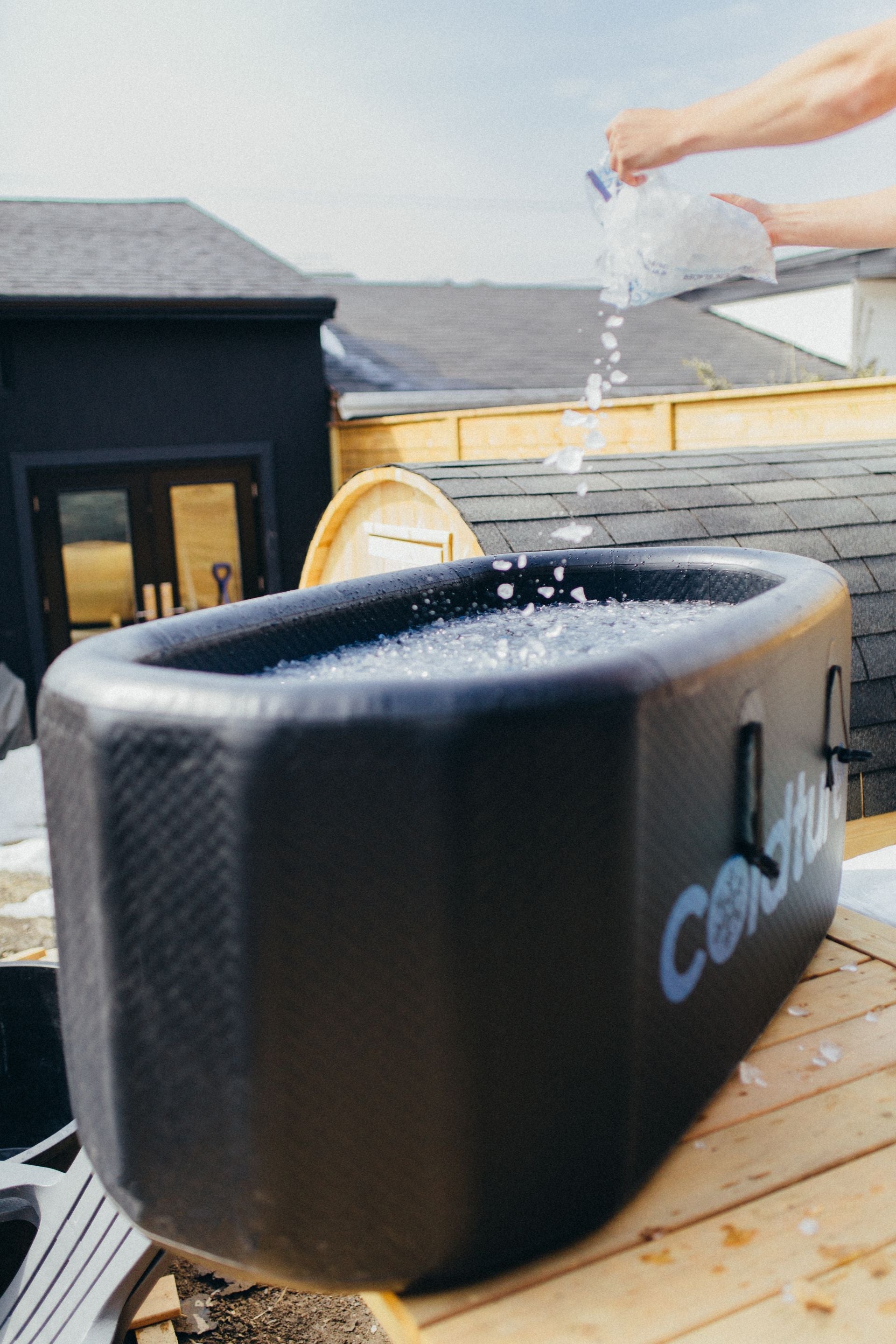
How Much Ice for an Ice Bath? Tips, Ratios, and a Better Way
Science + Recovery | 6 min read
If you are building an ice bath manually, the amount of ice you need comes down to some basic physics: your starting water temperature, your target temperature, and the volume of water. Here is a practical way to estimate it, plus an honest look at why most serious cold plungers eventually move away from ice entirely.
The Basic Ratio
A reasonable rule of thumb for a standard tub is that you will need a substantial amount of ice to bring tap water down to an effective cold plunge temperature, often in the range of 10 to 20 kg (roughly 20 to 40 lbs) of ice, depending on your starting water temperature and how cold you want to get. [1]
The colder your tap water starts, the less ice you need. In winter, water from the tap may already be 10 to 15°C, requiring far less ice. In summer, tap water can be 20°C or warmer, requiring significantly more. The target matters too: getting to 12°C from warm tap water takes a lot of ice; getting to 15°C takes less.
A practical starting estimate: for a typical tub of cold tap water, start with around 10 kg of ice, measure the temperature, and add more in increments until you hit your target. Keep notes the first few times and you will quickly learn your own ratio for the season.
The Practical Problems With Ice
Here is where honesty serves you better than a tidy ratio. Ice baths have real, recurring frustrations that the ratio question tends to hide.
First, cost and hassle. Buying or making 10 to 20 kg of ice for every session adds up quickly in money, freezer space, and time. Second, inconsistency: the temperature starts too cold right after you add ice, then drifts warmer through your session, so you are never quite at a stable target. Third, the temperature is different every time depending on your tap water and how much ice you used, which makes it hard to apply any research-backed protocol consistently. Fourth, the daily friction of preparing ice is the single most common reason people abandon a cold plunge habit. [2]
The ratio is solvable. The underlying friction is the real problem.
Why a Chiller Solves the Whole Question
A chiller-based system makes the ice question disappear entirely. Instead of calculating ratios and hauling bags of ice, you set a temperature and the system holds it.
The Coldture Classic Tub + Chiller maintains any temperature from 3 to 40°C with a 1 HP chiller, every session, no ice required. You set 12°C from your phone and the water is 12°C, today and tomorrow and next summer, regardless of what comes out of the tap. It also runs continuous filtration, so the water stays clean between sessions rather than needing to be drained and refilled. The Barrel Tub + Chiller offers the same in a vertical footprint, and the Ultra Barrel Lite + Chiller is the most compact in the lineup for condos and indoor use.
The single biggest reason people maintain a cold plunge habit long-term is removing the daily friction. Eliminating the ice ritual is the clearest example of that.
If You're Sticking With Ice for Now
There is nothing wrong with starting with ice while you decide whether cold plunging is for you. Use the increment method, start with about 10 kg, measure, and add to taste. Keep the sessions short, never plunge alone when you are new to it, and track your ratios by season. Just know that if the habit sticks, the ice is usually the first thing people are glad to leave behind. Browse the full Coldture cold plunge lineup.
This article is for general wellness information and is not medical advice. Cold water immersion carries risks, particularly for people with cardiovascular conditions. Consult a healthcare professional before beginning a cold exposure practice.
References
[1] Tipton MJ, et al. "Cold water immersion: kill or cure?" Experimental Physiology. 2017;102(11):1335-1355. doi.org/10.1113/EP086283
[2] Machado AF, et al. "Can water temperature and immersion time influence the effect of cold water immersion on muscle soreness?" Sports Medicine. 2016;46(4):503-514. doi.org/10.1007/s40279-015-0431-7
Share:
What Is the Best Time to Cold Plunge? Morning, Post-Workout, or Night
Cold Exposure and Brown Fat: The Metabolism Science Explained