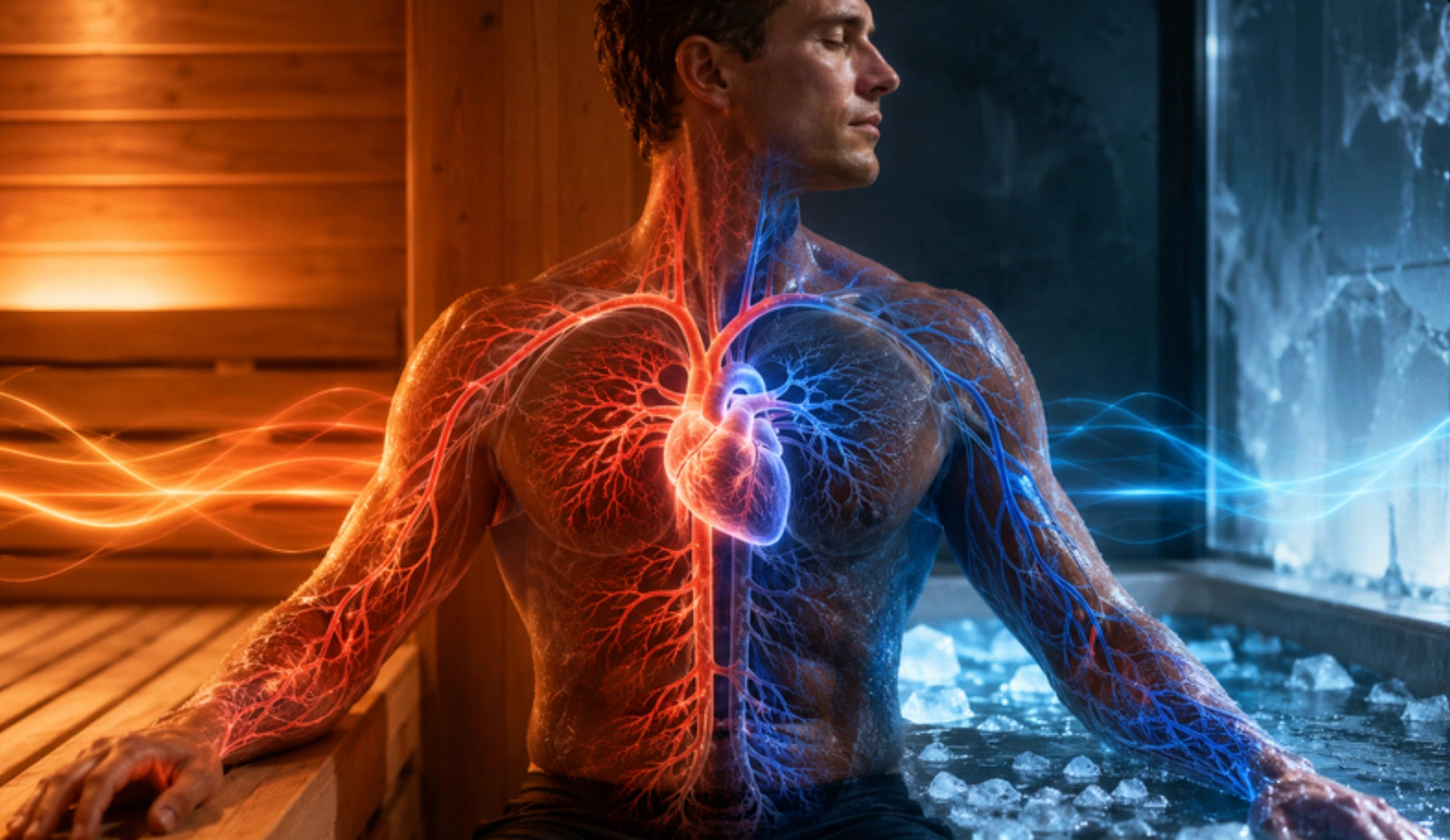
the recovery routine

heat, cold, and light. the dose that actually works.

most people treat a sauna like a warm bench, a plunge like a dare, and a red light panel like a gadget. the research is more specific than that. below is the protocol we would hand anyone: the temperatures, the timing, the weekly structure, and the studies each number comes from.

11 to 15°C cold, per meta-analysis 3
4 to 7x sauna, per week 1
30 sessions light, before measured change 7

the one rule

consistency beats intensity, and the data is not subtle about it.

the Finnish cohort study that put saunas on the map followed 2,315 middle-aged men for a median of 20.7 years. it grouped them by how often they sat, never by how hot they ran it.

sudden cardiac death by sauna frequency

1x per week

10.1%

2 to 3x per week

7.8%

4 to 7x per week

5.0%

Kuopio Ischaemic Heart Disease study, n=2,315, median 20.7-year follow-up. bars show the share of each frequency group, scaled to the highest.1 observational cohort: association, not proof of cause.

the same shape shows up in cold. the dose-response meta-analysis found the best results clustered at 11 to 15°C for 11 to 15 minutes, not at the coldest or longest settings tested.3 harder is not the lever. repeatable is.

so pick one modality. keep the session small enough that you will do it again tomorrow. add the second when the first has stopped requiring willpower.

01

heat

the sauna: warm the body with structure, not just a hot room

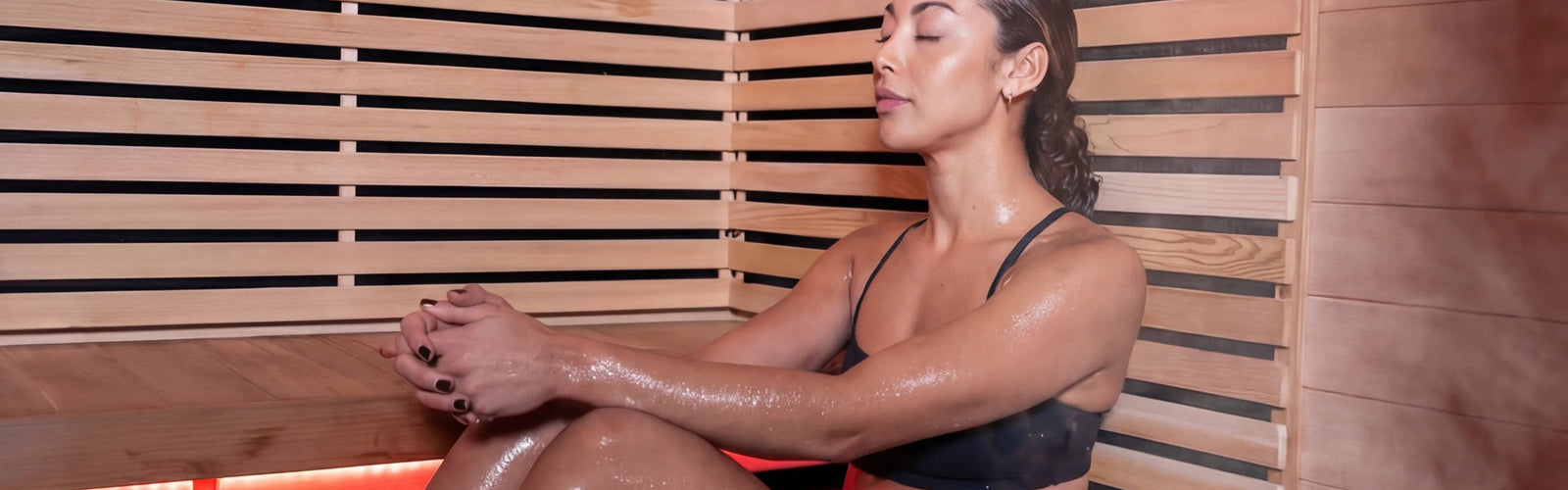
infrared cabins run 18 to 65°C (65 to 150°F). traditional stoves go far higher. the number that matters is not the ceiling, it is the temperature you can sit in comfortably for 10 to 20 minutes, several times a week, for years.

52°C
starting temperature
125°F infrared. build toward 60°C (140°F) over a few weeks. traditional heat: start near 65°C (150°F).
10 to 20min
session length
the cohort data showed the strongest association in the 19-minutes-and-over group.1
3 to 5x
per week
4 to 7 sessions weekly was the most-used frequency band in the research.1
what the research found

the Kuopio Ischaemic Heart Disease study tracked sauna habits in 2,315 men aged 42 to 60 and followed them for two decades. compared with once-weekly use, four-to-seven weekly sessions were associated with lower rates of sudden cardiac death, fatal coronary heart disease, fatal cardiovascular disease, and all-cause mortality.1 a later analysis extended the finding to a mixed cohort of men and women.2

worth saying plainly: these are observational cohorts. they show association, not proof of cause, and the editors of the journal said as much at publication. what they do establish is that regular heat exposure is a habit worth building, and that the frequency, not the extremity, is what tracked.

how to run the session

01

warm-up

first 2 to 3 minutes. sit, breathe, let the heat build. do not rush it.

02

main

8 to 15 minutes at your working temperature. this is the session.

03

cool-down

step out and let your heart rate settle before you do anything else. the step most people skip.

04

when

after training, or in the evening 1 to 2 hours before bed. the buffer matters, see mistake 04.

02

cold

the cold plunge: short, controlled, and repeatable beats heroic

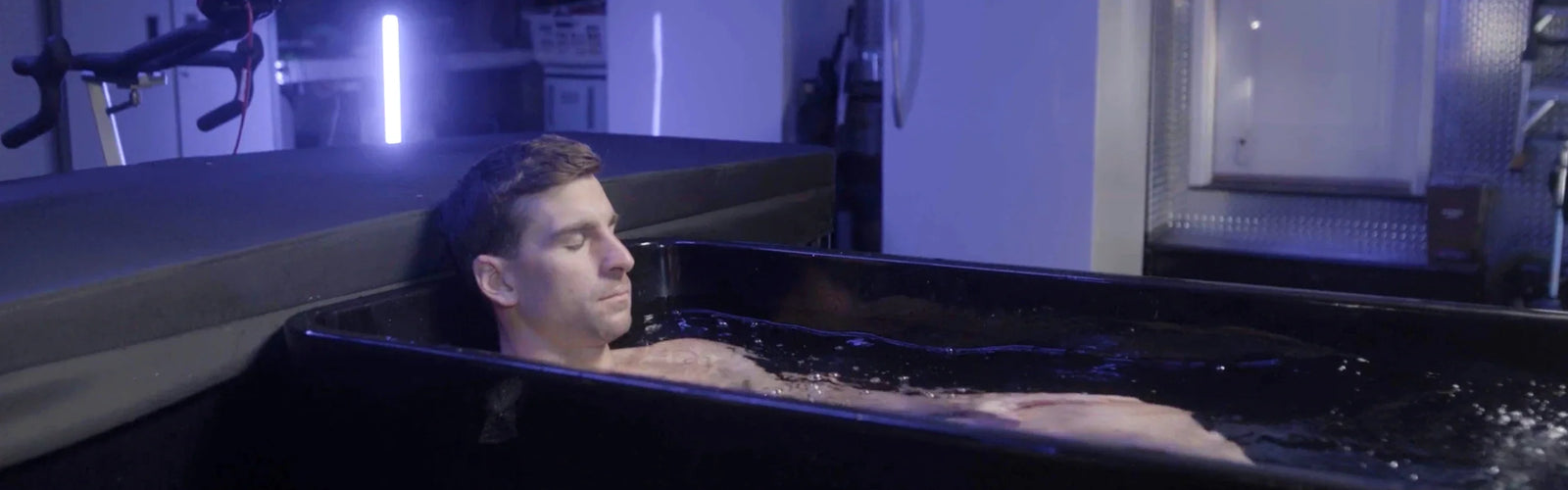
a temperature-controlled system runs 3 to 40°C (37 to 104°F), which means you can pick a number and hit it every session. that reliability is the whole point, because the research is dose-specific and ice is not.

11 to 15°C
working temperature
52 to 59°F. start at the warm end. colder is not automatically better.3
2 to 5min
session length
soreness trials cluster at 10 to 15 min; most home plungers do shorter, more often.3,8
3 to 5x
per week
a common practical target is roughly 11 minutes of total cold per week.

where the research window sits in the system range

the research window

3°C system floor, colder than any trial needs

11 to 15°C the research window. start at the warm end

40°C heat mode, the other end of the same unit

the pale band marks the dose-response optimum from the pooled trials.3,8 a chiller lets you sit inside it every session. ice does not.

what the research found

a systematic review and meta-analysis of randomised trials compared cold water immersion with passive recovery and found a clear dose-response: 11 to 15°C for 11 to 15 minutes produced the best results for muscle soreness.3 a 2025 network meta-analysis ranked the same window most effective for delayed onset soreness.8

the neurochemistry is the other half. in a controlled lab study, one hour of head-out immersion at 14°C raised plasma noradrenaline by roughly 530% and dopamine by roughly 250%, with metabolic rate up about 350%.4 that is a large acute shift from a non-pharmacological stimulus, and it is the mechanism behind the sharp, clear-headed feeling people describe afterwards. shorter sessions produce smaller but real responses.

the caveat most brands skip

if you are lifting for size, timing matters. in a 12-week controlled trial, men who used 10 minutes of cold immersion after every strength session gained less muscle and less strength than those who did active recovery instead. quadriceps muscle mass rose about 15% in the active recovery group and about 2% in the cold group, measured by MRI.5

the practical fix is not to stop plunging. it is to separate the two. put cold on conditioning days, rest days, or mornings, and leave a few hours between a hypertrophy session and the water. endurance adaptations do not appear to be affected the same way.

how to run the session

01

get in

controlled, not a jump. let your shoulders drop below the surface.

02

breathe

slow nasal inhale, longer exhale. the first 30 seconds is a gasp reflex, not danger. the breath is what keeps it manageable.

03

get out

before you are gritting through it. end on a good note so tomorrow is easy.

04

after

rewarm passively for a few minutes. movement and dry clothes, not a hot shower straight away.

03

light

red light: dose is distance times time, not session length

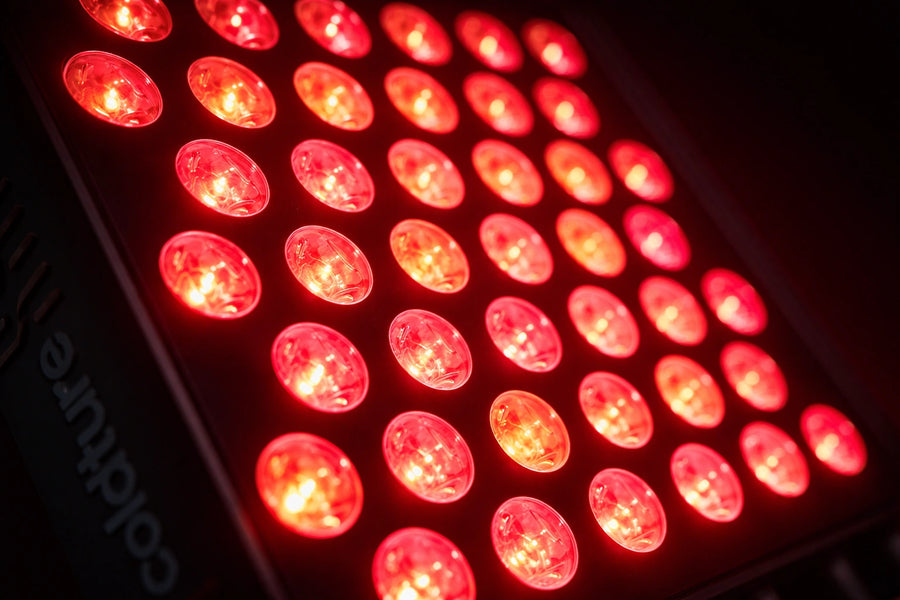
this is the protocol people get wrong most often, because the variable that matters is invisible. a panel's irradiance falls off sharply with distance. sitting further back does not make a session gentler, it makes it a different, much smaller dose.

6in
distance
about 15 cm, held steady. this is the distance our published irradiance is measured at.
10min
session length
per area. longer is not better once the target dose is met.
2 to 5x
per week
the skin trial ran twice weekly for 30 sessions before measuring.7
what the research found

the most cited controlled trial in this field enrolled 136 volunteers, of whom 113 were randomised into four treatment groups and treated twice a week for 30 sessions with polychromatic red (611 to 650 nm) or red plus near-infrared (570 to 850 nm) light. against controls, the treated groups showed statistically significant improvements in skin complexion, profilometrically measured roughness and wrinkle depth, and ultrasonographically measured intradermal collagen density.7

two things are load-bearing there. the outcomes were imaged, not self-reported. and the schedule ran across roughly 15 weeks, which is the honest answer to "how long until I see anything."

what 30 sessions actually looks like

one dot is one 10-minute session. twice a week, that is roughly 15 weeks before the trial measured anything.7 plan in months, not sessions.

why the spec sheet matters here

red light is the one category where the number on the box changes whether you are running the studied dose or a fraction of it. irradiance is measured in W/m² at a stated distance, and a panel quoting output at 3 inches is not comparable to one quoting it at 6. if a brand publishes wattage but not irradiance, or irradiance but not the distance, you cannot calculate your dose. ask for both.

how to run the session

01

bare skin

no fabric between the panel and the area you are treating. fabric absorbs the dose.

02

hold the distance

about 6 inches (15 cm), steady across the session. mark the floor if you have to.

03

cover the area, then turn

front and back are two doses, not one. use the timer rather than guessing.

04

same slot, every time

attach it to something you already do. this is a habit problem, not a technology problem.

04

the contrast stack

heat, then cold. the upgrade most people have never run properly.

pairing the two is where a routine stops being two separate habits and becomes one session. you do not need both on day one. it is the natural next step once one habit no longer takes convincing.

what the research found

a systematic review and meta-analysis pooled 18 controlled trials on contrast water therapy after exercise-induced muscle damage. across 13 pooled studies, contrast therapy produced significantly greater improvements in muscle soreness than passive recovery at every follow-up point measured: under 6 hours, and at 24, 48, 72 and 96 hours. it also significantly reduced strength loss at each of those points.6

the honest framing: against passive rest, contrast wins clearly. against other active recovery methods, the review found little evidence that it is superior. the authors also flagged that the included trials carried a high risk of bias. treat it as a well-supported, pleasant, sustainable way to recover, not a magic multiplier.

one round, to scale

15 min heat
2 min cold
repeat, or stop

block widths are proportional to time. the heat is most of the session. the cold is the punctuation, which is why people who try to make it even usually quit.

how to run it

01

heat first, fully

a complete sauna session, warm-up through main. let the body get genuinely warm, not briefly hot.

02

straight into cold

1 to 3 minutes at your working temperature. controlled entry, same breathing as protocol 02.

03

repeat, or stop

one round is a complete session. two to three rounds is the classic protocol if you have the time.

04

end on the side you want to feel

finish cold for sharp and awake. finish warm for loose and settled before bed.

05

your week

two templates. pick the one you will actually finish.

the protocols above are doses. this is the calendar. start on the left column and only move right when the current week has stopped feeling like a decision.

mon

sauna 12 min at 52°C (125°F), evening

tue

off

wed

sauna 12 to 15 min, evening

thu

off

fri

sauna 15 min, evening

sat

cold 2 min at 15°C (59°F), morning. first exposure, keep it short

sun

off

total

roughly 45 minutes across the week. that is the entire commitment.

mon

red light 10 min, morning  +  sauna 15 min, evening

tue

cold 3 min at 12°C (54°F), morning. conditioning day, not a lifting day

wed

red light 10 min, morning  +  sauna 15 min, evening

thu

cold 3 min, morning

fri

contrast stack 15 min heat, 2 min cold, two rounds, finish cold

sat

red light 10 min  +  sauna 20 min, unhurried

sun

off, or a short sauna if you want it

note

lifting for size? keep cold at least a few hours away from the session, or move it to a rest day. see protocol 02.5

the failure modes

5 mistakes that quietly ruin the whole thing

01

going too extreme, too soon

tolerance builds over weeks. starting at maximum heat or minimum temperature is the single most reliable way to quit by week three, and the research does not reward it anyway.3

02

skipping water

hydrate before and after, every session. sauna weight loss is water, not fat, and the fluid needs replacing the same day.

03

no cool-down

walking straight from the cabin into your day skips the part the body settles into. give it two minutes before you move on.

04

no buffer before sleep

leave 1 to 2 hours between a sauna and bed. the drop in core temperature afterwards is the part that helps sleep, and it needs time to happen.

05

plunging immediately after lifting

if hypertrophy is the goal, cold straight after a strength session blunted 12-week gains in a controlled trial.5 separate them, or plunge on conditioning and rest days instead.

where Coldture fits

the routine works on whatever you have.

a public sauna and a lake will run every protocol on this page. what a home system changes is the failure rate: a temperature you can set, a session that starts when you decide, and no drive between you and the habit. all engineered in-house in Canada and backed by a nationwide service network.

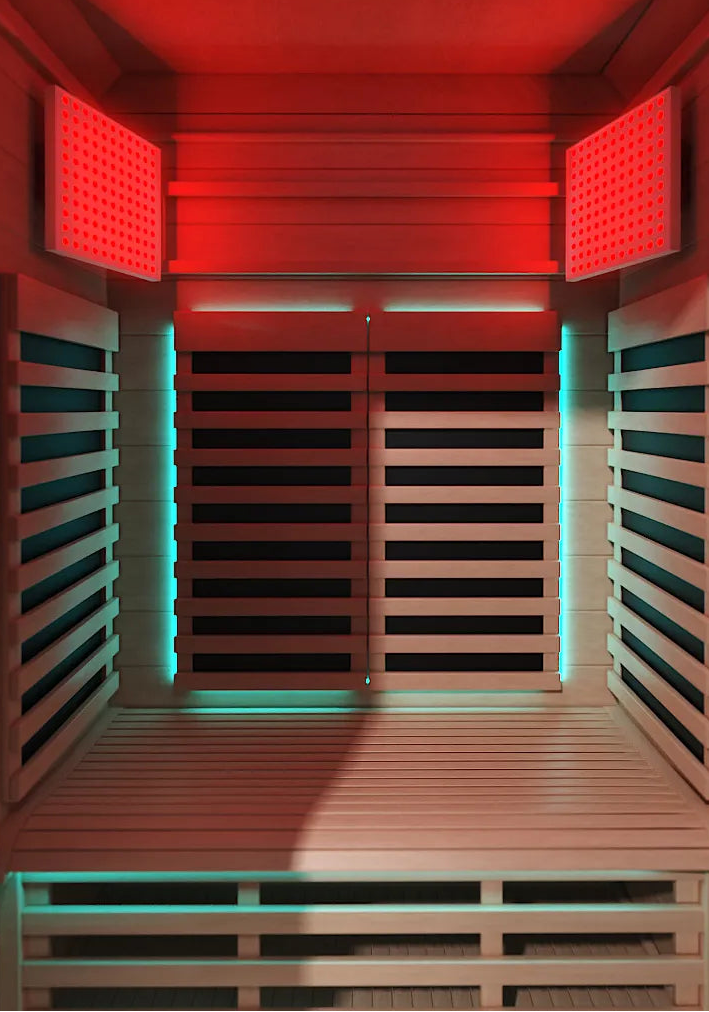
interior of the Coldture POD infrared sauna with red light panels lit

protocol 01 / heat

POD Infrared Sauna

infrared heat and 4 dedicated red light panels in one cabin, so a single 10 to 20 minute sit covers two protocols at once.

18 to 65°C (65 to 150°F), 1 to 2 person

4 red light panels at 660 and 850 nm

120V / 20A standard outlet, no install

Canadian hemlock, red cedar bench, no plywood
explore saunas

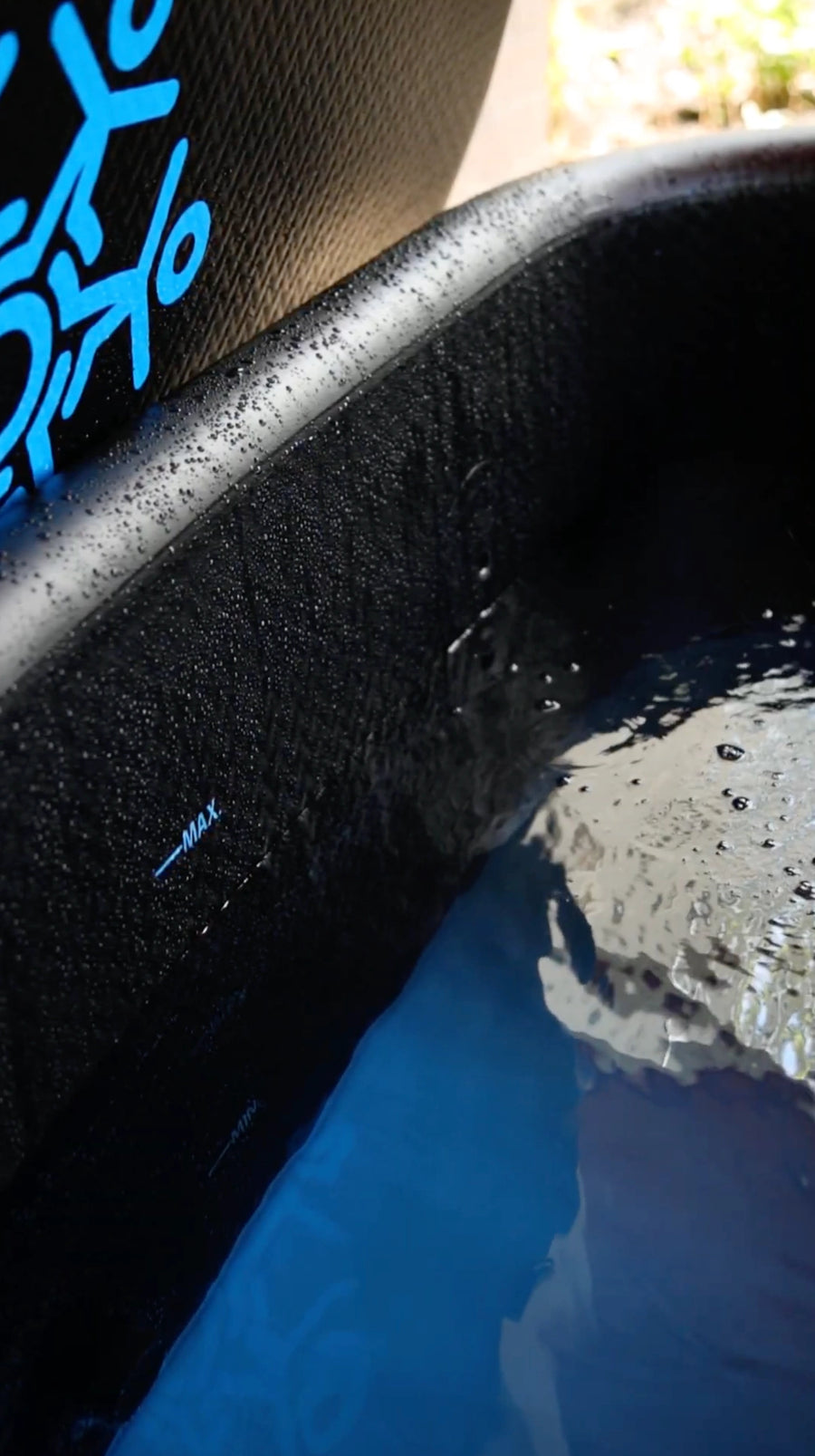
close-up of a Coldture cold plunge shell and chilled water surface

protocol 02 / cold

CLASSIC Tub + Chiller Pro

a temperature you can actually repeat. app-controlled cold and heat in one system, no ice, no drain-and-refill.

3 to 40°C (37 to 104°F), app-controlled

110 to 120V standard outlet

continuous multi-stage filtration

chill, heat, and auto modes

explore cold plunges

close-up of the LED array on the Coldture PRO red light panel

protocol 03 / light

PRO Red Light Panel

a full-body panel built for short, consistent sessions, with the irradiance published at the distance it was measured.

720 dual-chip LEDs, 1,200W output ±10%

≥1,400 W/m² measured at 6 inches

8 wavelengths, 630 to 1060 nm

FDA cleared, Health Canada approved

explore red lights

or take the whole protocol in one order

the bundles pair cold, heat and light so all three habits start the same week instead of six months apart.

start here

recovery starter bundle

cold, heat and light in one order, plug-and-play, no install trades required. the fastest way to have all three protocols running in the same week.

build the room

elite recovery bundle

a rigid plunge, a dual-heat sauna and a full-body red light panel. performance-grade equipment sized for daily use by more than one person.

outdoors, year round

signature oasis bundle

outdoor-rated plunge and sauna, cold-climate engineered, installed and running on day one. no seasonal draining, no shutdown month.

engineered in-house in Canada in-house support financing available trusted by 40,000+

go one level deeper

this page is the routine. each modality has its own protocol.

everything above is how the three fit into one week. if you want the dose broken out by goal, with the frequency data, the ramp-up and the caveats for each, start here.

next step

not sure which protocol your space and schedule can hold?

tell us the room, the electrical you have, and how many people will use it. we will tell you what fits and what does not, including when the answer is a portable tub instead of a build. no pressure either way.

or read the full research library, roughly 30 articles across cold, heat and light.

the research

every number on this page, sourced

we cite the primary literature rather than summaries of it, and we flag where the evidence is observational or where trials carried a risk of bias. if a claim is not on this list, we did not make it.

  1. 1Laukkanen T, Khan H, Zaccardi F, Laukkanen JA. Association between sauna bathing and fatal cardiovascular and all-cause mortality events. JAMA Internal Medicine. 2015;175(4):542-548.
  2. 2Laukkanen T, Kunutsor SK, Khan H, Willeit P, Zaccardi F, Laukkanen JA. Sauna bathing is associated with reduced cardiovascular mortality and improves risk prediction in men and women: a prospective cohort study. BMC Medicine. 2018;16:219.
  3. 3Machado AF, Ferreira PH, Micheletti JK, et al. Can water temperature and immersion time influence the effect of cold water immersion on muscle soreness? A systematic review and meta-analysis. Sports Medicine. 2016;46(4):503-514.
  4. 4Sramek P, Simeckova M, Jansky L, Savlikova J, Vybiral S. Human physiological responses to immersion into water of different temperatures. European Journal of Applied Physiology. 2000;81(5):436-442.
  5. 5Roberts LA, Raastad T, Markworth JF, et al. Post-exercise cold water immersion attenuates acute anabolic signalling and long-term adaptations in muscle to strength training. The Journal of Physiology. 2015;593(18):4285-4301.
  6. 6Bieuzen F, Bleakley CM, Costello JT. Contrast water therapy and exercise induced muscle damage: a systematic review and meta-analysis. PLoS ONE. 2013;8(4):e62356.
  7. 7Wunsch A, Matuschka K. A controlled trial to determine the efficacy of red and near-infrared light treatment in patient satisfaction, reduction of fine lines, wrinkles, skin roughness, and intradermal collagen density increase. Photomedicine and Laser Surgery. 2014;32(2).
  8. 8Impact of different doses of cold water immersion (duration and temperature variations) on recovery from acute exercise-induced muscle damage: a network meta-analysis. Frontiers in Physiology. 2025;16:1525726.

this routine is a general wellness guide, not medical advice, and nothing here is intended to diagnose, treat, cure or prevent any condition. the cohort studies cited show association, not causation. if you are pregnant, managing a cardiovascular condition, taking medication that affects heat or cold tolerance, or recovering from illness or injury, speak with your physician before starting heat or cold exposure. never use a sauna or cold plunge alone if you have any reason to believe you may be at risk.