

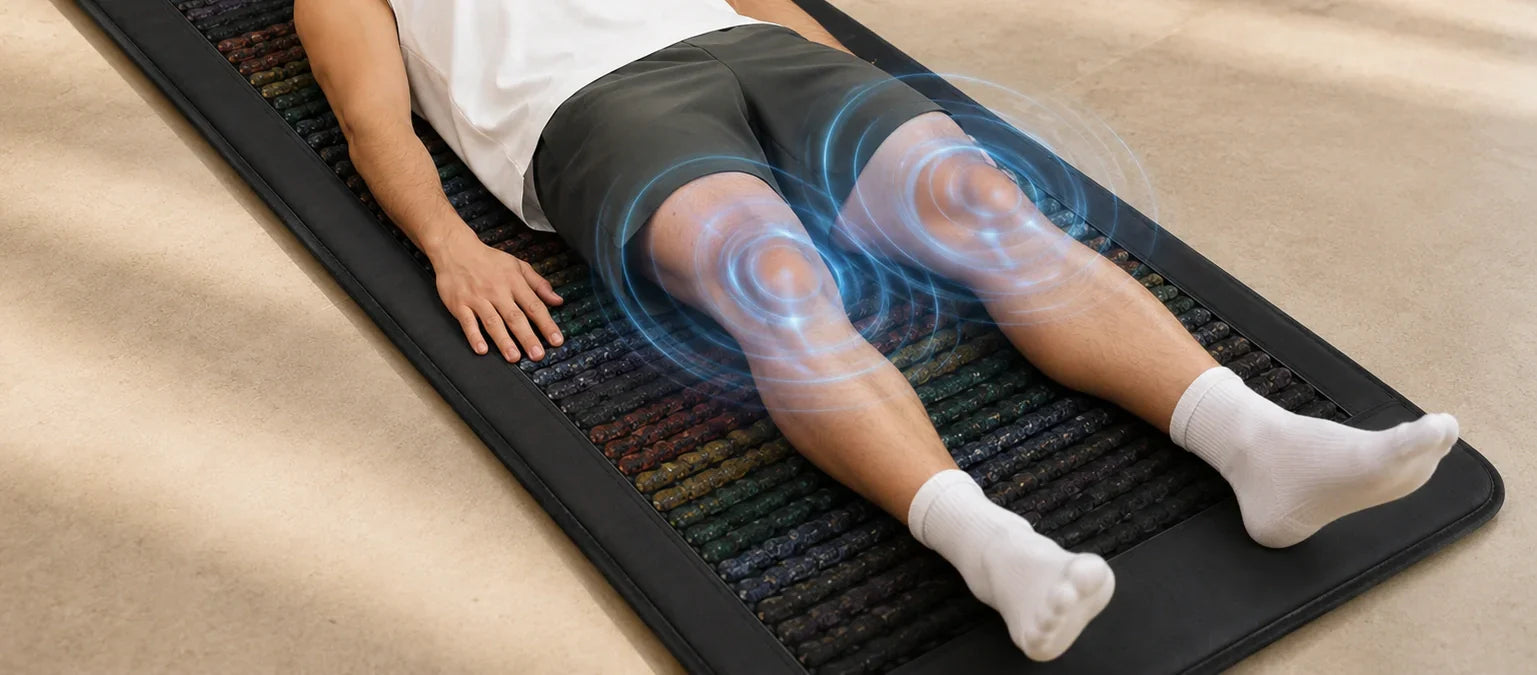
most recovery tools work on something you can see or feel. heat warms your muscles. cold constricts your blood vessels. red light reaches your skin. you can point to the mechanism and feel it happening.
PEMF works differently. pulsed electromagnetic fields pass through your skin, muscle, and bone without you feeling much of anything. there's no heat, no vibration, no visible light. just a low-frequency electromagnetic pulse that interacts with the charged particles on the surface of your cells, triggering a cascade of downstream biological effects that have been studied since the 1970s.
it's one of the least intuitive recovery modalities available. it's also one of the most well-researched. here's what the science actually says.
what PEMF is
PEMF stands for pulsed electromagnetic field. a PEMF device uses a coil (or multiple coils) powered by alternating electric current to generate short bursts of low-frequency electromagnetic fields, typically between 1 and 100 Hz. these fields radiate outward from the coil and pass through biological tissue.
 unlike static magnets (the kind in a refrigerator magnet or magnetic bracelet), PEMF fields are dynamic. they pulse on and off at specific frequencies, which is what allows them to interact with the electrical signaling systems already running inside your cells. static magnets don't do this. the pulsing is the mechanism.
and unlike TENS units (transcutaneous electrical nerve stimulation), which deliver electrical current through the skin to stimulate nerves directly, PEMF generates an electromagnetic field that penetrates tissue without direct electrical contact. the two technologies share some principles but differ significantly in mechanism, depth of penetration, and the biological pathways they activate.
how it works at the cellular level
every cell in your body maintains an electrical charge across its membrane, called the resting membrane potential. healthy cells typically maintain a potential of approximately -70mV. this voltage gradient drives the movement of ions (calcium, sodium, potassium) across the membrane, which is how cells communicate, signal for repair, and regulate inflammation.
 when cells are damaged, inflamed, or under chronic stress, their membrane potential drops. ion channels become less responsive. cellular communication slows. the repair and regeneration signals that depend on precise electrochemical gradients weaken.
PEMF interacts with this system directly. a review published in PMC on the coupling of PEMF therapy to molecular cell biology identified several endogenous mechanisms through which PEMF acts as a trigger: the resting membrane potential itself and resonance mechanisms in charged moieties like membrane transporters. voltage-gated calcium channels are particularly responsive. when PEMF pulses pass through tissue, they force charged ions on cell surfaces to vibrate, which alters the electrochemical balance across the membrane. this triggers changes in intracellular calcium concentrations, which in turn activates downstream signaling pathways involved in inflammation modulation, tissue repair, and cell growth.
a review in the Journal of the American Academy of Orthopaedic Surgeons identified cell membrane adenosine receptors (A2A and A3) as specific sites of PEMF action. through these receptors, PEMF increases the structural integrity of bone and cartilage extracellular matrix, enhancing repair, and alters the homeostatic balance of signaling cytokines, producing anti-inflammatory effects. the review noted that PEMF exerts a proanabolic effect on bone and cartilage matrix and a chondroprotective effect that counteracts the catabolic effects of inflammation in the joint environment.
in simpler terms: PEMF doesn't add anything to your body. it provides an electromagnetic stimulus that helps your cells run their existing repair, communication, and anti-inflammatory programs more efficiently. the energy comes from the field. the work is done by your own biology.
where the evidence is strongest: bone healing
PEMF therapy's clinical history begins with bone. the FDA first cleared PEMF devices for the treatment of non-union fractures (fractures that fail to heal on their own) in 1979. this makes PEMF one of the oldest FDA-cleared electromagnetic therapies in clinical use.
 the evidence base for this application is substantial. a 2002 systematic review in Bioelectromagnetics, analyzing 12 studies, reported an average healing rate of 87% in non-union fractures treated with PEMF. a network meta-analysis ranked PEMF among accepted adjuvant treatments for delayed union and fracture non-union. subsequent research has shown that PEMF-based bone growth stimulation can accelerate normal fracture healing by 20-30% and improve spinal fusion outcomes in at-risk surgical patients.
the mechanism is well-characterized. PEMF stimulates osteoblast activity (the cells that build new bone), increases the expression of bone morphogenetic proteins (BMPs), and upregulates the production of transforming growth factor beta (TGF-beta), all of which directly support the bone remodeling cascade. the electromagnetic stimulus essentially amplifies the signals your body already uses to heal bone, which is why it works as an adjunct to the natural healing process rather than a replacement for it.
pain and inflammation: growing evidence
beyond bone, the research on PEMF for pain management and inflammation has expanded significantly over the past decade, particularly for osteoarthritis.
a systematic review and meta-analysis published in Physical Therapy (2020) examined 16 randomized, placebo-controlled trials of PEMF for osteoarthritis. the pooled analysis found statistically significant improvements in pain (standardized mean difference = 1.06), stiffness (SMD = 0.37), and physical function (SMD = 0.46) compared to sham treatment. PEMF parameters did not significantly influence outcomes, suggesting the effect is robust across different device configurations.
a 2022 meta-analysis published in PMC analyzing 11 RCTs comprising 614 patients with knee and hand osteoarthritis confirmed the findings: PEMF alleviated pain (SMD = 0.71, p = 0.03), improved stiffness (SMD = 1.34, p = 0.003), and restored physical function (SMD = 1.52, p = 0.004) compared to control groups. the researchers noted that low-frequency PEMF treatment exerted a more favorable efficacy across all three outcomes.
a 2015 meta-analysis in Clinical Rheumatology covering 15 trials with over 1,000 patients reported a significant decrease in pain scores versus sham treatment, with improvements typically emerging after 4-8 weeks of regular use. a 2019 RCT in PLOS ONE demonstrated a 25% greater reduction in fibromyalgia pain intensity compared to sham.
 the anti-inflammatory mechanism appears to work through the adenosine receptor pathway identified in the skeletal research. PEMF modulates inflammatory cytokines (including TNF-alpha, IL-6, and IL-1beta) and increases anti-inflammatory signaling, which helps explain why the pain relief tends to build over weeks of consistent use rather than appearing immediately.
what the research is still building
it's worth being honest about where the evidence is strong, where it's promising, and where it's still early.
strong evidence: bone healing (FDA-cleared, decades of clinical data, multiple systematic reviews). pain and stiffness reduction in osteoarthritis (multiple meta-analyses of RCTs, statistically significant results across pain, stiffness, and function).
moderate evidence: post-surgical pain management (30-50% reduction in pain and swelling reported in clinical settings). soft tissue injury recovery (tendinopathies, sprains, repetitive strain). chronic musculoskeletal pain (fibromyalgia, back pain, neck pain: small but encouraging trials).
early/emerging evidence: sleep quality improvement (plausible mechanism through nervous system modulation at low frequencies, but large-scale RCTs are limited). general wellness and energy claims (insufficient clinical evidence to support broad consumer marketing claims). cognitive function (transcranial magnetic stimulation, a related but higher-intensity technology, is FDA-cleared for treatment-resistant depression, but this uses different parameters than consumer PEMF devices).
the honest framing: PEMF is not a miracle device and it doesn't do everything the wellness industry claims. but for bone healing, joint pain, and inflammation, the clinical evidence is real, replicated, and growing.
 frequency matters
one of the most consistent findings across the PEMF literature is that biological effects are frequency-specific. a field pulsing at 3 Hz does not produce the same cellular response as one at 50 Hz. different frequencies appear to activate different pathways.
lower frequencies (1-10 Hz) are generally associated with relaxation, nervous system calming, and sleep support. these frequencies overlap with the delta and theta brainwave ranges and may support parasympathetic nervous system activity.
mid-range frequencies (10-30 Hz) are associated with tissue repair, pain modulation, and anti-inflammatory effects. this is the range most commonly used in clinical PEMF studies for osteoarthritis and musculoskeletal pain.
higher frequencies (30-100 Hz) are associated with deeper tissue penetration and cellular activation. some research suggests these may be more effective for acute conditions and neuromuscular stimulation.
the implication for device selection is straightforward: look for devices that offer a range of frequencies rather than a single fixed output. the ability to adjust frequency based on what you're targeting (relaxation vs. recovery vs. deeper activation) gives you more flexibility to match the research protocols.
coil count and coverage
PEMF fields radiate outward from the coil that generates them. the field strength is highest closest to the coil and drops off with distance. this means that the number and placement of coils directly determine how much of your body sits within the active zone during a session.
most consumer PEMF mats use 4-8 coils, which creates gaps in coverage. you might get a strong field at your lower back but very little reaching your shoulders or feet. for localized treatment (a specific joint or injury site), a few well-placed coils may be sufficient. for full-body protocols, more coils distributed across a longer mat provide more even coverage.
this is one of the practical differences that separates clinical-quality PEMF from entry-level devices. the field is the therapy. if part of your body isn't inside the field, it's not receiving treatment.
the Coldture PEMF mat uses 18 coils distributed across three zones (upper, middle, lower) along a 74.8-inch mat, which is enough length to cover most adults from shoulders to feet. the coil density means less dead space between zones and more even field distribution across a full-body session.
 what to look for in a PEMF device
the PEMF market has grown rapidly, and the range of quality and claims varies enormously. here's what actually matters based on the research:
frequency range. devices that offer multiple frequencies (ideally spanning 1-100 Hz) allow you to match protocols to goals. single-frequency devices limit your options. the Coldture mat runs 9 programs from 3 Hz (delta, deep relaxation) through 64 Hz (deep penetration), plus a randomized program that cycles through the range.
coil count and distribution. more coils = more even coverage = more of your body inside the active field. 18 coils across three zones is significantly more coverage than the 4-8 coils typical of most consumer mats.
complementary modalities. PEMF pairs well with far infrared heat, which increases tissue perfusion and may enhance the delivery of electromagnetic energy to deeper tissue. devices that layer PEMF with infrared, negative ions, or grounding are not gimmicks if each modality has its own evidence base and is implemented at meaningful output levels.
session control. the research consistently shows that PEMF benefits build over weeks of consistent use. devices with programmable session timers, memory functions (so you don't have to reconfigure every session), and automatic shutoff support the kind of daily habit that produces results.
build quality and safety. low EMF output, non-toxic materials, and clear spec disclosure matter. if a manufacturer doesn't publish their frequency range, coil count, or field strength, that's a gap worth questioning.
how PEMF fits into a recovery stack
PEMF occupies a unique space in recovery because it doesn't compete with other modalities. it works through a completely different mechanism than heat (thermal), cold (vasoconstriction/vasodilation), or red light (photobiomodulation). this means it can complement all three without overlap.
before a sauna session. a PEMF session before entering the sauna may support circulation and open up the cellular signaling pathways that heat then amplifies. some users report deeper, more productive sweat sessions when PEMF precedes heat.
after a cold plunge. the rewarming period after cold exposure is when the body's circulatory system is most active (vasodilation, nutrient delivery, inflammation clearance). PEMF during this window may support the repair processes that the cold exposure set in motion.
before bed. low-frequency PEMF programs (3-10 Hz, delta/theta range) may support nervous system downregulation and relaxation. the Coldture mat's far infrared heat at a low setting adds gentle warmth that pairs with the calming field for an evening wind-down protocol.
on its own. 20-30 minutes daily on a PEMF mat is a standalone recovery practice. lie down, choose a program, and let the field do the work. no wearables, no active participation required.
the bottom line
PEMF therapy is one of the few recovery technologies with an FDA clearance dating back nearly 50 years, a well-characterized cellular mechanism (ion channel modulation, adenosine receptor activation, calcium signaling), and a growing body of meta-analytic evidence for pain, stiffness, and inflammation. it's not a cure-all, and the gap between what the clinical research supports and what some companies market is worth acknowledging. but for what it does well, the evidence is solid.
the technology works through your body's own electrical signaling systems. the field provides the stimulus. your cells do the repair. consistency, frequency selection, and full-body coverage are the variables that determine whether you're getting a clinical-grade experience or a placebo-grade one.
the Coldture PEMF mat layers 18 coils across three full-body zones with 9 frequency programs (3-64 Hz), far infrared heat (86-158°F), negative ions, gemstones, grounding, and TENS in a single mat. remote-controlled sessions with memory for time, temperature, and program. folds and packs for storage and travel. $1,299 CAD. learn more.
sources
- Ross CL, Harrison BS. "Pulsed Electromagnetic Field Stimulation of Bone Healing and Joint Preservation: Cellular Mechanisms of Skeletal Response." PMC, 2020.
- Funk RHW et al. "Coupling of Pulsed Electromagnetic Fields (PEMF) Therapy to Molecular Grounds of the Cell." PMC, 2018.
- Wuschech H et al. "Effects of PEMF on Patients with Osteoarthritis: A Prospective, Placebo-Controlled, Double-Blind Study." Bioelectromagnetics, 2015.
- Elshiwi AM et al. "Effects of Pulsed Electromagnetic Field Therapy on Pain, Stiffness, Physical Function, and Quality of Life in Patients with Osteoarthritis: A Systematic Review and Meta-Analysis." Physical Therapy, 2020.
- Chen L et al. "The Efficacy of Pulsed Electromagnetic Fields on Pain, Stiffness, and Physical Function in Osteoarthritis: A Systematic Review and Meta-Analysis." PMC, 2022.
- Vavken P et al. "Effects of Pulsed Electromagnetic Field on Knee Osteoarthritis: A Systematic Review." Rheumatology, 2009.
- Defined Health. "Effects of Pulsed Electromagnetic Field Therapy on Outcomes Associated with Osteoarthritis: A Systematic Review of Systematic Reviews." PMC, 2022.
- Grasso A et al. "Pulsed Electromagnetic Field Therapy in People with Knee Osteoarthritis: A Systematic Review and Meta-Analysis." MDPI Medicina, 2026.
Share:
skipping recovery in the summer costs you more than most people realize
the science of contrast therapy: why the best athletes in the world alternate between heat and cold