

Cold Plunge FAQ: The 5 Questions Everyone Asks, Answered With Research
Science + Recovery | 9 min read
Key Takeaways
- What it is: Short, controlled immersion in cold water (typically to the neck) for recovery and wellness.
- Benefits: Best-supported for muscle recovery and soreness; mood and alertness effects are real but shorter-lived. The overall evidence is promising but still mixed.
- How to do it: Roughly 10 to 15°C, a few minutes per session, several times a week. Start warmer and shorter.
- Safety: Generally safe for healthy adults, but the cold shock response is real. People with cardiovascular conditions or who are pregnant should consult a doctor first.
- Vs. ice bath / cryotherapy: A cold plunge is controlled cold water immersion; an ice bath is the DIY version; cryotherapy uses freezing air and has weaker evidence.
1. What Is a Cold Plunge and How Does It Work?
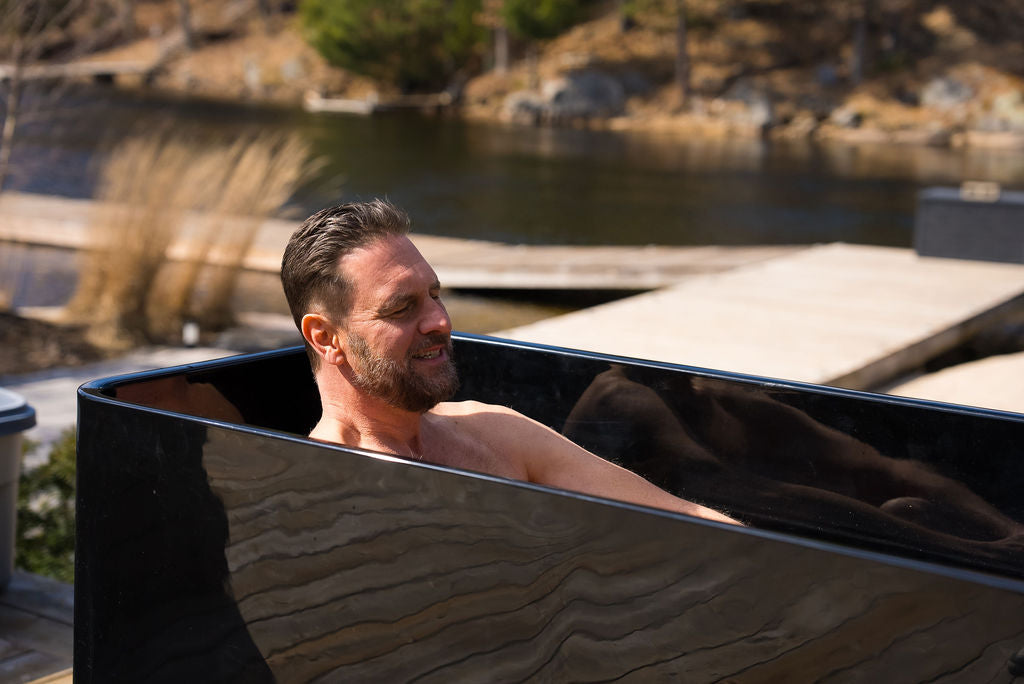
A cold plunge, also called cold water immersion, is the practice of partially or fully submerging your body in cold water for a short, controlled period, usually a few minutes, for recovery and wellness benefits. [1] Most of the benefit comes from immersing the body up to the neck; submerging the head is optional and may increase the risk of the cold shock response. [2]
When you enter cold water, the body mounts a coordinated response. Blood vessels in the skin and extremities constrict (vasoconstrict) to conserve heat and protect core temperature. [3] Heart rate and blood pressure rise initially, then settle with controlled breathing. The cold also triggers a release of neurotransmitters including norepinephrine and dopamine, which is part of the alert, clear-headed feeling many people report afterward. [3] As the body rewarms, it shifts toward a parasympathetic "rest and recover" state, the calm people describe post-plunge.
2. What Are the Benefits of Cold Plunging?
This is where honesty serves you better than hype, because the evidence is genuinely mixed and worth presenting accurately.
The best-supported benefit is muscle recovery. Research has found that cold water immersion reduces exercise-induced muscle damage and soreness, which helps restore physical performance the next day. [4] This is the most consistent finding across the literature and the strongest reason athletes use it.
Mood, alertness, and stress. Individuals who did cold plunges reported lowered cortisol levels, enhanced mood regulation, and increased resilience to stress. [5] The neurotransmitter response underpins a real, if often short-lived, lift in mood and alertness. The DO
The honest caveat on the broader claims. A 2025 meta-analysis of 11 studies found the overall picture is mixed: some possible benefits, but many of them modest and without lasting staying power. [6] Major medical centers have echoed that the evidence for the bigger longevity and metabolic claims is still weak. [7] So the responsible framing is: cold plunging is a legitimate, useful recovery and mood tool with solid support in specific areas, not a proven cure-all. That is still a compelling reason to do it, just not for the reasons the internet sometimes claims.
We go deeper on specific applications in our guides on cold plunges for runners and what cold water does to brain chemistry.
3. How Long, How Cold, and How Often Should You Cold Plunge?
The practical protocol question, with research-backed answers.
Temperature: Most research uses water around 10 to 15°C (50 to 59°F). [4][6] This is cold enough to trigger the response without crossing into the extreme cold that raises risk. Beginners should start at the warmer end and work down.
Duration: Sessions are short. Most protocols fall in the range of a few minutes up to about 10 to 15 minutes total. [4] A common practical guideline is to accumulate roughly 11 minutes of cold exposure per week across several sessions. Longer is not proportionally better, and extended immersion in very cold water increases risk.
Frequency: Several sessions per week, with consistency mattering more than any single session. The adaptations, comfort with cold, recovery, mood resilience, come from regular practice over time. [3]
We cover the full protocol in detail, including timing relative to training, in our cold plunge temperature and time guide.
A note on consistency: the single biggest predictor of whether a cold practice sticks is how much friction stands between you and the water. A system that holds an exact temperature removes the daily guesswork, which is why a chiller-based setup tends to outlast the ice-hauling approach. The Coldture Classic Tub + Chiller holds any temperature from 3 to 40°C on a standard outlet, and the Barrel Tub + Chiller does the same in a compact footprint.
4. Is Cold Plunging Safe? Who Should Not Do It?
For most healthy adults, cold plunging is considered safe when done sensibly. [8] But the risks are real and worth understanding, not glossing over.
The cold shock response. The most immediate risk is the cold shock response: a sudden gasp, spike in heart rate and breathing, and the potential to hyperventinate. [5] In extreme cases this can lead to loss of consciousness and, in open water, drowning. This is why controlled entry, steady breathing, and never submerging the head as a beginner matter, and why you should never plunge alone when you are new to it.
Hypothermia and overexposure. Staying in too long or in water that is too cold can lower core body temperature toward hypothermia. [7] Keep sessions short and have warm, dry layers ready immediately afterward.
Who should consult a doctor first. People with cardiovascular conditions, uncontrolled high or low blood pressure, or circulatory issues should talk to a doctor before cold plunging, because the cold places sudden demand on the cardiovascular system. [8] Pregnant women should also consult their provider; we cover this in our cold plunging while pregnant guide.
Practical safety habits: enter slowly, breathe in a controlled way, immerse to the neck rather than the head, keep sessions short, never plunge alone as a beginner, and exit immediately if you feel unwell, numb, or unusually short of breath.
A temperature-controlled system adds a safety margin here too: you know exactly how cold the water is and can set a sensible, repeatable temperature rather than guessing with ice.
5. Cold Plunge vs. Ice Bath vs. Cryotherapy: What's the Difference?
These terms get used interchangeably, but they are not the same.
Cold plunge: A dedicated tub of chilled water for short, controlled immersion, typically held at a precise temperature by a chiller. The most controllable and repeatable form of cold therapy. [1]
Ice bath: Essentially the DIY version, a tub of water cooled with ice. Same principle as a cold plunge, but the temperature starts too cold, drifts warmer through the session, and varies every time depending on how much ice you used. More friction, less consistency. We cover the ratios in our how much ice for an ice bath guide.
Cryotherapy: A different method entirely, using freezing air or nitrogen gas (often -110°C and colder) to surround the body for 2 to 3 minutes, rather than water. [9] Notably, the evidence for whole-body cryotherapy is weaker than for cold water immersion; some research has found little measurable benefit. [6] Cold water immersion is the better-studied, more accessible, and more controllable option for most people.
The practical takeaway: a cold plunge gives you the controlled, repeatable version of what an ice bath does manually, with stronger and more accessible evidence than cryotherapy.
Getting Cold Plunging Right
Across all five questions, the themes are the same: do it in a sensible temperature range, keep sessions short, respect the real safety considerations, and above all, be consistent, because that is where the genuine benefits live.
That consistency depends on removing friction, which is what Coldture builds for. The Classic Tub + Chiller holds a precise temperature from 3 to 40°C with continuous filtration so it is always ready. The Barrel Tub + Chiller and Ultra Barrel Lite + Chiller bring the same to smaller spaces. And because the range runs to 40°C, the same system supports contrast therapy with heat. Browse the full Coldture cold plunge lineup.
Frequently Asked Questions
What is a cold plunge and how does it work? A cold plunge is short, controlled immersion in cold water, usually to the neck, for recovery and wellness. The cold triggers vasoconstriction, a neurotransmitter release tied to alertness, and a recovery response as the body rewarms.
What are the benefits of cold plunging? The strongest evidence is for reduced muscle soreness and faster recovery. Mood, alertness, and stress-resilience benefits are real but often shorter-lived. The broader longevity claims are still mixed in the research.
How long, how cold, and how often should you cold plunge? Around 10 to 15°C, a few minutes per session, several times a week. A common target is roughly 11 minutes of total cold exposure weekly. Start warmer and shorter, and build up.
Is cold plunging safe? Who should avoid it? It's generally safe for healthy adults, but the cold shock response and hypothermia are real risks. People with cardiovascular conditions or who are pregnant should consult a doctor first. Never plunge alone as a beginner.
What's the difference between a cold plunge, ice bath, and cryotherapy? A cold plunge is a temperature-controlled tub; an ice bath is the DIY ice-cooled version; cryotherapy uses freezing air and has weaker evidence. Cold water immersion is the better-studied, more controllable option.
This article is for general wellness information and is not medical advice. Cold water immersion carries real risks, including the cold shock response and hypothermia, particularly for people with cardiovascular conditions or who are pregnant. Consult a healthcare professional before beginning a cold exposure practice, and never plunge alone when you are new to it.
References
[1] Hot Spring Spas. "Cold plunge frequently asked questions." (Overview of cold plunge practice and definitions.) 2026.
[2] Tipton MJ, et al. "Cold water immersion: kill or cure?" Experimental Physiology. 2017;102(11):1335-1355. doi.org/10.1113/EP086283
[3] Šrámek P, et al. "Human physiological responses to immersion into water of different temperatures." European Journal of Applied Physiology. 2000;81(5):436-442. doi.org/10.1007/s004210050065
[4] Machado AF, et al. "Can water temperature and immersion time influence the effect of cold water immersion on muscle soreness? A systematic review and meta-analysis." Sports Medicine. 2016;46(4):503-514. doi.org/10.1007/s40279-015-0431-7
[5] Cleveland Clinic. "What to know about cold plunges." (Overview of benefits, cold shock, and safety.) 2025.
[6] Cain T, et al. "The effects of cold water immersion on health and wellbeing: a systematic review and meta-analysis." PLOS ONE. 2025. (Meta-analysis of 11 studies; mixed findings.)
[7] Mayo Clinic Press. "The science behind ice baths for recovery." (On limitations of the evidence and cryotherapy.) 2025.
[8] SweatHouz / general clinical guidance. "Cold plunge safety and contraindications." (On who should consult a doctor.) 2025.
[9] Mayo Clinic Health System. "Cold-water plunging health benefits." (On cold water immersion vs. cryotherapy and risks.) 2024.
Share:
Red Light Therapy FAQ: The 5 Questions Everyone Asks, Answered With Research
The Good News in Longevity Science That Almost No One Is Talking About