

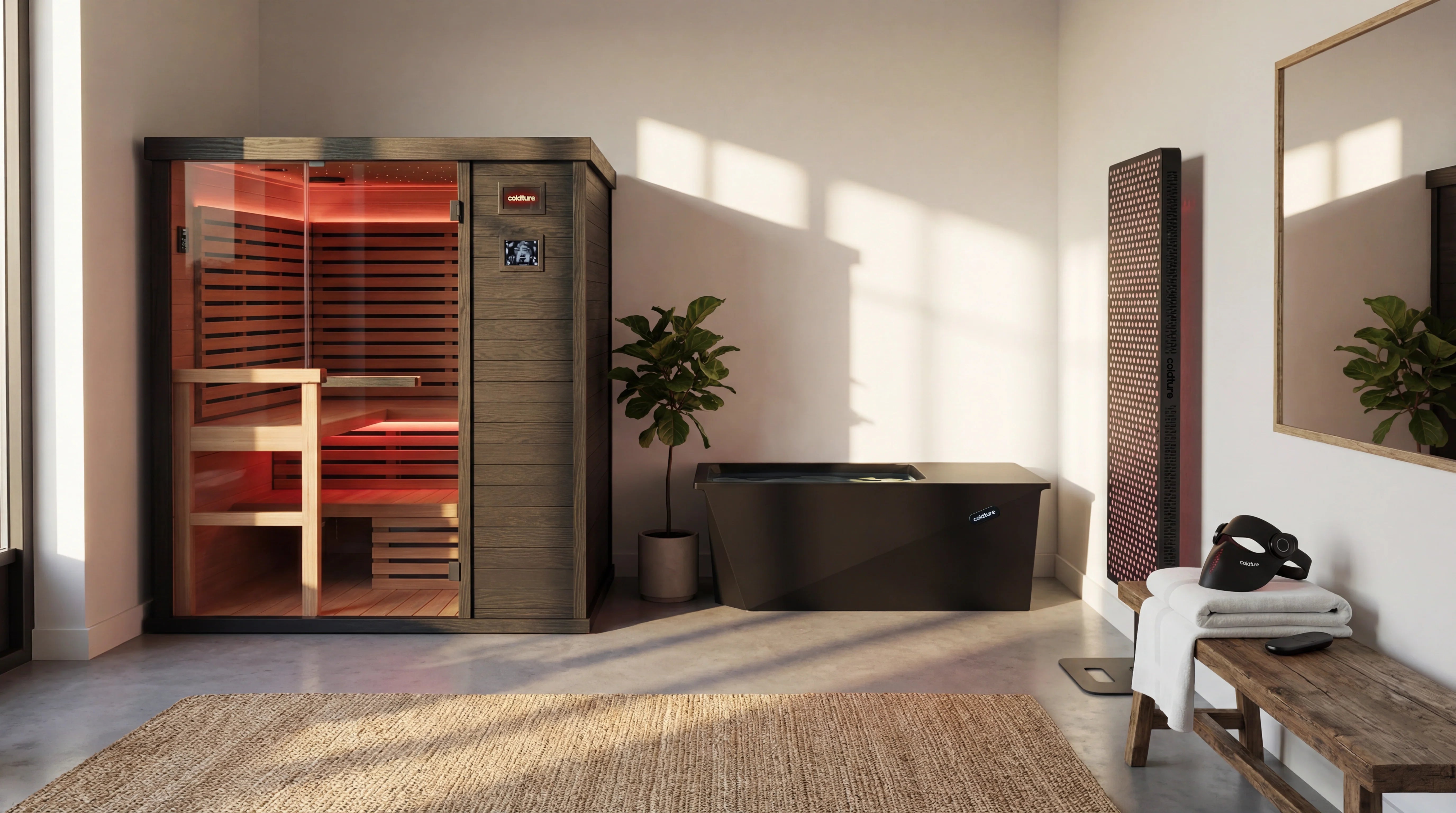
Stress doesn’t clock out when you do. Between demanding work schedules, brutal winters, and the general noise of daily life, the idea of a restorative retreat at home has shifted from luxury to genuine necessity for many North American homeowners. A well-designed home spa gives you daily access to the kind of recovery and relaxation that used to require a hotel stay or a gym membership. This guide walks you through every major decision, from initial planning to finishing touches, so you can build a setup that actually gets used, season after season.
Table of Contents
- Assessing your space and needs
- Essential features: Thermal elements and contrast therapy
- Steam showers and saunas: Costs, sizing, and installation
- Sensory design and finishing touches for true immersion
- Avoiding common mistakes and ensuring lasting results
- Why personalization, not perfection, delivers home spa satisfaction
- Upgrade your home spa with Coldture wellness solutions
- Frequently asked questions
Key Takeaways
| Point | Details |
|---|---|
| Year-round relaxation | Design for all seasons so you can enjoy your spa whenever you need it, not just in summer. |
| Thermal cycling benefits | Combining heat and cold in your spa supports stress relief, recovery, and healthy skin. |
| Budget and plan wisely | Accurately estimate costs and space needs before starting to ensure your project succeeds. |
| Prioritize usability | Easy access and comfortable zoning turn a spa from a display into an everyday wellness tool. |
Assessing your space and needs
With your desire for genuine relaxation established, it’s time to ensure your spa vision actually fits your home and your life.
Before buying a single piece of equipment, get clear on why you want a home spa. Are you chasing post-workout muscle recovery? Deep stress relief after long workdays? A social space to share with guests? Or a performance-focused setup that supports athletic training? Your primary goal shapes every decision that follows, from which thermal elements you choose to where you put them.
Next, walk your property with fresh eyes. Do you have a spare bathroom, a basement, a garage bay, or outdoor square footage? Each option carries different installation requirements. Indoor spaces tend to need more attention to ventilation and moisture control, while outdoor setups demand serious weatherproofing. One thing that often gets overlooked is seasonality. North American home spa design must plan for all four seasons, not just the warm months when outdoor use feels obvious. A sauna or cold plunge that becomes inaccessible in February is a failed investment.
Here’s a quick overview of the most common space types and what each demands:
| Space type | Ideal for | Main considerations |
|---|---|---|
| Spare bathroom | Steam shower, vanity, lighting | Plumbing access, ventilation |
| Basement | Full sauna + cold plunge combo | Electrical capacity, moisture barrier |
| Garage | Larger setups, prefab saunas | Insulation, heating for winter |
| Outdoor deck/yard | Cold plunge, barrel sauna | Weatherproofing, privacy, drainage |
Key constraints to address before you finalize any plan:
- Electrical capacity: Saunas and steam generators often require dedicated 240V circuits.
- Plumbing access: Cold plunges and steam showers need water supply and drainage.
- Ventilation: Inadequate airflow in humid environments leads to mold fast.
- Budget range: Know your ceiling before you fall in love with a custom build.
- Privacy: Natural screening or frosted panels matter more than most homeowners expect.
Pro Tip: Place your hot and cold elements within ten feet of each other. Moving from a 180°F sauna to a cold plunge 30 feet away in January defeats the purpose and breaks the thermal loop. Proximity is a practical design feature, not a luxury one.
Essential features: Thermal elements and contrast therapy
Once you’ve determined your setup, the heart of any home spa is its core thermal and contrast therapy features.
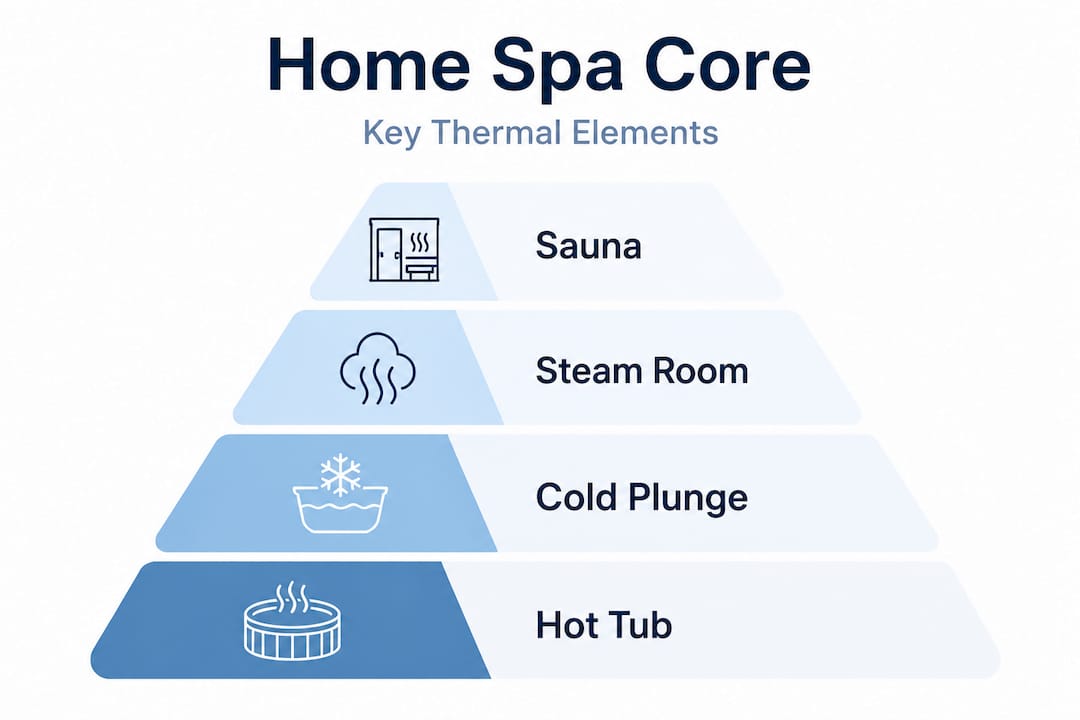
The three most impactful thermal elements are the sauna, the steam room, and the cold plunge. Each serves a distinct physiological function, but they deliver their greatest benefits when used together. Contrast therapy basics involve alternating between heat and cold exposure to drive circulation, reduce inflammation, and accelerate recovery. Many users also report a powerful mood lift after a well-executed hot/cold session.
Thermal bathing and balneotherapy show measurable improvements in skin barrier function and perceived stress over a 16-week period, according to a community-based study. That’s not a one-session benefit; it’s a sustained improvement tied to consistent practice.
How you sequence your sessions matters. Here’s a practical beginner protocol:
- Warm up in the sauna for 10 to 15 minutes at 170 to 190°F.
- Take a cool shower or step outside briefly to begin the transition.
- Immerse in the cold plunge for 1 to 3 minutes at 50 to 59°F.
- Rest and recover at room temperature for 5 to 10 minutes.
- Repeat one to three cycles depending on your tolerance and goals.
Safety note: Hot/cold cycling protocols should be approached cautiously, especially for anyone with cardiovascular conditions. Always consult your physician before starting intensive temperature exposure routines.
Exploring a complete thermal therapy routine can help you build a structured practice over time. If you’re also developing a sustainable home gym setup, layering thermal recovery into that environment makes each training session more complete.
Steam showers and saunas: Costs, sizing, and installation
To bring your thermal vision to life, you’ll need to decide between steam showers, saunas, or both, and know what to expect in terms of investment and complexity.
Steam showers and saunas each have their own installation requirements. Steam shower costs vary based on shower size, generator capacity, and whether you’re converting an existing shower or building from scratch. A basic conversion might run $3,000 to $5,000, while a custom tile enclosure with a high-output generator can easily reach $10,000 or more. Saunas follow a similar curve, from prefab barrel units around $2,500 to custom indoor rooms above $15,000.
Here’s a side-by-side comparison to help you decide:
| Feature | Steam shower | Traditional sauna |
|---|---|---|
| Temperature range | 110 to 120°F with high humidity | 160 to 200°F with low humidity |
| Installation complexity | Moderate (plumbing + generator) | Low to moderate (electric or wood) |
| Average entry cost | $3,000 to $8,000 | $2,500 to $6,000 (prefab) |
| Space requirement | 36 to 100+ sq ft | 16 to 100+ sq ft |
| Maintenance needs | Generator descaling, seals | Wood treatment, ventilation checks |
Key sizing rules:
- Steam generators are rated in kilowatts per cubic foot of space. Undersizing is the most common and costly mistake.
- Prefab saunas install faster and cost less but limit customization. Custom builds take longer but can maximize awkward spaces.
- Steam room temperatures are typically cited around 110 to 120°F, though the experience varies significantly based on humidity levels and ventilation design.
Common installation pitfalls to avoid:
- Under-sizing the generator: A 7kW generator in a 200-cubic-foot steam room will never reach temperature. Always match or slightly exceed the recommended capacity.
- Ignoring ceiling slope: Steam rooms need a sloped ceiling so condensation runs to the walls, not drips on bathers.
- Forgetting a dedicated drain: Steam and plunge setups generate significant water runoff.
- Skipping the vapor barrier: Without proper moisture protection, walls degrade within a few years.
Pro Tip: If you’re adding a cold plunge to complement your sauna, ice bath integration principles from commercial gym setups translate well to residential spaces. Think about drainage, surface grip, and user flow from hot to cold before the installation begins.
Sensory design and finishing touches for true immersion
After mastering the hardware, elevate your spa with the right ambiance and sensory details.
This is where most home spas either feel like professional retreats or awkward converted bathrooms. The difference isn’t always expensive. It’s intentional. High-end home spa sensory design converges on lighting, sound, scent, and material zoning as the key differentiators. The evidence for each modality varies, but the cumulative effect on perceived relaxation is real and significant.
Lighting: Swap overhead fluorescents for warm, dimmable recessed lights or LED strips placed low along walls. Aim for 2700K color temperature, which mimics candlelight without the fire hazard. Avoid cool white light above 4000K in relaxation areas; it activates alertness, not rest.
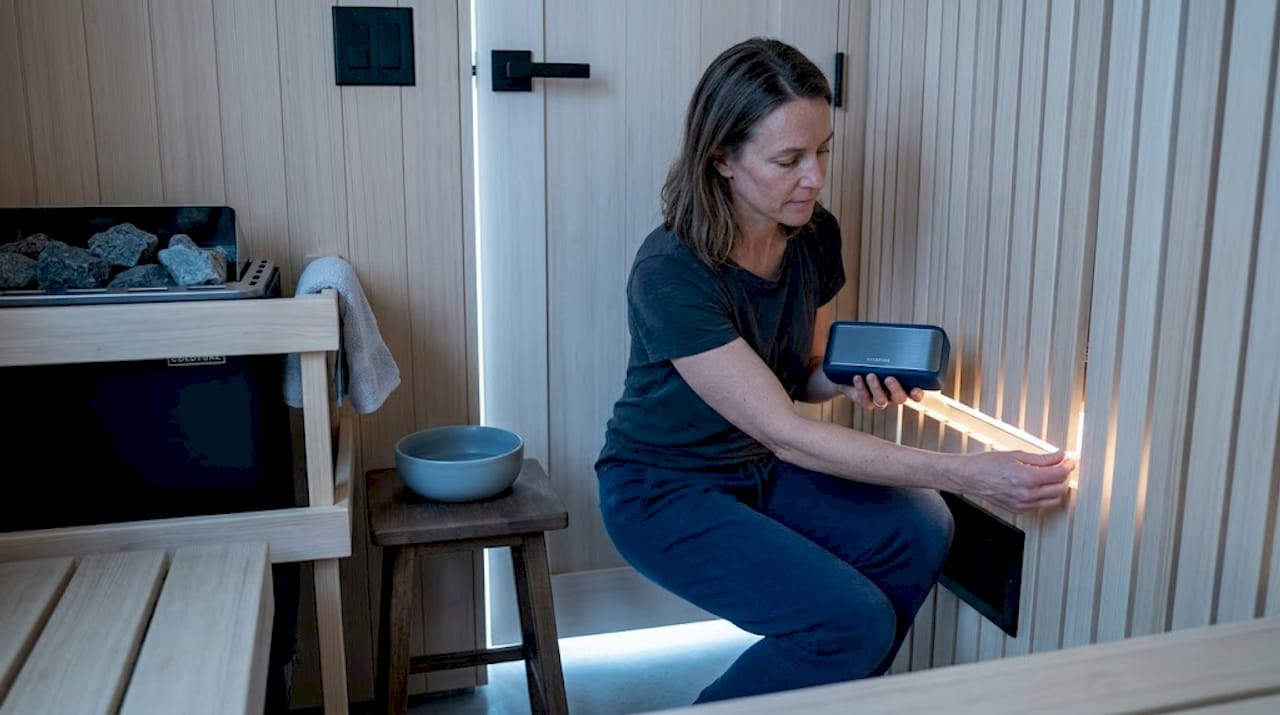
Sound: Waterproof Bluetooth speakers are now affordable and excellent. Build a dedicated spa playlist around 60 to 70 beats per minute (BPM) to match a relaxed heart rate. Many users prefer nature soundscapes like rain, rivers, or forest ambiance over music. Either works. What matters is that the audio feels deliberate, not like a forgotten TV in another room.
Scent: Essential oil diffusers work well in dry areas, but in humid environments like steam showers, choose naturally scented woods (cedar, eucalyptus, pine) or eucalyptus branches that release scent with heat and steam. Avoid synthetic fragrances in enclosed hot spaces.
Finishing materials and details:
- Teak, cedar, and other moisture-resistant woods add warmth and hold up to humidity far better than painted drywall.
- Heated floors in cold rooms make barefoot transitions to and from the plunge dramatically more comfortable.
- A dedicated robe hook and warm towel rack positioned between your hot and cold elements keeps the experience fluid.
- Accent stones, river pebbles, or smooth tiles at floor level add a grounding texture underfoot.
Pro Tip: Before selecting any material, scent, or product, ask whether it performs well in both high humidity and high heat. A bamboo shelf that warps after three weeks or a diffuser that malfunctions near steam will break the atmosphere you’ve carefully built. Durability and sensory effect must both be checked.
For ideas that extend beyond just the spa itself, reviewing your broader recovery method options can help you build a whole-home wellness environment where the spa plays a central role.
Avoiding common mistakes and ensuring lasting results
A flawless spa is as much about what you avoid as what you add, ensuring daily relaxation doesn’t become tomorrow’s regret.
The most expensive home spa mistakes aren’t made during installation. They’re made in planning, or the complete lack of it. Here are the most common patterns and how to sidestep them:
- Skipping winterization planning. North American home spas must work year-round, not just in summer. If your outdoor cold plunge or sauna lacks proper insulation and weatherproofing, you’ll lose months of usability every year.
- Underestimating ventilation. Poor airflow in a steam or sauna room creates mold within months. Mechanical ventilation must be planned before walls are sealed.
- Over-investing in aesthetics, under-investing in function. Imported Italian tiles look stunning. But if your generator is underpowered or your cold plunge lacks filtration, the experience will disappoint every time.
- Never scheduling use. The most common reason a home spa stops being used is that it was never made into a routine. Treat your spa sessions like workouts. Block the time.
- Ignoring maintenance calendars. Steam generators need descaling every few months. Cold plunges need water treatment and filter changes. Cedar needs occasional sanding and oiling. Budget time, not just money.
“The spa that gets used every week beats the showroom-perfect spa that gets used once a month. Design for your actual habits, not your aspirational ones.”
Looking at expert recovery routines can give you a framework for making spa use a non-negotiable part of your week rather than an occasional treat.
Why personalization, not perfection, delivers home spa satisfaction
Here’s a perspective that doesn’t get said enough in the wellness design world: the most beautifully designed home spa that doesn’t match your daily behavior is a waste.
We’ve seen homeowners invest over $50,000 in custom tile, imported wood, and state-of-the-art generators, only to use the space twice a month because the layout doesn’t fit how they actually live. Contrast that with a homeowner who spent $8,000 on a prefab sauna, a quality cold plunge, and smart lighting, placed within ten steps of each other in a basement, and uses that setup four times a week. The second homeowner is getting more measurable health benefit by a wide margin.
The uncomfortable truth is that Instagram wellness culture pushes visual perfection over functional design. The most shareable spa and the most used spa are rarely the same room.
What actually predicts home spa satisfaction over time is proximity (hot and cold elements close together), simplicity of operation (equipment that heats up fast and requires minimal setup), and honest alignment with your wellness goals. If you hate cold water, a cold plunge won’t become a habit no matter how beautiful it looks. If you travel constantly, an elaborate fixed setup might serve you far less than a portable system.
Start with the core elements that match your primary goal. If recovery from training is the priority, a quality sauna and cold plunge will deliver more than any add-on. If deep relaxation is the goal, lighting, sound, and a steam shower will carry most of the experience. Customizing your wellness routine to fit your real life, not a wellness influencer’s highlight reel, is what turns a home spa from a one-time novelty into a lasting health asset.
Build simply. Use it consistently. Upgrade over time.
Upgrade your home spa with Coldture wellness solutions
If your spa vision is starting to take real shape, the right equipment makes all the difference between a setup you’re proud of and one that falls short of what you imagined. Coldture designs cold plunges, saunas, and red light therapy systems specifically for North American homes and climates, combining performance you’d expect from a professional facility with aesthetics that belong in a well-designed home.
Whether you’re planning a full contrast therapy circuit or starting with a single standout piece, Coldture’s lineup covers every stage of your build. Browse cold plunge options built for year-round outdoor and indoor use, explore the full sauna collection ranging from compact barrel units to custom-ready indoor rooms, and discover red light therapy devices that add a powerful recovery modality without requiring additional construction. Every product is designed to work as a standalone piece or as part of a complete home wellness environment.
Frequently asked questions
What are the core components of a home spa?
Essential elements include at least one thermal feature such as a sauna, steam room, or hot tub, a cold exposure option like a cold plunge, and sensory enhancements like ambient lighting and scent.
How much space do you need to build a home spa?
Most saunas and steam rooms require at least 16 to 25 square feet of dedicated space. Steam room sizing depends on the shower footprint and generator capacity, while cold plunges and lounge areas add to the total footprint.
Can you install a cold plunge and sauna outdoors in winter?
Yes, but your design must address North American winterization from the start, including insulation, weatherproof materials, and protection for plumbing and electrical systems in freezing temperatures.
Are there proven health benefits to home spa use?
Yes. Regular thermal bathing improves skin barrier function and measurably reduces perceived stress over time, based on a 16-week community study of consistent balneotherapy practice.
How much should you budget for a steam shower or sauna?
Steam shower and sauna costs typically range from around $3,000 for a basic conversion to over $15,000 for a fully custom design, depending on size, materials, and generator specifications.
Share:
Step-by-step recovery protocol for peak athletic results
Why biohackers use saunas: science-backed benefits explained