

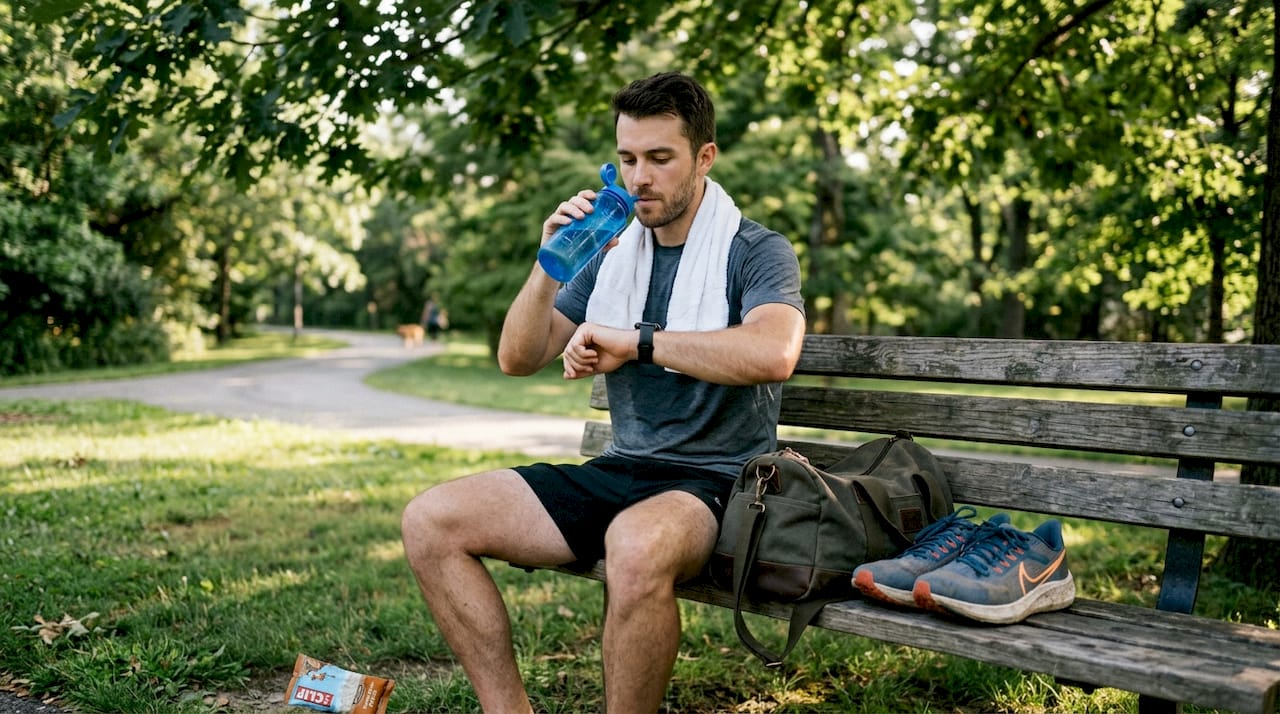
You finish a brutal training block, wake up two days later feeling like you aged a decade overnight, and wonder why nothing seems to help. Static stretches, foam rolling, extra sleep, they all check the right boxes, yet soreness lingers and performance stalls. The truth is that most athletes are working with an incomplete toolkit. Evidence-based modalities like cold water immersion, sauna therapy, and neuromuscular stimulation can meaningfully shorten recovery windows and push long-term adaptation further than conventional methods alone. This guide breaks down exactly how to use each one.
Table of Contents
- Understand the fundamentals: What recovery really means
- Cold water immersion: Step-by-step for rapid recovery
- Harnessing sauna therapy: Maximizing cellular repair and adaptation
- Beyond basics: Massage, vibration, and electrical stimulation
- Our take: Personalizing recovery for optimal results
- Next steps: Explore advanced recovery solutions
- Frequently asked questions
Key Takeaways
| Point | Details |
|---|---|
| Layer recovery strategies | Combining foundational habits and advanced modalities optimizes results and resilience. |
| Cold water immersion timing | Use cold water immersion 24–72 hours after exercise for reduced soreness and faster recovery. |
| Sauna benefits for adaptation | Sauna therapy stimulates cellular repair and supports muscle growth through heat shock protein and growth hormone boosts. |
| Personalized protocols | Tailor recovery methods to match your training phase and individual goals for the highest impact. |
| Consistency is key | Regular, smart recovery routines are more effective than occasional intense interventions. |
Understand the fundamentals: What recovery really means
Recovery is not the absence of training. It is the period when your body actually builds the fitness you worked for. Every hard session creates micro-tears in muscle tissue, spikes inflammatory markers, and depletes glycogen stores. Without adequate recovery, you accumulate fatigue faster than you absorb adaptation, and that is when overuse injuries, mood disruption, and performance plateaus show up.
Four physiological markers matter most to athletes tracking recovery quality:
- DOMS (Delayed Onset Muscle Soreness): Peaks 24-72 hours post-exercise. Driven by mechanical damage and inflammation, not lactic acid buildup.
- CK (Creatine Kinase): A blood enzyme that spikes after muscle damage. Elevated CK is a reliable indicator that your tissues have not yet fully repaired.
- HSPs (Heat Shock Proteins): Cellular chaperones triggered by thermal stress (heat or cold) that help refold damaged proteins and accelerate repair.
- GH (Growth Hormone): Secreted during deep sleep and thermal stress. Essential for tissue regeneration and lean mass preservation.
The stretching myth you need to drop
Here is where many athletes waste time. Static stretching after workouts feels productive. But post-exercise stretching shows no significant effects on soreness, strength, or performance (SMD -0.06 to 0.27, all p>0.05). That does not mean mobility work has no place in your program. It just means stretching alone should not carry the weight of your recovery strategy.
Instead, build your recovery on a layered framework. The foundation comes first:
| Recovery layer | Key components | Primary function |
|---|---|---|
| Foundational | Sleep (7-9h), protein 20-40g, carbs, hydration | Tissue repair, glycogen refill |
| Thermic | Cold plunge, sauna, contrast therapy | Inflammation control, HSP activation |
| Mechanical | Massage, vibration, FES | CK clearance, neuromuscular reset |
Foundational recovery amplifies advanced methods — consuming 20-40g of protein plus carbohydrates within 60 minutes post-exercise combined with consistent sleep and hydration sets the stage for every advanced modality to work more effectively. Consistency outperforms intensity every single time. You can own the best cold plunge on the market, but if your sleep is broken and your nutrition is poor, results will disappoint.
Building effective recovery routines starts with locking these foundational pillars in place before layering advanced therapies on top. Get that order right and you will notice the difference within weeks.
Cold water immersion: Step-by-step for rapid recovery
Cold water immersion (CWI) is one of the most well-researched recovery tools in sports science. The mechanism is straightforward: cold exposure causes vasoconstriction (narrowing of blood vessels), which reduces local inflammation and fluid accumulation in damaged tissue. When you exit the water, vasodilation (vessel reopening) flushes metabolic waste products and delivers fresh oxygen to muscle fibers.
Cold water immersion reduces soreness and CK at temperatures of 50-59°F for 10-15 minutes, with meaningful reductions in DOMS and creatine kinase levels (effect size g=-0.24). It performs best for team sport athletes and endurance athletes during the 24-72 hour recovery window after competition or high-load training.
Whole-body vs. partial immersion
| Protocol | Coverage | Best for |
|---|---|---|
| Whole-body CWI | Neck down | Maximum systemic effect, team sports |
| Partial (lower body) | Hips down | Lower limb dominant sports, convenience |
| Cold shower | Surface only | Better than nothing, travel option |
Optimal cold water immersion research shows that medium-duration sessions (10-15 minutes) at moderate temperatures (11-15°C / 52-59°F) best target DOMS and CK reduction, while lower temperatures (5-10°C) produce greater benefits for jump performance and explosive power. Whole-body and partial immersion show equivalent outcomes when matched for duration and temperature, so use whichever fits your setup.
Step-by-step cold plunge protocol
- Cool down first. Wait 15-30 minutes after the session ends before immersing. Plunging while your core temperature is still elevated reduces effectiveness.
- Set the temperature. Target 52-59°F for general soreness and CK reduction. Drop to 41-50°F if explosive performance recovery is the priority.
- Enter slowly. Lower yourself in over 20-30 seconds to allow the cold shock response (initial gasp reflex) to settle. Control your breathing.
- Hold for 10-15 minutes. Use a timer. Exiting early because it feels uncomfortable cuts the protocol short before full vascular response occurs.
- Exit and rewarm passively. Skip hot showers immediately after. Passive rewarming (towel off, light clothing) prolongs the anti-inflammatory effect.
- Log your session. Note water temperature, duration, and how soreness changes in the following 24-48 hours.
Pro Tip: Adding electrolytes to your post-plunge drink accelerates fluid rebalancing after cold-induced shivering burns through glycogen stores faster than most athletes expect.
“The goal of cold immersion is not to endure discomfort. It is to create a controlled physiological response that accelerates what your body already wants to do — repair and adapt.”
Your cold plunge routine should match your training phase. During high-volume blocks, prioritize soreness reduction with moderate temps and longer durations. When peaking for competition, dial temperatures lower to preserve neuromuscular sharpness. Understanding the full ice bath benefits and applying this cold therapy guide to your specific sport will sharpen these decisions considerably.
Harnessing sauna therapy: Maximizing cellular repair and adaptation
Where cold therapy excels at controlling inflammation short-term, sauna therapy plays a longer game. Heat exposure triggers a cascade of cellular repair mechanisms that cold simply cannot replicate. Understanding this distinction is what lets you use both tools strategically instead of randomly.
Sauna boosts cellular repair and GH by inducing heat shock proteins (HSPs) that refold damaged cellular proteins, while simultaneously increasing growth hormone output by 200-300%. That GH spike supports muscle protein synthesis and drives long-term adaptations in strength, endurance capacity, and tissue resilience.
What happens during a sauna session
Core temperature rises progressively. Your cardiovascular system responds as if you are doing light aerobic work, increasing heart rate and cardiac output. Plasma volume expands over repeated sessions, which benefits endurance athletes particularly. Skeletal muscle blood flow increases, accelerating the clearance of inflammatory byproducts that accumulate after hard training.

Sauna session structure
| Goal | Temperature | Duration | Frequency |
|---|---|---|---|
| Recovery (endurance) | 176-194°F | 15-20 min | 3-4x/week |
| Hypertrophy support | 194-212°F | 20-30 min | 2-3x/week |
| Cardiovascular adaptation | 176-194°F | 20 min | 4-5x/week |
Step-by-step sauna protocol for athletes
- Hydrate before you enter. Drink 16-20oz of water or an electrolyte drink in the 30 minutes prior. Dehydration during heat exposure blunts the cardiovascular response and increases dizziness risk.
- Start at 176°F. New users should begin at the lower range and build tolerance over 2-3 weeks before pushing toward 194°F.
- Session duration: 15-20 minutes. Exit before you feel lightheaded. Productive heat stress does not require pushing to the edge of discomfort.
- Cool down between rounds. If doing multiple rounds, cool for 5-10 minutes outside the sauna between sessions. This cycling amplifies HSP response.
- Rehydrate aggressively after. Athletes lose 0.5-1.5 liters of fluid per session. Replace with water and electrolytes within 30 minutes of exiting.
- Avoid sauna on max intensity days. Combining heavy heat exposure with peak training sessions accelerates fatigue without proportional adaptation gains.
Pro Tip: Schedule sauna sessions 4-6 hours after strength training rather than immediately after. The delay allows the acute inflammation phase to progress naturally before you introduce heat-driven repair signals.
The key strategic decision is timing. Use sauna during hypertrophy and base-building phases to maximize cellular repair signals and long-term adaptation. During competition phases, sauna use should decrease in frequency to avoid accumulated cardiovascular fatigue. Your adaptive recovery routines should reflect this periodized approach rather than treating sauna as a daily constant.
Safety note: Athletes with cardiovascular conditions, uncontrolled hypertension, or pregnancy should consult a physician before beginning regular sauna use. Listen to your body — lightheadedness, nausea, or chest pressure means exit immediately.
Beyond basics: Massage, vibration, and electrical stimulation
Once thermic modalities are dialed in, targeted mechanical and electrical therapies can close the remaining gaps in your recovery. Each works through a distinct mechanism, and understanding those differences tells you exactly when to deploy them.
How each therapy works
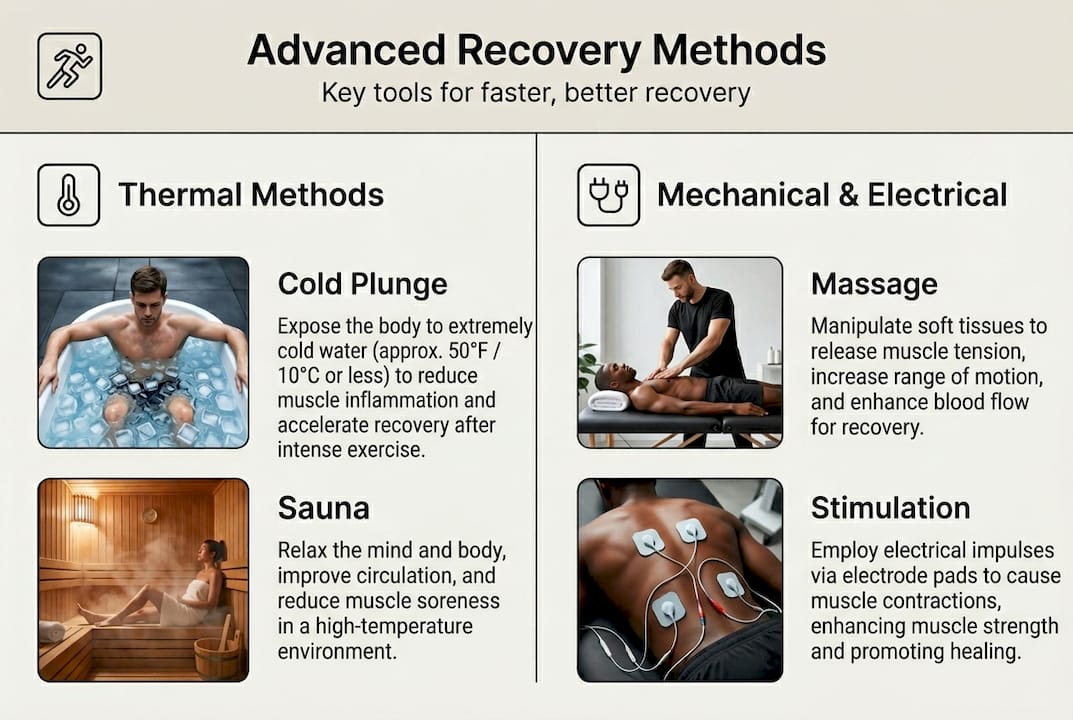
Massage reduces CK significantly (p<0.01) while increasing gamma-aminobutyric acid (GABA), the neurotransmitter responsible for calming the nervous system and reducing perceived pain. Vibration therapy shortens muscle contraction time (Tc p=0.027), which translates directly to faster neuromuscular readiness between sessions. Functional electrical stimulation (FES) improves peak power output (p<0.001) by actively recruiting motor units during the recovery period without creating additional mechanical fatigue.
When to use each modality
- Massage: Best applied 24-48 hours post-exercise, when DOMS is peaking and CK is elevated. Use before bed to combine the GABA-increasing effect with sleep quality improvements. Both manual therapy and percussion devices (massage guns) demonstrate similar CK reduction when applied for equivalent durations.
- Vibration therapy: Most effective as a pre-training or inter-session tool. 10-15 minutes of whole-body or localized vibration at 25-45Hz activates the neuromuscular system and improves contraction efficiency without creating the tissue disruption that extra training volume would.
- FES (Functional Electrical Stimulation): Use between strength sessions and during injury rehabilitation phases where active exercise tolerance is limited. FES pads placed on major muscle groups at low intensity drive blood flow and motor unit recruitment simultaneously, creating a recovery stimulus without voluntary effort.
Pro Tip: Pair vibration therapy in the morning with 5 minutes of dynamic movement before your first training session of the day. This combination cuts warm-up time in half and reduces early-session injury risk when tissues are still tight from sleep.
Common mistakes to avoid
The biggest error athletes make is using massage immediately post-exercise, during the acute inflammatory phase. Inflammation in the first 0-6 hours is a productive signal — your body is sending repair resources to damaged tissue. Aggressively massaging during this window can interrupt that process. Let the acute phase pass, then apply mechanical therapy.
Similarly, overusing FES at high intensities can create additional muscular fatigue rather than recovery. Keep stimulation intensity low enough that it feels like a gentle contraction, not a training effort.
Our take: Personalizing recovery for optimal results
Here is the perspective most recovery content skips: rigid protocols are recovery theater. Following a strict “cold plunge every morning, sauna every evening” schedule without adapting it to your training phase, sport demands, and individual response is not optimized recovery. It is just routine for routine’s sake.
The athletes who genuinely recover better are the ones who treat their recovery toolkit the same way a smart coach treats programming — with periodization, observation, and willingness to adjust. Cold water immersion may blunt long-term hypertrophy adaptations if used too aggressively during strength-focused training blocks because it suppresses some of the inflammatory signaling that drives muscle growth. That does not make cold therapy bad. It means matching the modality to the goal.
Foundational practices — consistent sleep, timed nutrition, adequate hydration — create the conditions where advanced therapies actually work. Without that base, you are stacking tools on a cracked foundation. Look at personalized recovery examples from elite athletes and notice one pattern: they all start simple and add complexity only when the basics are mastered. The most sophisticated recovery protocol in the world will not outperform consistent, foundational habits applied intelligently.
Next steps: Explore advanced recovery solutions
If the techniques in this guide resonated, you already know that having the right equipment makes a measurable difference in consistency. Knowing the optimal protocol is one thing. Having a cold plunge or sauna that is ready when you need it — at the right temperature, designed for daily use — is what turns knowledge into habit.
Coldture designs professional-grade cold plunges and saunas built specifically for athletes who take recovery as seriously as training. Whether you are exploring shop cold plunges for rapid post-session recovery or looking to explore saunas for cellular adaptation and long-term performance, you will find equipment that fits your home or commercial setup. You can also learn about red light therapy as a complementary modality that supports tissue recovery at the cellular level.
Frequently asked questions
How soon after exercise should I use cold water immersion?
For best results, time your cold water immersion 24-72 hours after team or endurance exercise. Cold water immersion reduces soreness and CK most effectively within this recovery window, making it a targeted post-competition or post-high-load training tool.
Does stretching help with muscle soreness and recovery?
No. Post-exercise stretching has no significant effect on soreness, strength, or performance outcomes. Mobility work has other benefits, but it should not be relied on as a primary recovery method.
How can I combine sauna and cold plunge therapies for maximum benefit?
Use contrast therapy (alternating hot and cold) after endurance or team sport sessions to boost norepinephrine and reduce inflammation rapidly. During hypertrophy phases, use sauna alone to preserve the HSP and GH response without the inflammation-suppressing effect of cold. Contrast therapy drives rapid recovery when goal-matched to the training context.
Is it necessary to use advanced recovery methods if I have good nutrition and sleep?
Not strictly necessary, but foundational recovery amplifies advanced methods — the combination consistently outperforms either approach alone. Advanced modalities accelerate recovery windows and support adaptation at a level that nutrition and sleep alone cannot fully replicate for athletes training at high volumes.
Are massage, vibration, or electrical stimulation effective for recovery?
Yes. Research confirms that massage, vibration, and FES are effective for recovery — reducing creatine kinase, increasing GABA, shortening muscle contraction time, and improving post-exercise power output. Each works best when timed correctly within the recovery cycle.
Share:
Cold exposure shapes your mindset for lasting resilience
Luxury home wellness: Elevate your living with recovery