

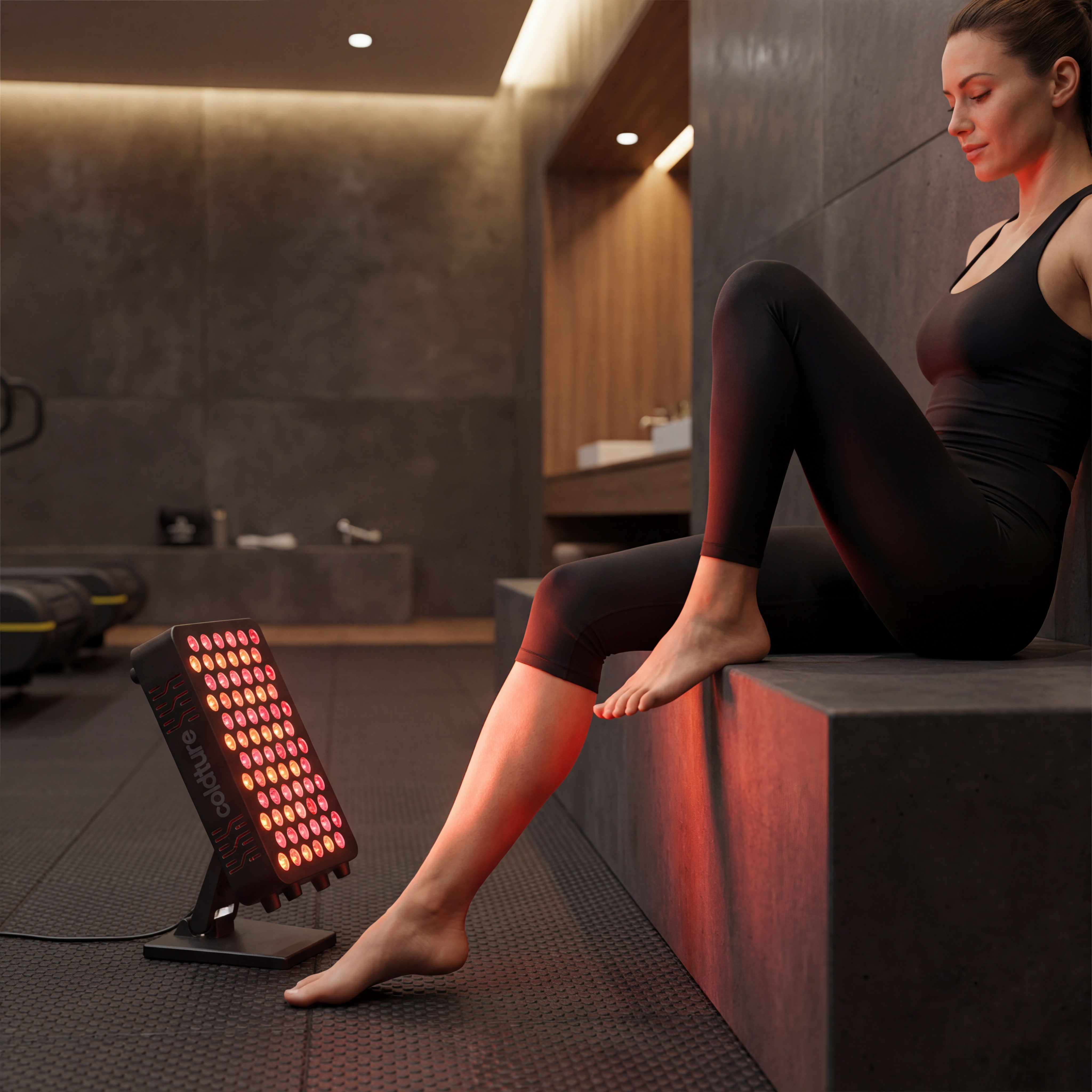
Red light therapy is everywhere right now, from pro locker rooms to home setups, and the role of red light in recovery has never been more discussed or more misunderstood. Some people treat it like a miracle fix. Others dismiss it as expensive hype. The truth sits closer to the middle, and it’s more interesting than either camp suggests. This article breaks down the actual science, the evidence-based benefits, and exactly how to use red light therapy without falling for the marketing noise.
Key takeaways
| Point | Details |
|---|---|
| Cellular mechanism matters | Red light activates mitochondria to produce more ATP, directly supporting tissue repair and reducing inflammation. |
| Timing changes outcomes | Applying red light before exercise, not just after, produces stronger gains in endurance and soreness reduction. |
| Wavelength determines depth | Use 630–660nm for surface muscle and skin; use 810–850nm or higher for joints, tendons, and deep tissue. |
| It complements, not replaces | Red light works best alongside quality sleep, nutrition, and structured training, not as a substitute. |
| Population matters | Athletes and highly active individuals tend to respond more consistently than moderately active people. |
The role of red light in recovery at the cellular level
Most recovery tools work from the outside in. Ice baths cool surface tissue. Compression moves fluid. Red light therapy does something different: it works from the inside out, at the level of the cell itself.
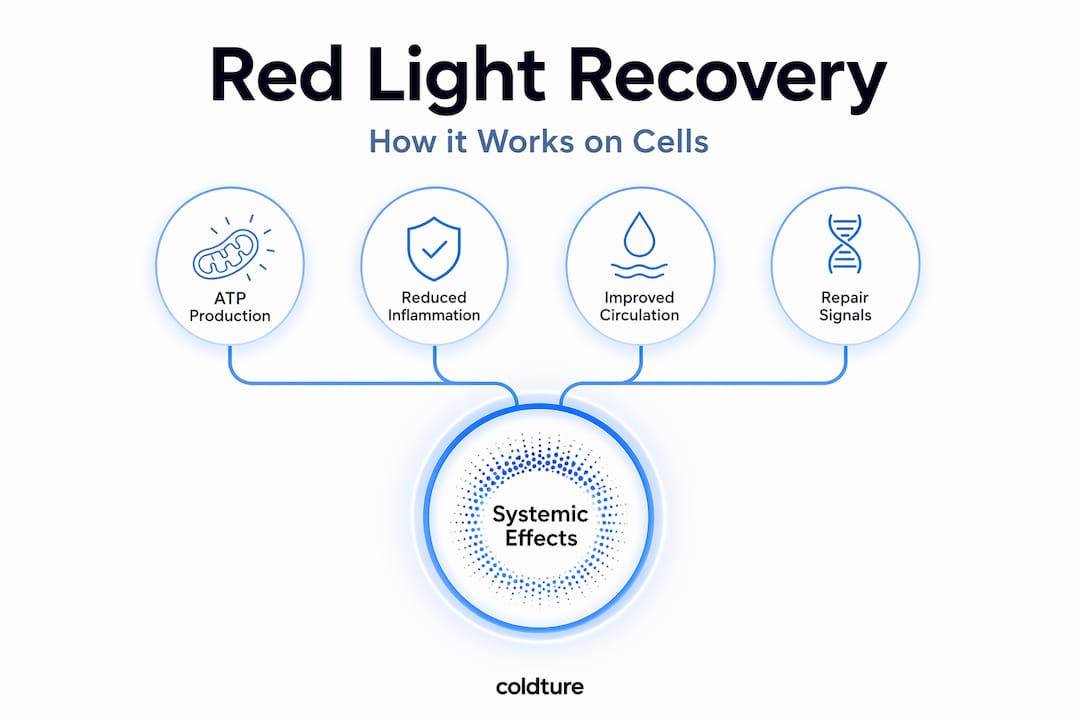
The key player is cytochrome c oxidase, an enzyme inside your mitochondria. When red and near-infrared photons hit this enzyme, it absorbs them and triggers a cascade of repair and anti-inflammatory processes. The result is a measurable increase in ATP production, which is the energy currency your cells use to rebuild damaged tissue, regulate inflammation, and restore function. More ATP means more capacity to recover.
Here is what that looks like in practice:
- ATP production increases, giving cells more energy to repair micro-tears in muscle fibers after hard training
- Blood flow improves, delivering oxygen and nutrients faster to stressed tissue while flushing out metabolic waste
- Inflammation reduces in a controlled way, not by suppressing the process entirely but by shortening the window of acute inflammation
- Oxidative stress decreases, which is important because post-exercise oxidative load is a key driver of prolonged soreness
Wavelength determines how deep the light actually reaches. Red light in the 630–660nm range works well for skin and superficial muscle. Near-infrared light at 810–850nm and above penetrates deeper, reaching joints, tendons, and dense muscle tissue. Multi-wavelength devices are increasingly preferred precisely because most athletes need both surface and deep tissue support at the same time.
Pro Tip: If you are targeting joint pain or tendon issues, make sure your device includes near-infrared wavelengths above 800nm. A device that only emits 630–660nm will not reach the tissue depth you need.
The key distinction that gets lost in most red light therapy conversations is this: the therapeutic effects are systemic. It is not numbing pain like ice does. It is improving the physiological environment so your body can do its job faster and more completely.
Evidence-based benefits for muscle recovery and performance
The research on red light therapy for athletes has matured significantly in the last few years. We are past the early “promising but limited” stage. A 2024 meta-analysis of 34 randomized controlled trials found that pre-exercise photobiomodulation significantly improves muscle endurance and accelerates strength recovery, outperforming neuromuscular electrical stimulation (NMES) and intermittent pneumatic compression (IPC) in both soreness reduction and performance outcomes.

| Benefit | Evidence Level | Key Finding |
|---|---|---|
| Reduced muscle soreness | Strong (multiple RCTs) | Consistent DOMS reduction vs. placebo and active comparators |
| Improved muscle endurance | Strong (2024 meta-analysis) | Pre-exercise PBMT outperforms NMES and IPC |
| Lower creatine kinase levels | Moderate (sport-specific) | Significant reductions in soccer players post-PBMT |
| Faster strength recovery | Moderate to strong | Effect magnitude varies by training status |
| Pain reduction over time | Moderate | Cumulative benefits with consistent use |
Sport type and training status both affect how much benefit you see. A 2025 meta-analysis found reduced creatine kinase levels in soccer players after photobiomodulation, which is a direct biochemical marker of less muscle damage. That is a meaningful, measurable outcome, not a subjective feeling.
Timing is one of the most underappreciated variables in all of this. A 2025 systematic review showed that pre-exercise PBMT application produces stronger outcomes than post-exercise application for both endurance and soreness reduction. The working theory is that priming the mitochondria before the workout gives cells more capacity to manage the incoming damage load. Post-exercise application still helps, but the magnitude is smaller.
Pro Tip: If your schedule allows, try applying your red light session 10 to 20 minutes before training rather than only after. The pre-exercise window appears to be where the biggest performance benefits live.
One honest caveat worth noting: the benefits are less consistent in moderately active individuals compared to highly trained athletes. This likely comes down to muscle fiber composition and how trained tissue responds to photobiomodulation. If you are just starting a fitness routine, do not expect the same response a competitive athlete might see.
Practical setup: devices, protocols, and integration
Getting results from red light therapy is not complicated, but it does require the right setup and reasonable expectations. For a deeper look at how photobiomodulation fits into a full recovery system, the device and protocol details below will point you in the right direction.
- Choose the right wavelength for your goal. Surface-level muscle soreness and skin health respond well to 630–660nm. Joint pain, tendon recovery, and deep muscle work need 810–850nm or higher. If you have multiple recovery needs, a multi-wavelength device covers both.
- Follow session length guidelines. Most evidence-based protocols run 10 to 20 minutes per target area. Longer is not always better. Excessive exposure can blunt the cellular response, a phenomenon called biphasic dose response. More light beyond the therapeutic threshold does not produce more benefit.
- Be consistent before you judge results. Cumulative benefits emerge over weeks of regular use, not after one or two sessions. Build it into your routine like training itself: 4 to 5 sessions per week for at least 4 weeks before evaluating impact.
- Pair it with foundational recovery. Research backs the idea that combining red light therapy with physical therapy produces faster and more durable recovery gains than either approach alone. Add structured movement, quality sleep, and adequate protein and you have a recovery stack that actually compounds.
- Avoid common mistakes. Using a device with too few joules of output, treating over clothing instead of bare skin, and skipping consistent use are the three most common reasons people report no results. Light does not penetrate fabric effectively. Skin contact or close proximity is required.
For athletes building out a full recovery routine, a resource like Coldture’s advanced recovery techniques guide covers how tools like photobiomodulation fit within a structured, periodized approach to recovery.
Limitations, safety, and what red light cannot do
Red light therapy is safe. FDA-cleared devices have a strong safety profile, with side effects generally limited to mild, temporary skin irritation or minor discomfort at the treatment site. Used appropriately, within recommended session lengths and at proper distances, the therapy does not pose meaningful risks for most people.
What it cannot do is equally worth knowing:
- It will not replace structural interventions. If you have a torn ligament or a significant structural injury, red light supports the recovery environment. It does not repair anatomy that needs surgical or manual intervention.
- It does not mask pain like a painkiller. This is one of the most common myths. Red light actually reduces inflammation and improves mitochondrial function, which reduces pain over time. It does not block pain signals the way an analgesic does.
- It will not build muscle on its own. Some marketing implies strength gains from red light alone. The evidence does not support this. It helps preserve and recover muscle. Training builds it.
- Results are not universal. As noted earlier, response varies by training status, and some individuals with specific health conditions may experience less benefit.
Red light therapy is a complementary tool. The evidence is real, but it works within a system of good recovery habits, not outside of it.
Experts consistently emphasize that foundational recovery habits like sleep quality, nutrition, and training structure should be in place before adding red light therapy. It amplifies a good system. It cannot fix a broken one.
My take on using red light therapy the right way
I got into recovery tools because I had no choice. Rehabbing my knee taught me that the gap between “I did something for recovery” and “I recovered well” is enormous. Most people fill that gap with hope rather than process.
What I’ve learned from years of working with athletes and building Coldture is that red light therapy is genuinely useful, but only if you respect what it is. It’s not a shortcut. It’s a signal amplifier. When your sleep is dialed in, your nutrition is solid, and your training has structure, adding red light creates a real compounding effect. The uses of red light in rehabilitation are well-documented at this point. The biology is legitimate. But I’ve also seen people spend $1,500 on a panel and skip sleep to use it at midnight. That is not recovery. That is theater.
My practical advice: start with a 4-week commitment at the right protocol, track how your soreness and readiness feel, and treat it as one layer of a stack, not the whole stack. If you’re not sleeping 7 to 9 hours and eating enough protein, address those first. Red light will do more for you once the fundamentals are working.
The people I’ve seen get the most out of photobiomodulation are the ones who already take recovery seriously. It rewards discipline, not desperation.
— Daniel
Take your recovery to the next level with Coldture
If you’re ready to put the science to work, Coldture’s recovery lineup is built for exactly this. The 360° Full-Body Red Light Therapy System delivers multi-wavelength coverage across the full body, so you’re not limited to spot treatment when your whole system needs to recover.
For those who want the full picture, Coldture’s recovery bundles pair red light therapy with cold plunge and sauna options, giving you the contrast therapy stack that professional teams and Olympic athletes actually use. If you’re serious about performance, recovery is where the edge lives. Coldture builds the tools to get you there.
FAQ
What is the role of red light in muscle recovery?
Red light therapy activates mitochondria to produce more ATP, reduces inflammation, and improves circulation, all of which accelerate muscle repair after exercise. Pre-exercise application tends to produce the strongest benefits for endurance and soreness reduction.
How often should you use red light therapy for recovery?
Most protocols recommend 4 to 5 sessions per week, with each session lasting 10 to 20 minutes per target area. Consistent use over at least 4 weeks is needed to see meaningful cumulative benefits.
Is red light therapy safe for athletes?
Yes. FDA-cleared red light therapy devices are considered safe, with side effects limited to mild, temporary skin irritation in some users. The therapy is non-invasive and appropriate for regular use within recommended guidelines.
What wavelength is best for muscle and joint recovery?
Use 630–660nm wavelengths for superficial muscle and skin recovery. For deeper tissue like joints and tendons, 810–850nm or higher near-infrared wavelengths are needed to reach adequate tissue depth.
Can red light therapy replace other recovery methods?
No. Red light therapy works best as a complement to foundational recovery practices like sleep, nutrition, and physical therapy. Clinical experts consistently recommend building strong recovery habits first and using red light to enhance an already solid system.
Share:
The Cedar Inside Your Outdoor Sauna Is the Reason It Lasts (or the Reason It Won't)
Recovery Optimization Steps for Peak Athletic Performance